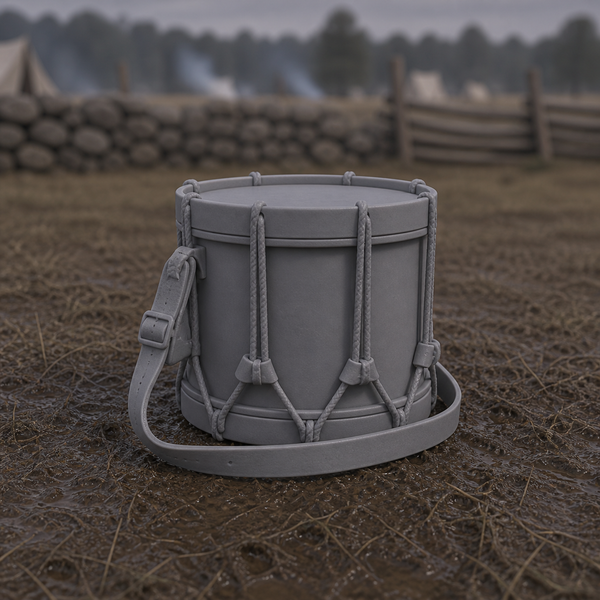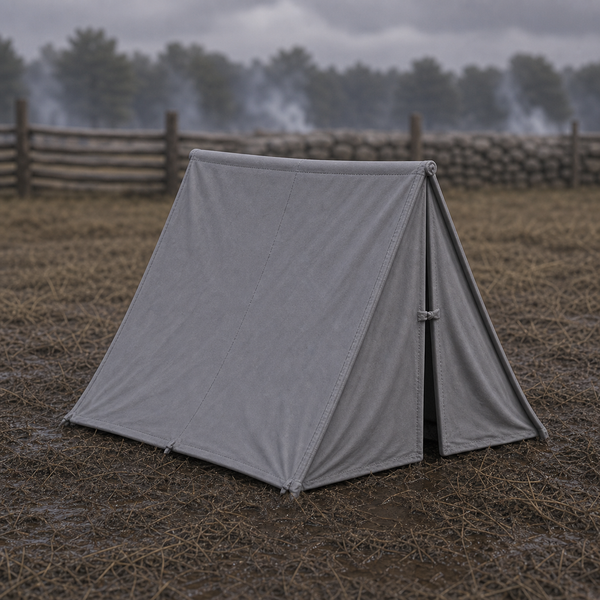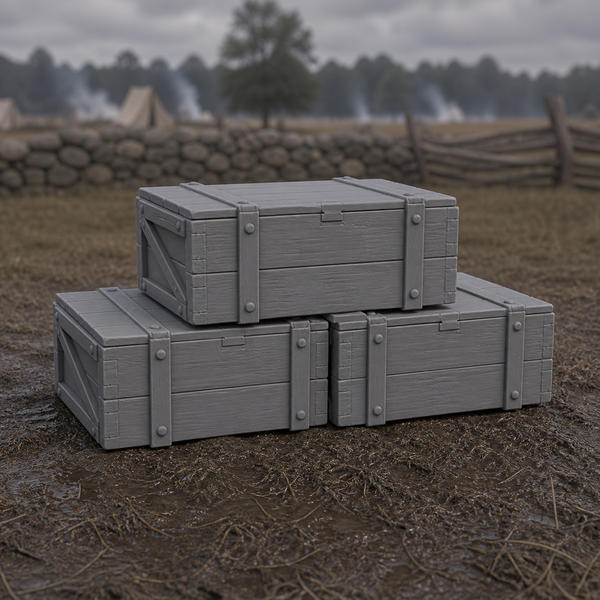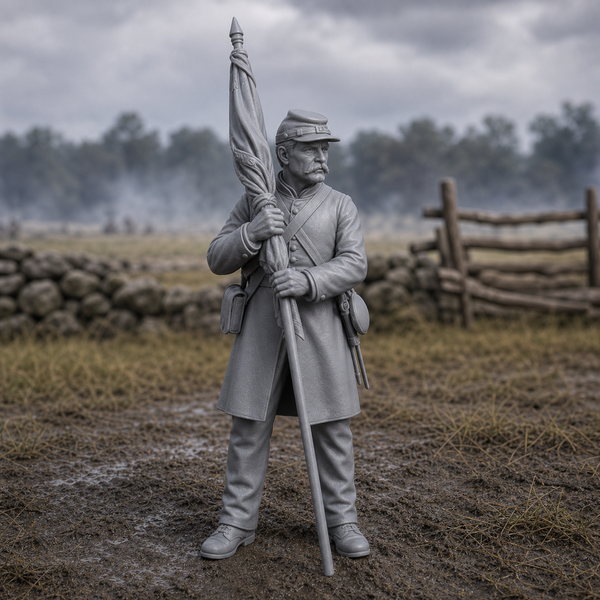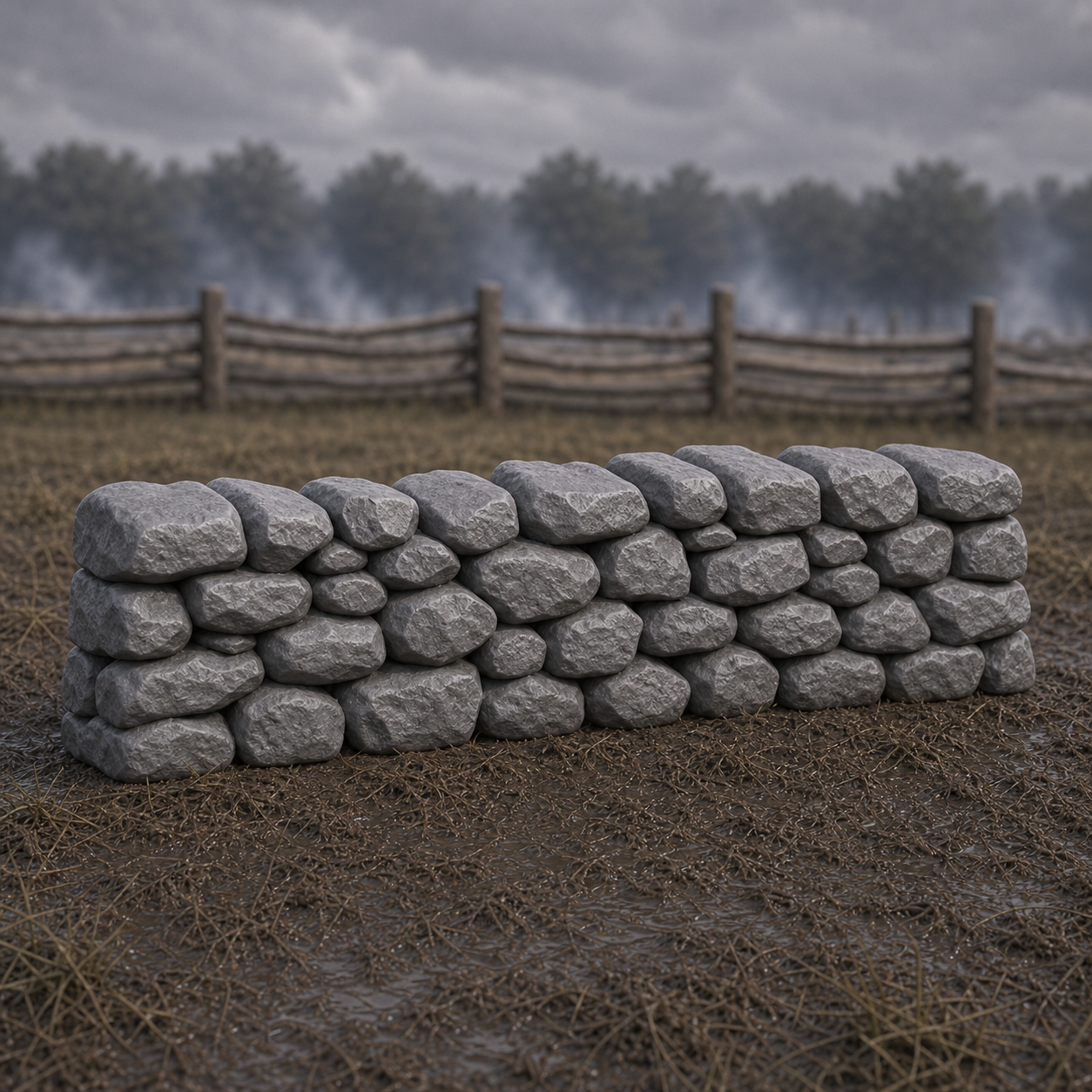

A short section of dry-stone field wall - irregular fieldstones, no mortar, low enough to vault. The Pennsylvania field-boundary that became iconic cover at Gettysburg. Period: American Civil War, Battle of Gettysburg, 1-3 July 1863.
Pennsylvania farmland in 1863 was crossed with dry-stone walls built by generations of farmers clearing fields. At Gettysburg these walls became defensive lines - Cemetery Ridge, the Bloody Angle, Devil's Den all centred on stone-wall positions. The Union line at the High Water Mark held behind such a wall.
Painting tips
- Stones: mixed pale buff and warm grey with sepia wash in joints.
- Top stones: lighter drybrush from weather.
- Mossy contact line: pale green-grey.
- Optional faded white chalk dust or bullet-splash mark on one face.
Historical sources & further reading
- Pennsylvania dry-stone field-wall references
- Coddington, The Gettysburg Campaign (terrain analysis)
⚠ Small parts. Not suitable for children under 14.