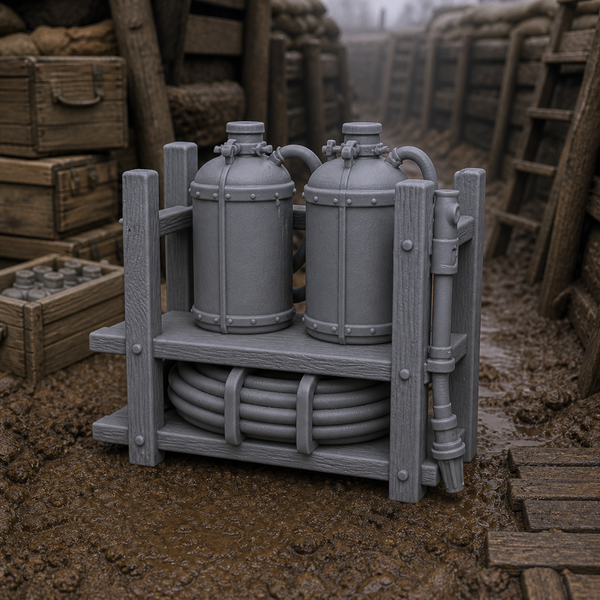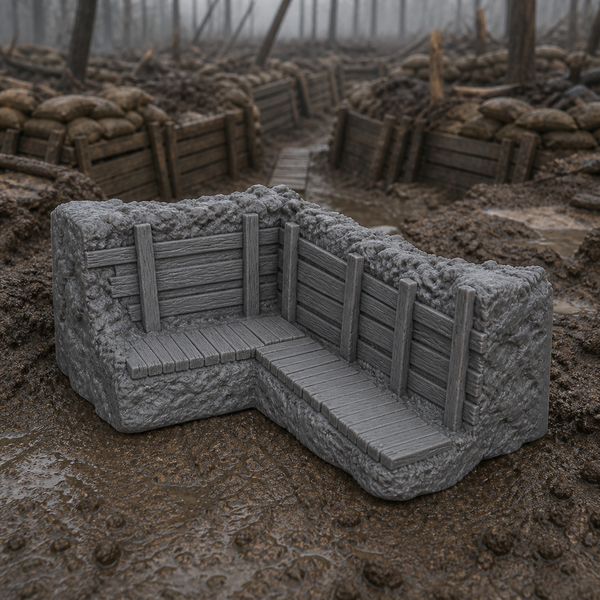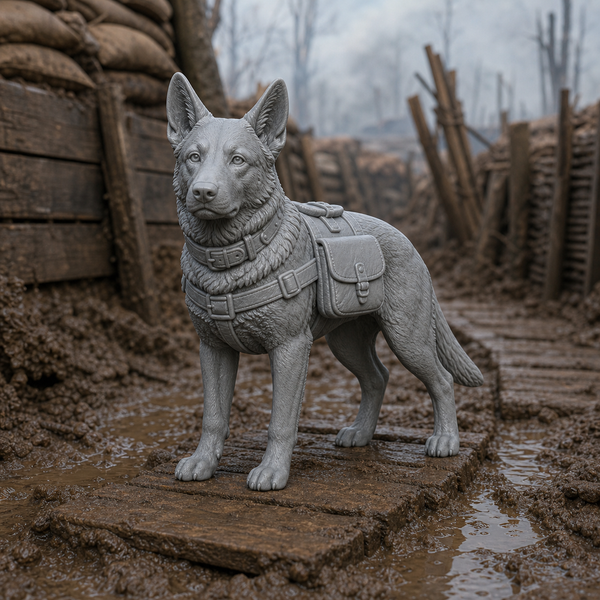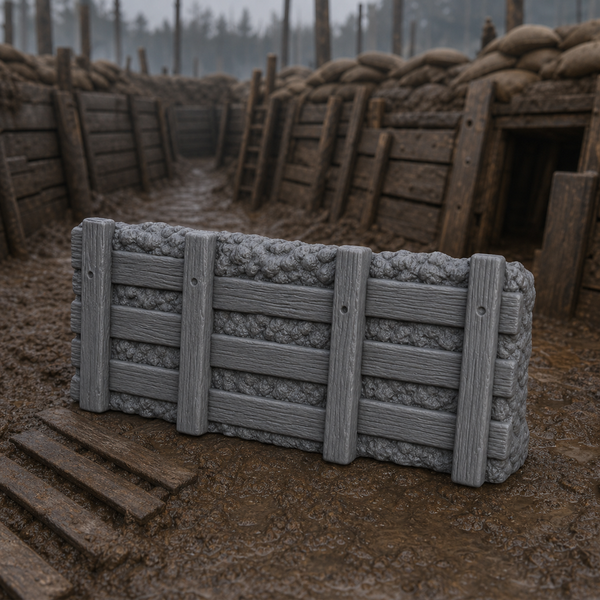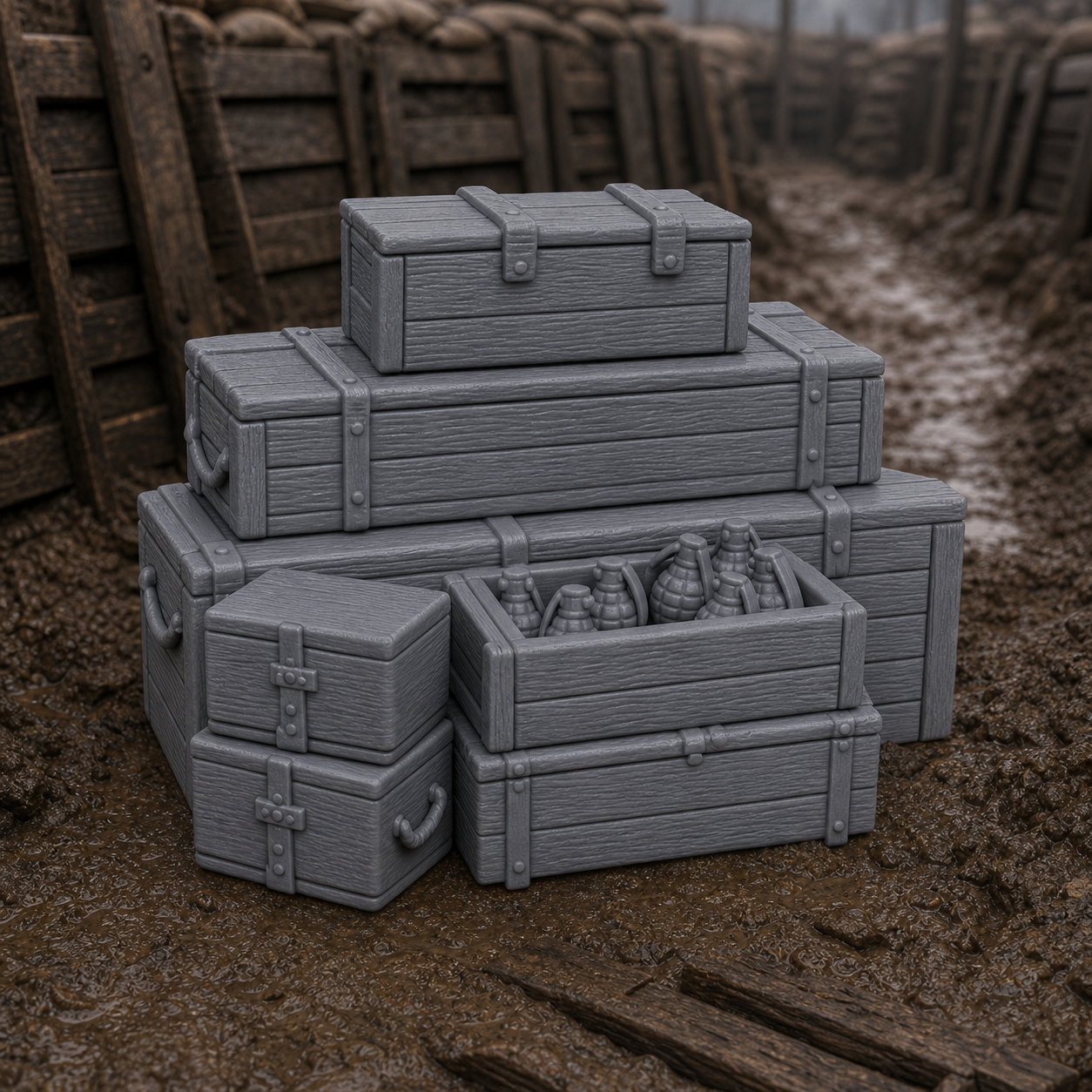
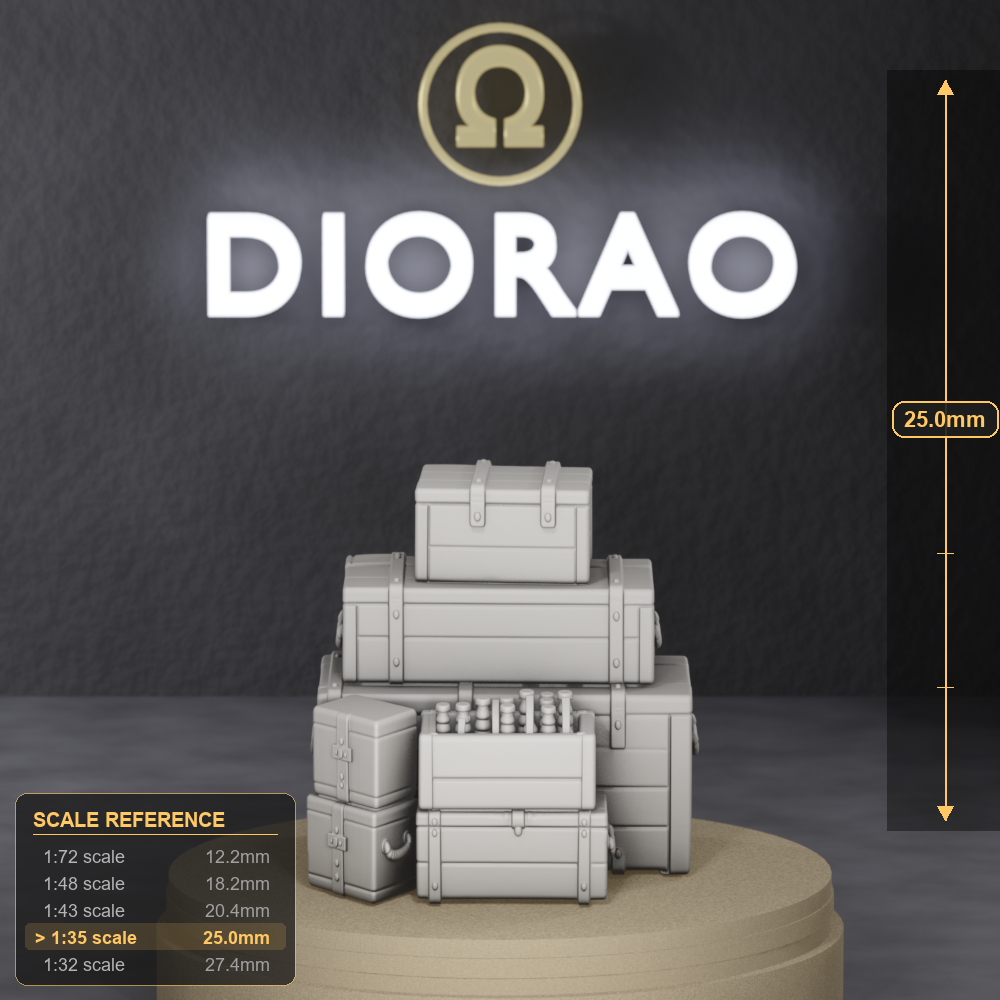
A stack of two timber ammunition crates with a smaller grenade box on top — the supply corner of any front-line trench bay. Period: World War I, 1914-1918.
Forward bays kept ready ammunition close to the firing step: a crate of rifle rounds at the bottom, machine-gun belts in the middle, hand grenades in their own smaller plank box at the top so the bombers could grab two at a time. Crates were rope-stenciled with lot numbers and hazard marks; the grenade box had a sliding lid to keep wet weather off. This piece fuses the stack as one mountable supply prop.
Painting tips
- Crates: dull olive-drab or unpainted timber, mud at the base.
- Stencils: cream/yellow lot marks (white drybrush).
- Iron hinges and hasps: dark steel, slight rust.
- Optional: a hazard X in red on the grenade box.
Historical sources & further reading
- British Army Stores Department crate-marking standards
- WW1 trench supply photographs
⚠ Small parts. Not suitable for children under 14.