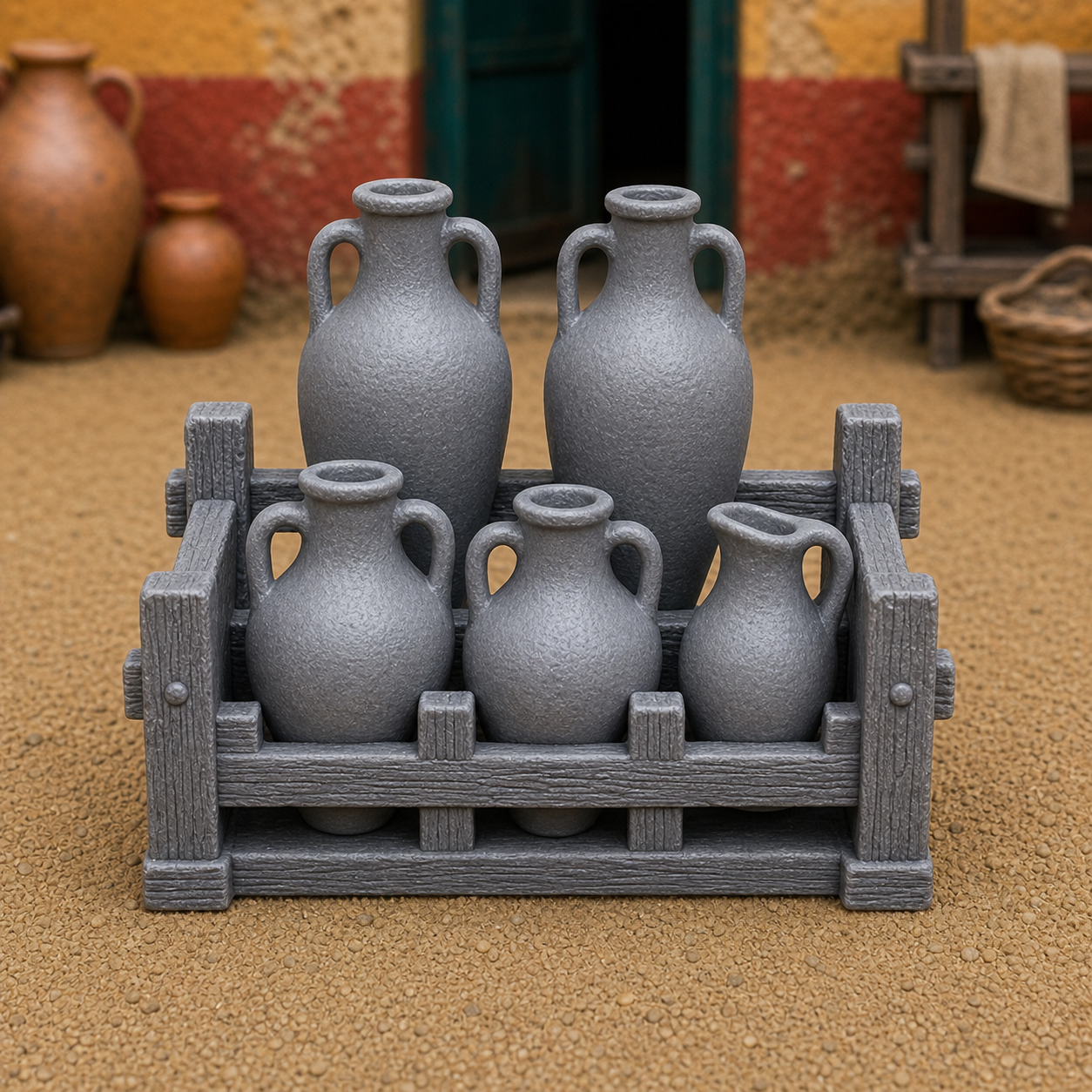
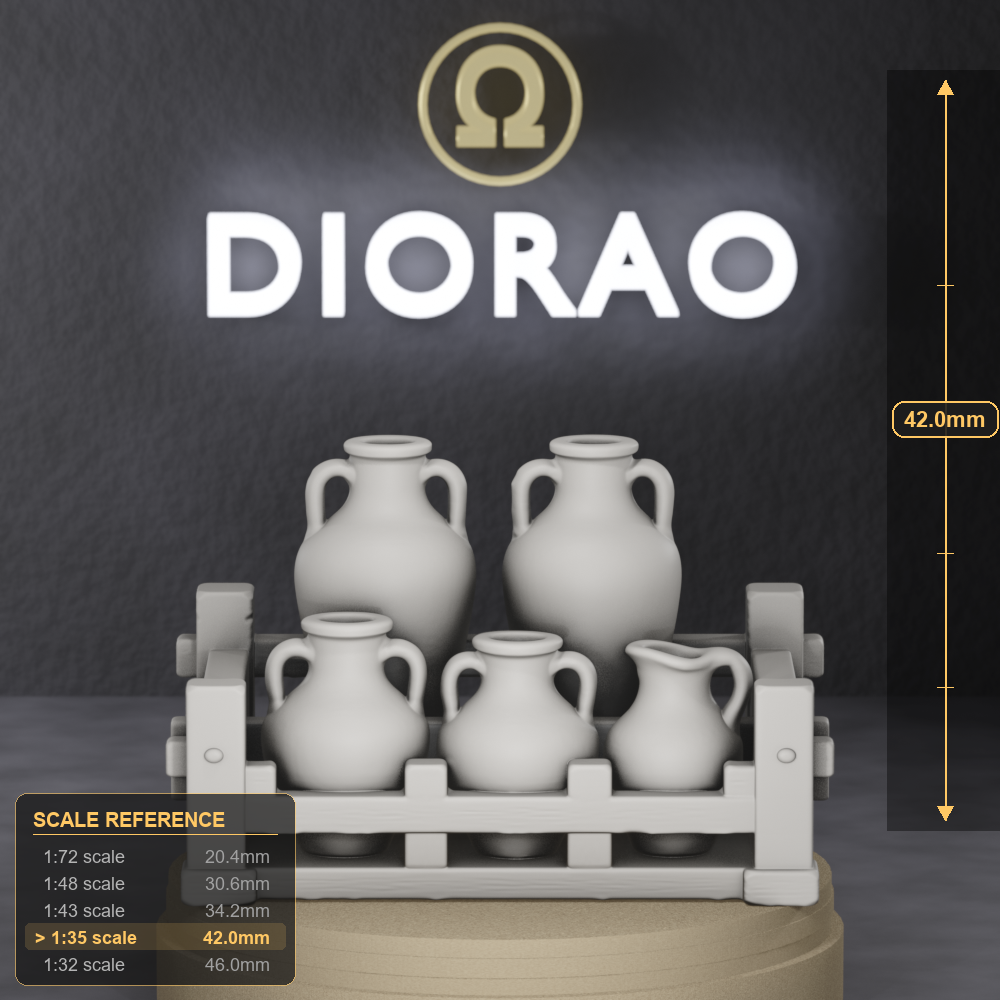
Roman ceramics were industrial: tens of thousands of amphorae, jugs, and storage jars left workshops across the empire each day, moving wine, olive oil, fish sauce (garum), water, and grain through every market stall and household. This set captures a typical merchant arrangement of stacked vessels for the morning trade. Period: Roman antiquity, 1st c. BCE - 3rd c. CE.
The set includes pointed-base wine amphorae (Dressel 1B and 2-4 forms), a flat-bottomed water jug (urna), small handheld pitchers, and a couple of storage jars. The Monte Testaccio in Rome - a 50-meter-tall hill made entirely of broken Spanish olive-oil amphorae from the 1st-3rd centuries CE - shows just how relentless the trade volume was.
Painting tips
- Vary terracotta tones across the set - orange-red for new pieces, warmer brown for older.
- Brown wash unifies the group; dry-brush pale highlights on rims and handles.
- Optional darker streaks for moisture/staining around lips.
- Mark a couple of vessels with painted tituli (text) for merchant authenticity.
Historical sources & further reading
- Peacock & Williams. Amphorae and the Roman Economy (1986)
- Monte Testaccio excavations, Rome
- Pompeii: household vessel finds
⚠ Small parts. Not suitable for children under 14.