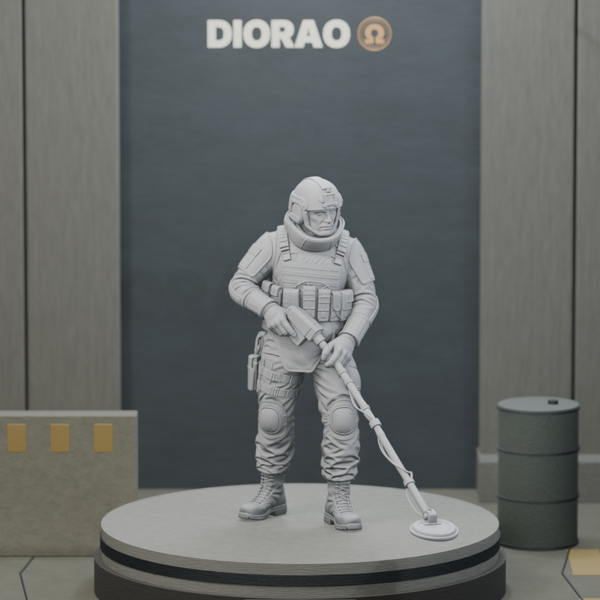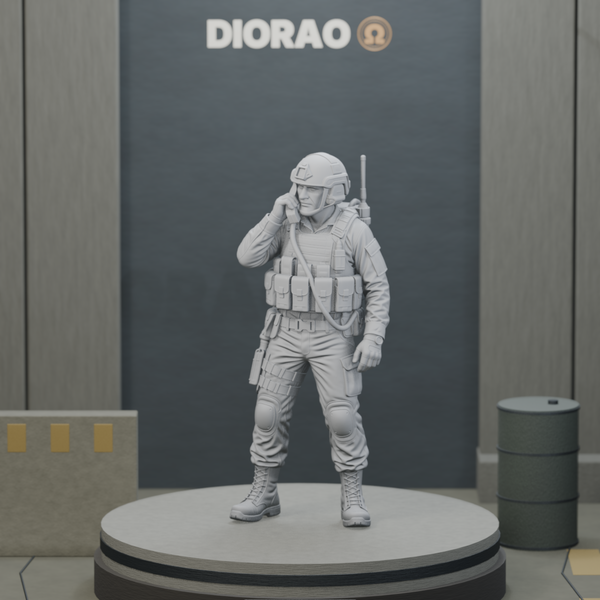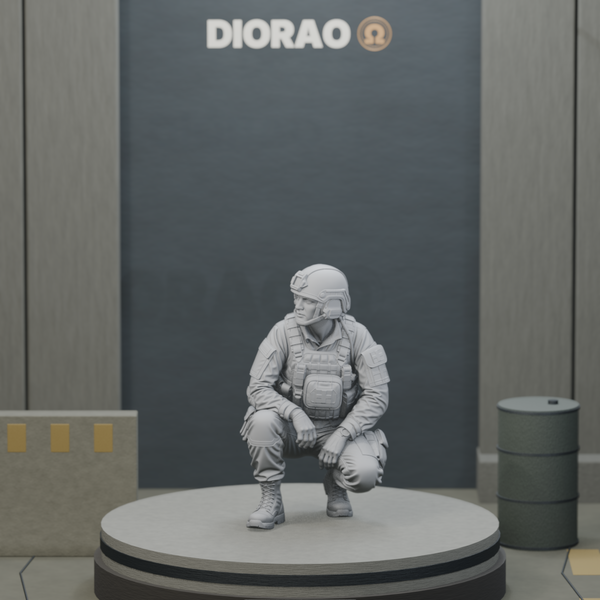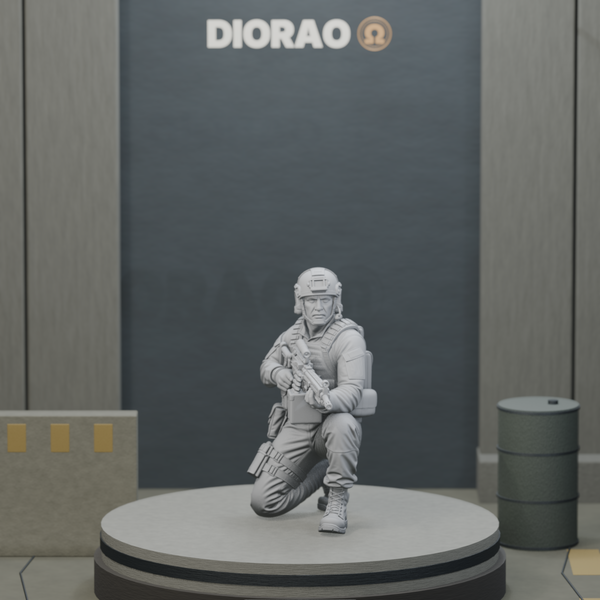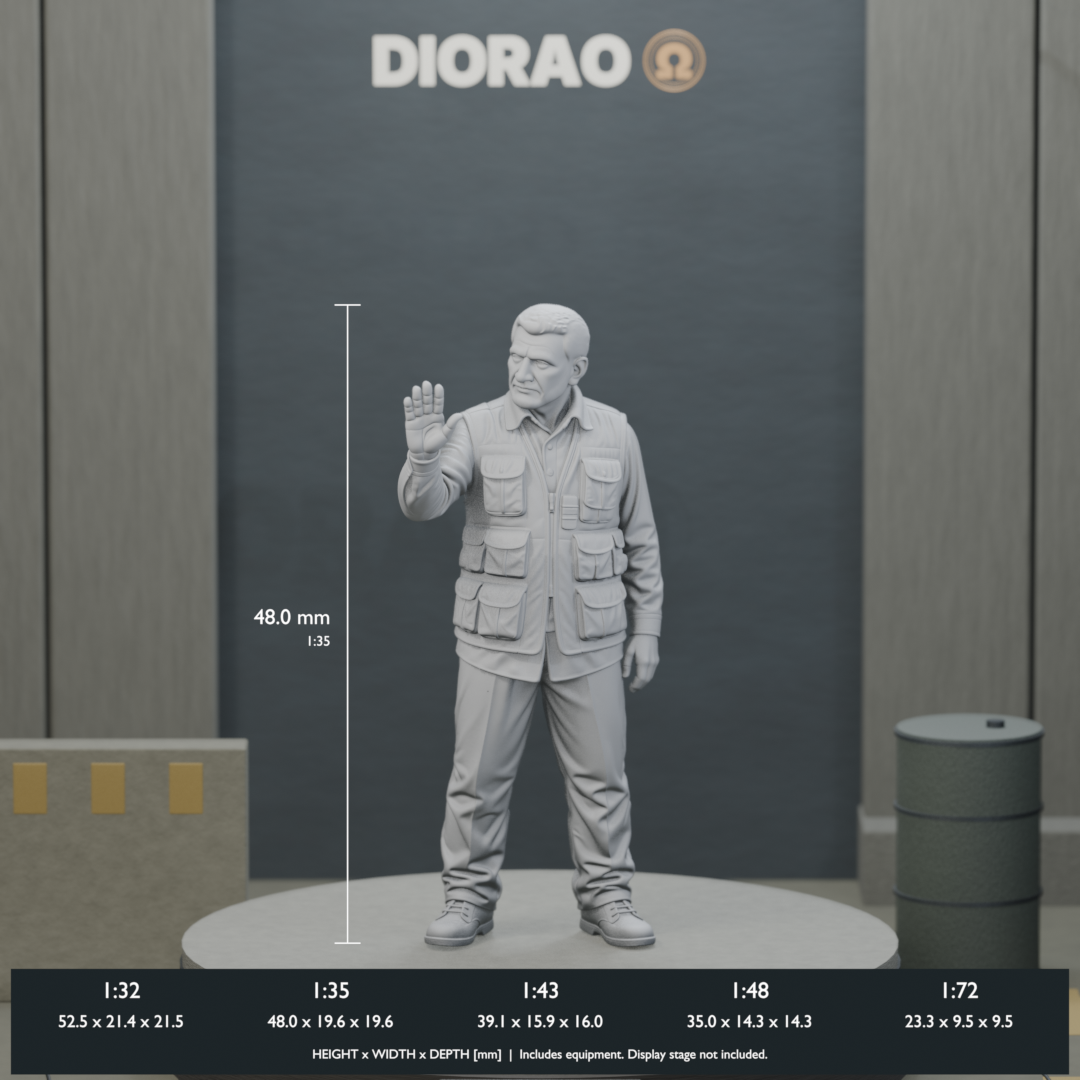
A civilian interpreter in plain shirt and trousers, lightweight protective vest over the top, no helmet, sometimes a baseball cap or head wrap. The patrol's voice into local communities. Period: Modern war, 1990-present.
Interpreters - locally hired or expatriate-contract - were essential at every NATO and partner patrol from the early 2000s onward in Iraq, Afghanistan, the Sahel, and elsewhere. Often the highest-risk position: target of insurgent retribution and locally identifiable.
Painting tips
- Shirt: muted plain (blue, grey, brown) - civilian look.
- Trousers: dark or khaki.
- Vest: matte earth or dark blue civilian-contractor pattern.
- Cap or wrap: dirty cap or locally-styled head cloth.
- Boots: scuffed civilian sneakers or boots.
Historical sources & further reading
- NATO interpreter programmes (CAT-I/II) references
- Counter-insurgency cultural-engagement studies
⚠ Small parts. Not suitable for children under 14.