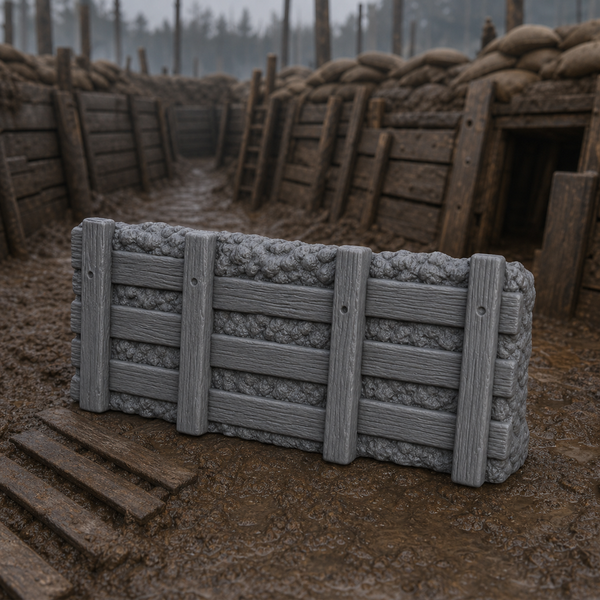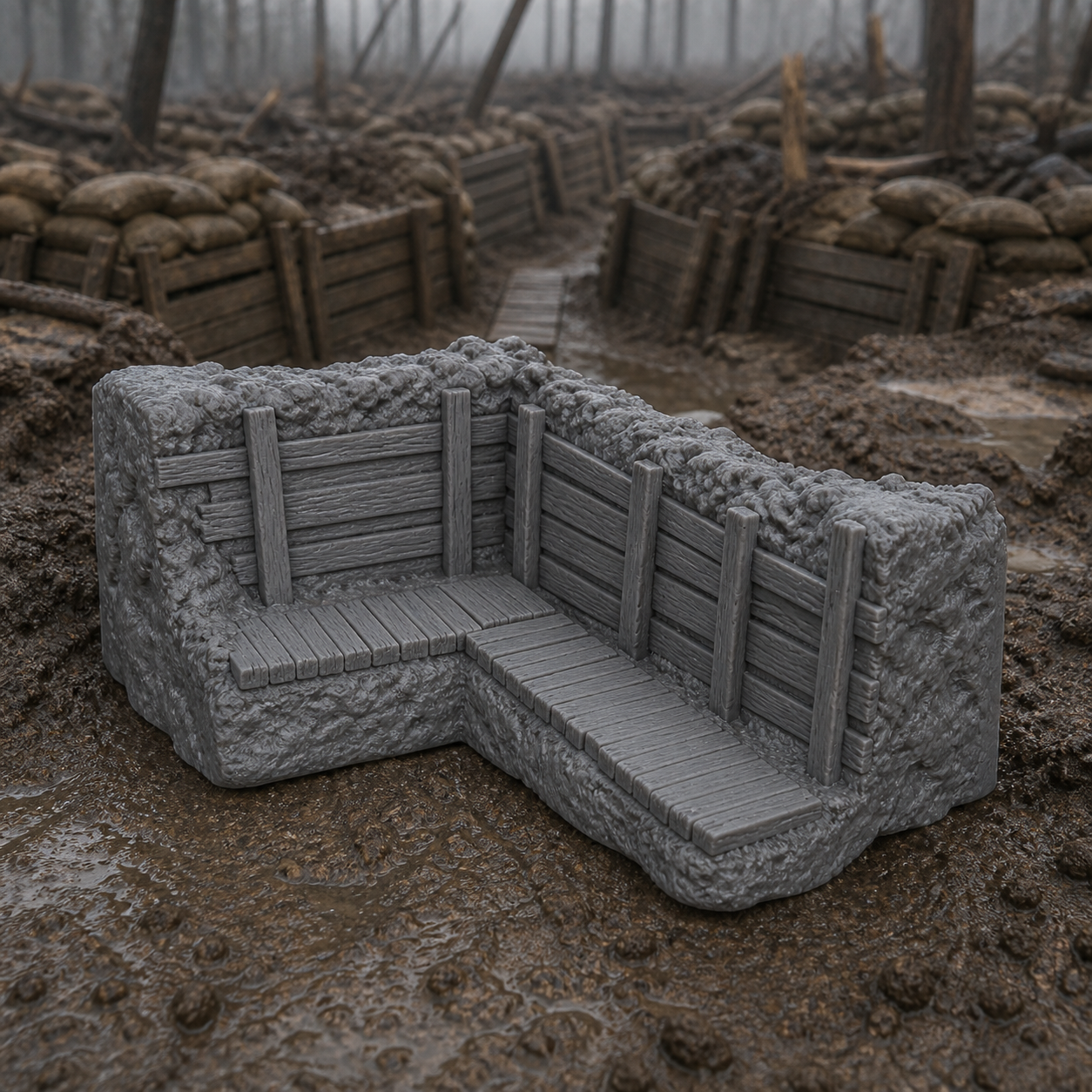
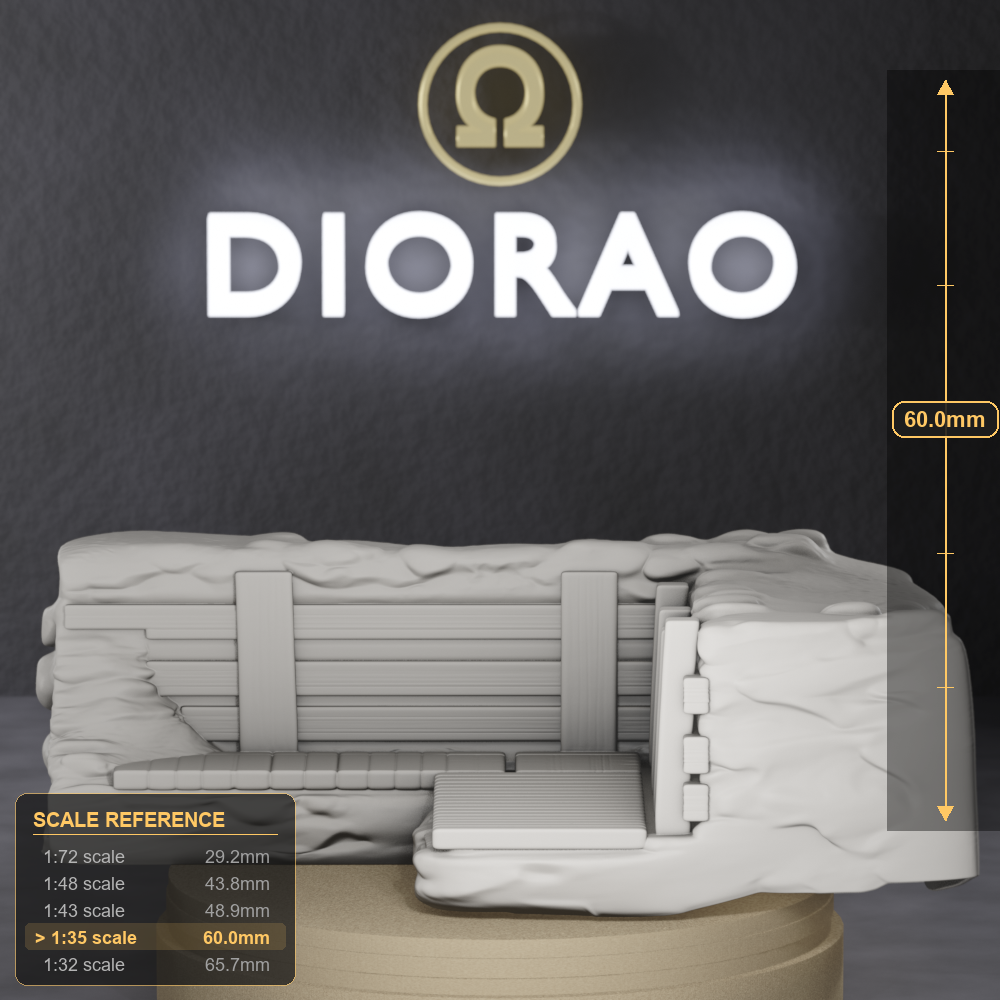
A right-angle trench corner with timber duckboards laid over the mud — the working geometry of any WW1 communication trench. Period: World War I, 1914-1918.
Trenches were dug in zig-zag — straight runs broken by traverses every few meters — so a single shell couldn't enfilade the whole line. Corners (traverses) were the most-trodden points and the most likely to flood. Duckboards (caillebotis) were laid as wooden grating to keep men off the standing water. This piece sculpts a single L-corner section: corner of the trench wall (sandbag and timber revetted), duckboards turning the bend, drainage gap underneath. Drop into a trench bay layout.
Painting tips
- Duckboards: wet timber grey-brown with sepia plank-gap wash.
- Mud beneath: dark glossy brown to suggest standing water.
- Sandbags / revetment: bleached khaki, mud splash at the base.
- Optional: a glossy varnish across the lowest mud line for waterlogged effect.
Historical sources & further reading
- British / French trench engineering manuals
- Western Front trench-corner photography
⚠ Small parts. Not suitable for children under 14.