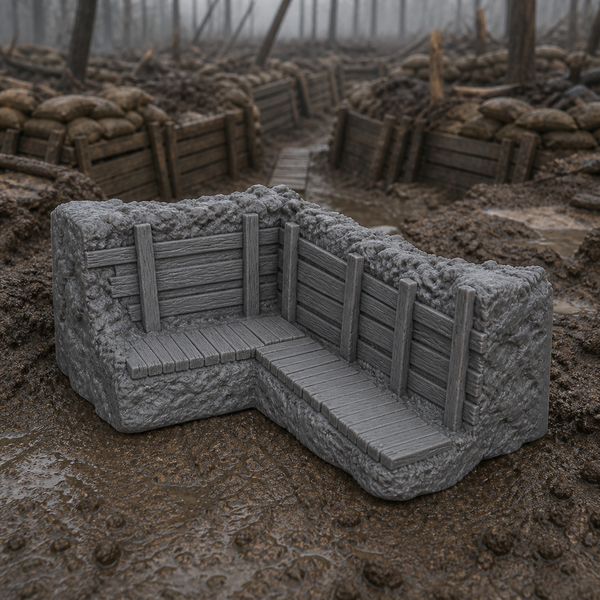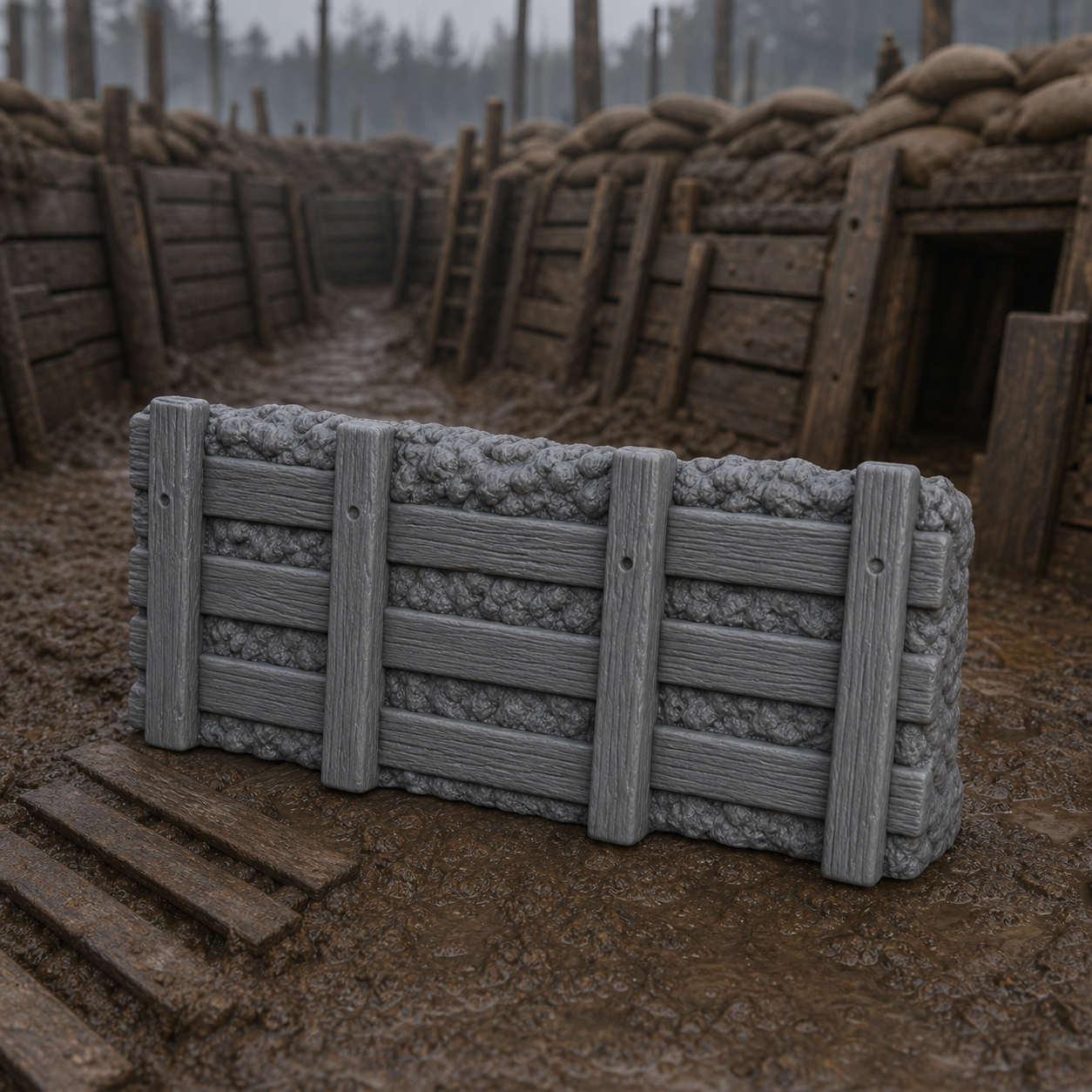
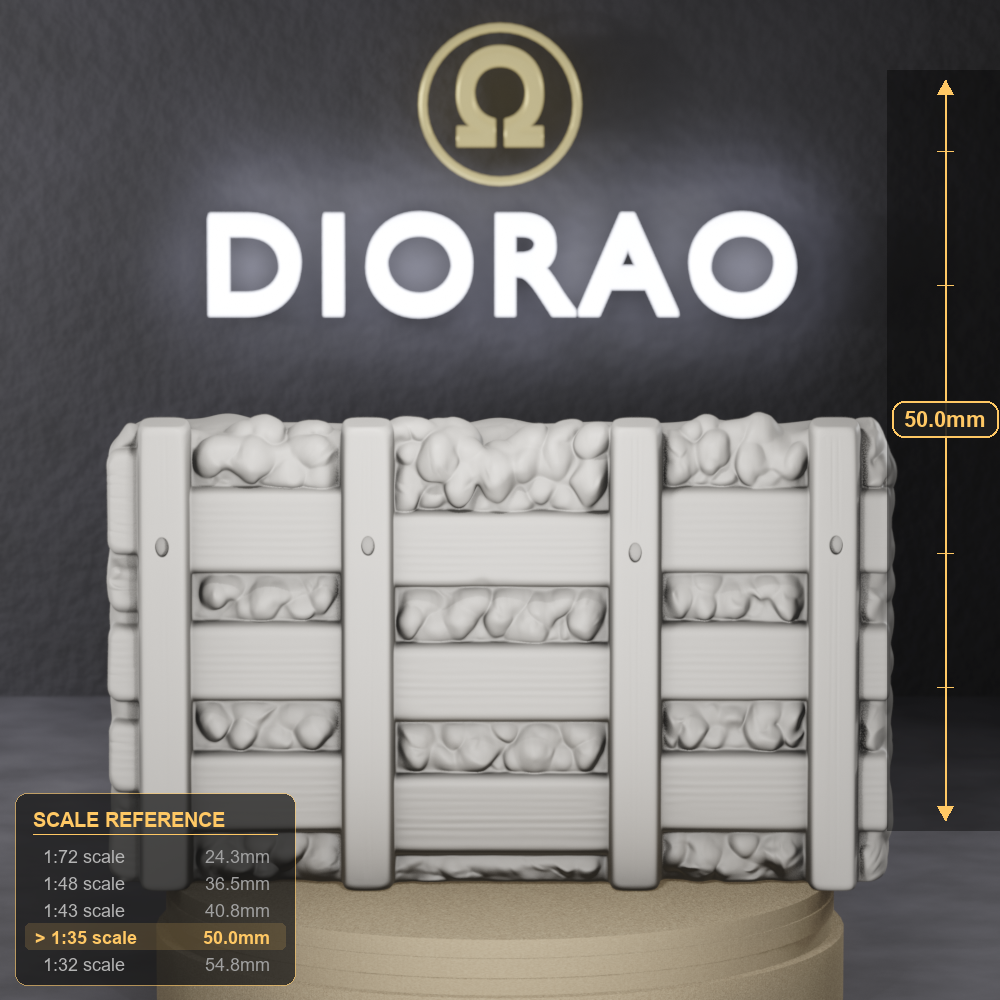
A section of timber revetment wall — vertical planks held back by horizontal cross-struts — keeping a trench wall from collapsing into mud. Period: World War I, 1914-1918.
Western Front trenches were dug into clay and chalk that washed out in every rain. Revetment — timber, hurdles, expanded metal — held the walls up. The most common pattern was vertical plank facing braced by horizontal struts, with sandbag capping at the top edge. This piece sculpts a single facade section ready to butt against a trench wall.
Painting tips
- Timber: dark damp grey-brown, water-line darker.
- Sandbag cap: bleached khaki.
- Mud splash at the base, seeping into plank gaps.
Historical sources & further reading
- Royal Engineers Field Service Pocket Book
- WW1 trench engineering records
⚠ Small parts. Not suitable for children under 14.