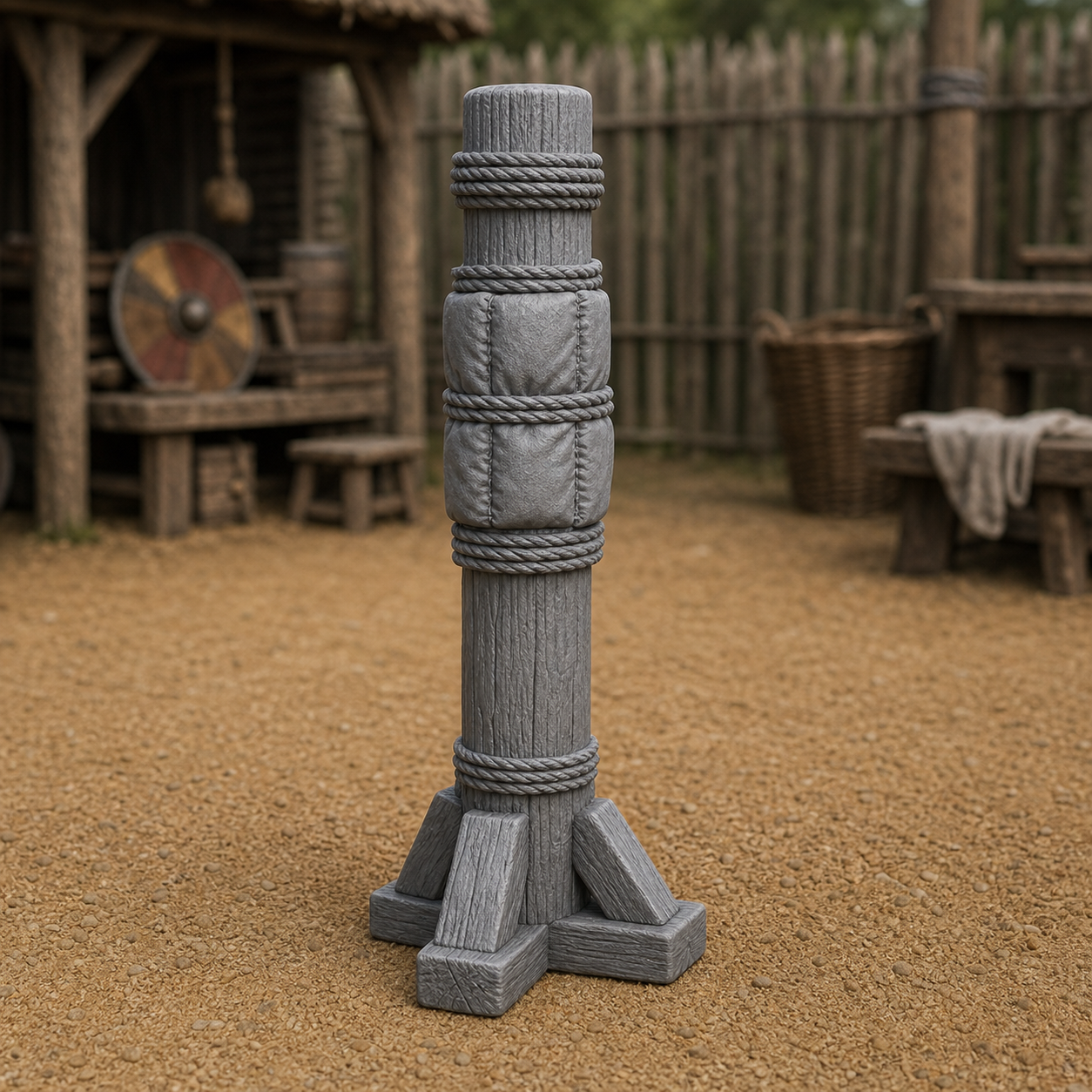
A thick oak post driven into the barracks yard — wrapped with rope at chest height and chipped raw from years of practice strokes. Period: Early Middle Ages, c. 600-900 CE.
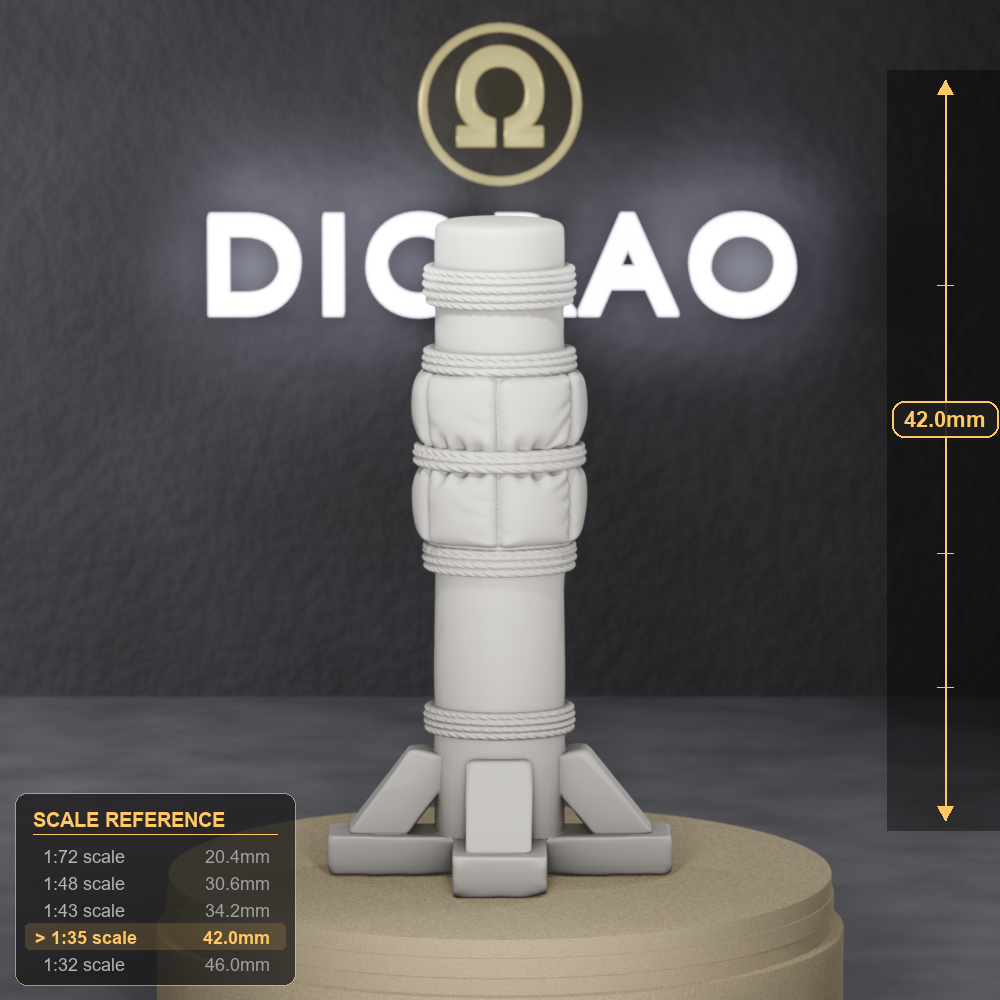
Anglo-Saxon household troops drilled against fixed posts the same way Roman legionaries did at the palus. Each man worked his cuts and parries against the post for an hour at a time — sword, shield, spear butt, axe. The rope wrap at chest height took most of the punishment, replaced every few weeks by the carpenter. Chip scars at face and shin height tell the rest of the story. This piece sculpts a single mountable post with rope wrap and chip detail.
Painting tips
- Post: weathered oak, lighter chip scars where wood is exposed.
- Rope: tan with sepia wash, darker where wear has rubbed.
- Base: dirty, mud-ground splash up the first 10mm.
Historical sources & further reading
- Vegetius, De Re Militari (Roman pala drill, inherited)
- West Stow yard reconstructions
⚠ Small parts. Not suitable for children under 14.