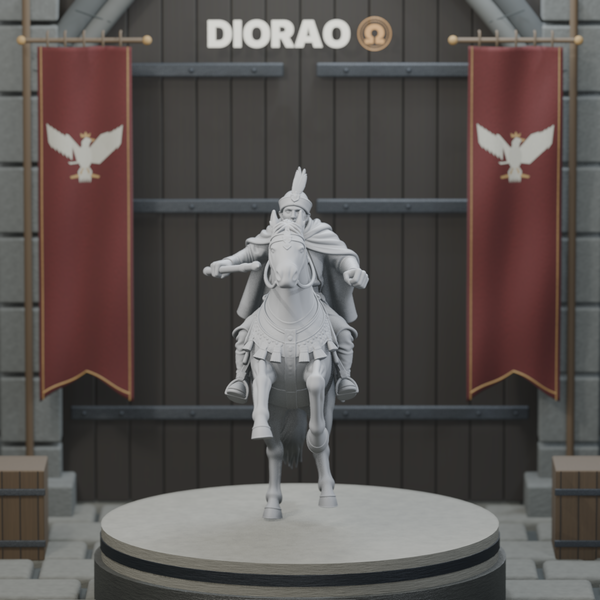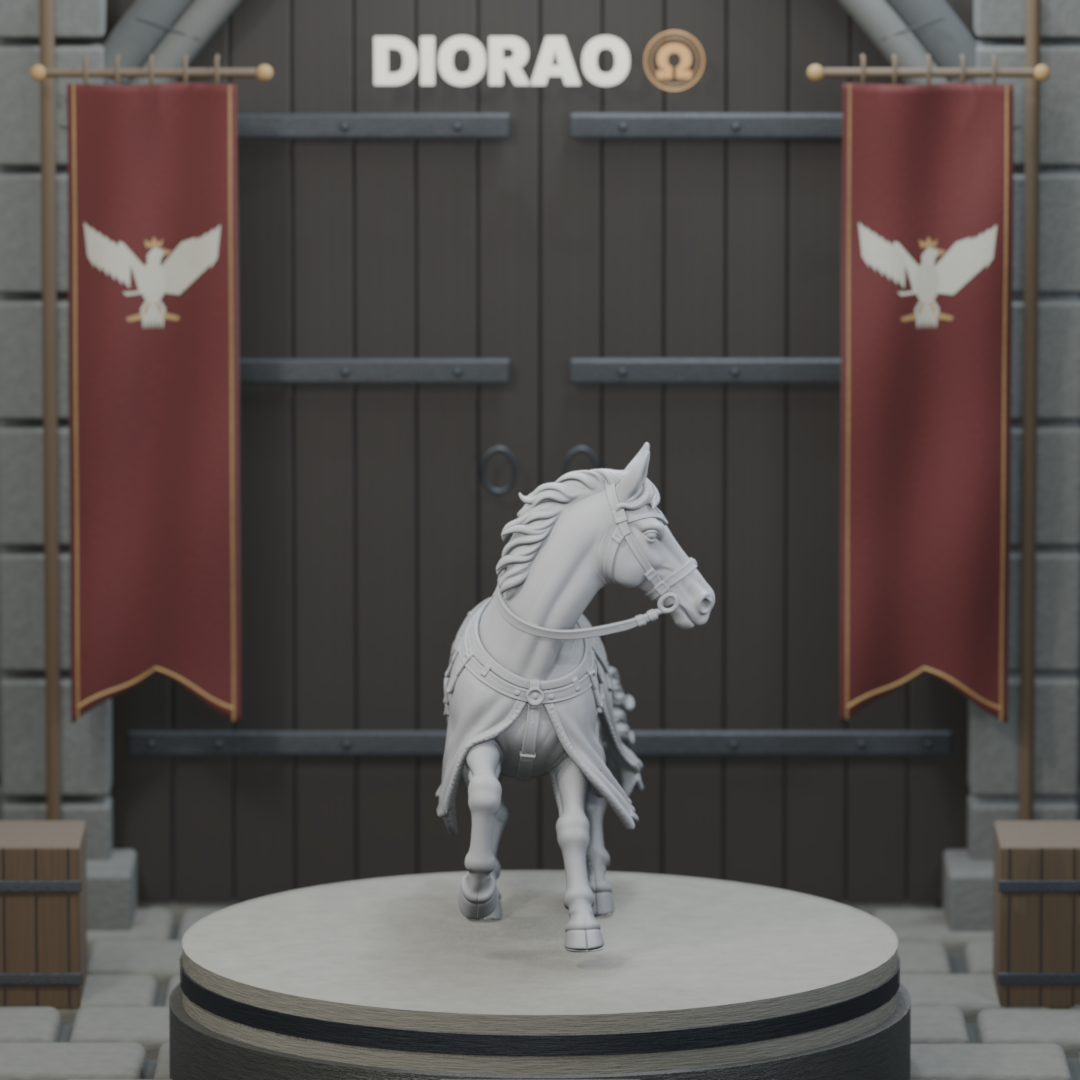
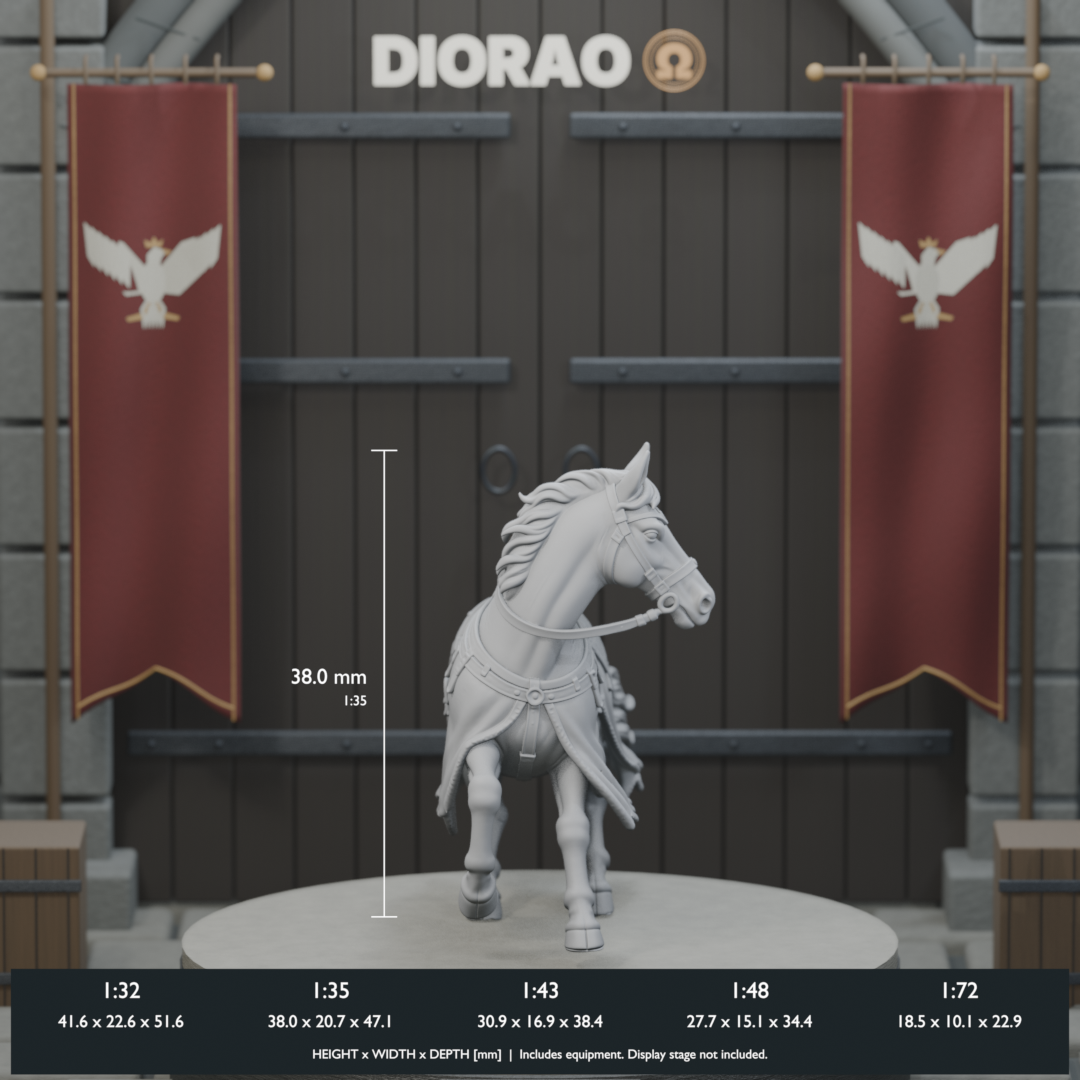
A medieval warhorse in caparison and headstall, riderless, head thrown up, reeling between the lines. The image of a battle in full collapse. Period: Battle of Grunwald, 15 July 1410.
Medieval cavalry battles produced large numbers of loose horses - thrown riders, killed riders, or panicked mounts in the press. Recovering them after the fight was part of the standard post-battle plunder; Grunwald is documented as having yielded thousands of horses to the Polish-Lithuanian side.
Painting tips
- Coat: warm bay, dapple grey, or black - whichever contrasts your knight figures.
- Caparison: heraldic field - red, blue, white, gold - matched to a Crown or Order banner.
- Mane and tail: darker than coat, slight motion drybrush.
- Mud splash on legs, optional red-brown smear on the flank.
Historical sources & further reading
- Medieval warhorse studies
- Grunwald chronicle accounts (post-battle horse-take)
⚠ Small parts. Not suitable for children under 14.