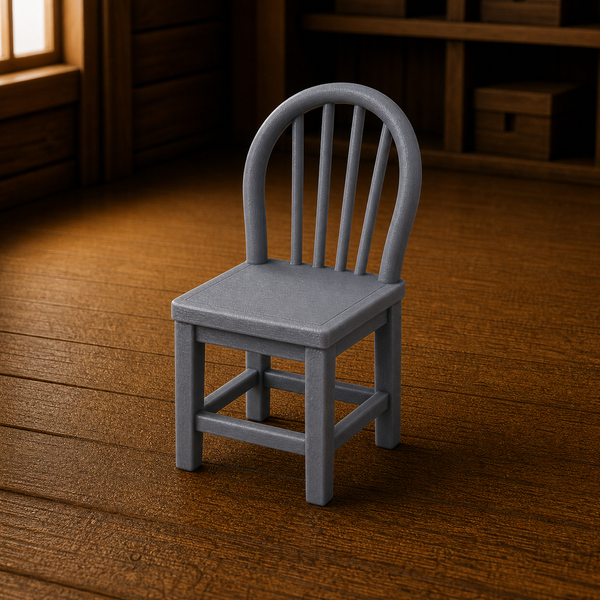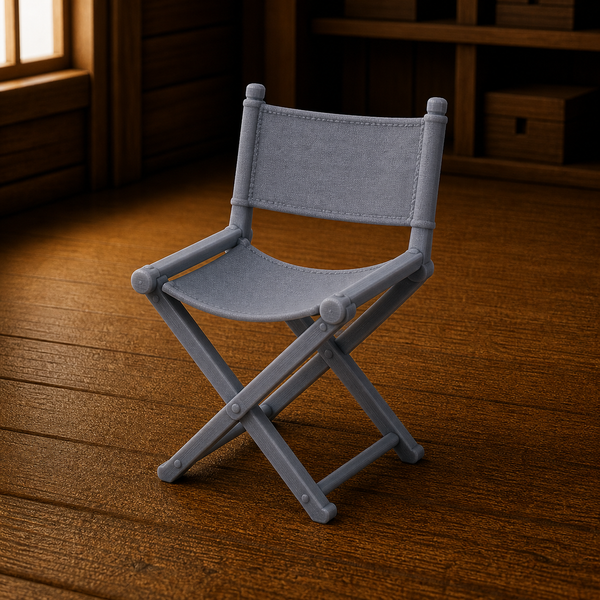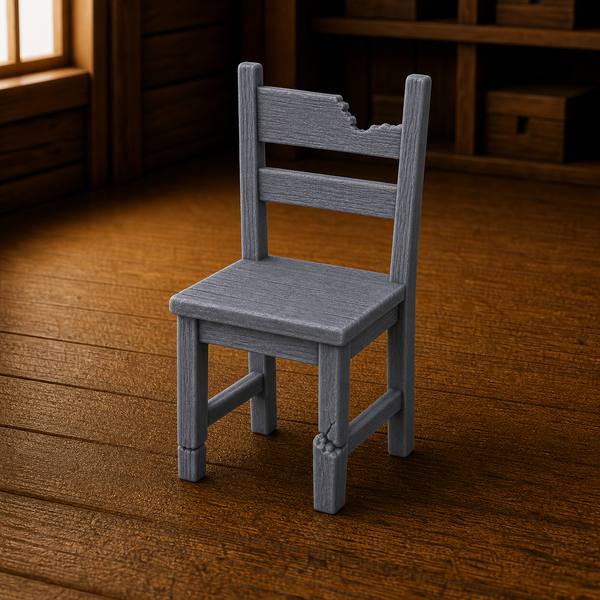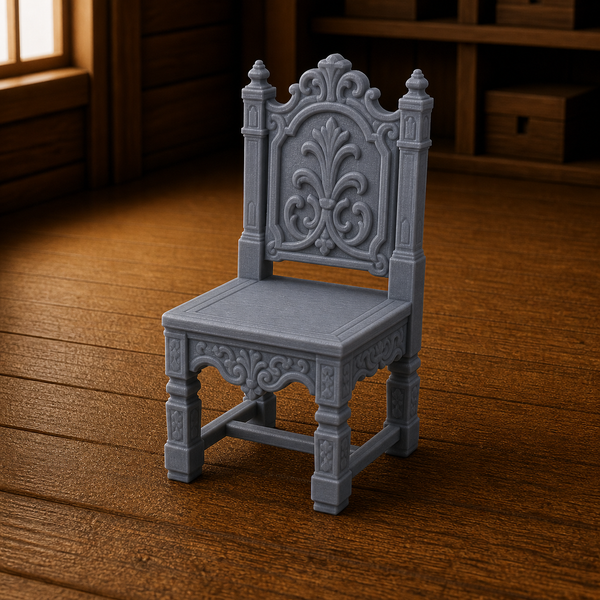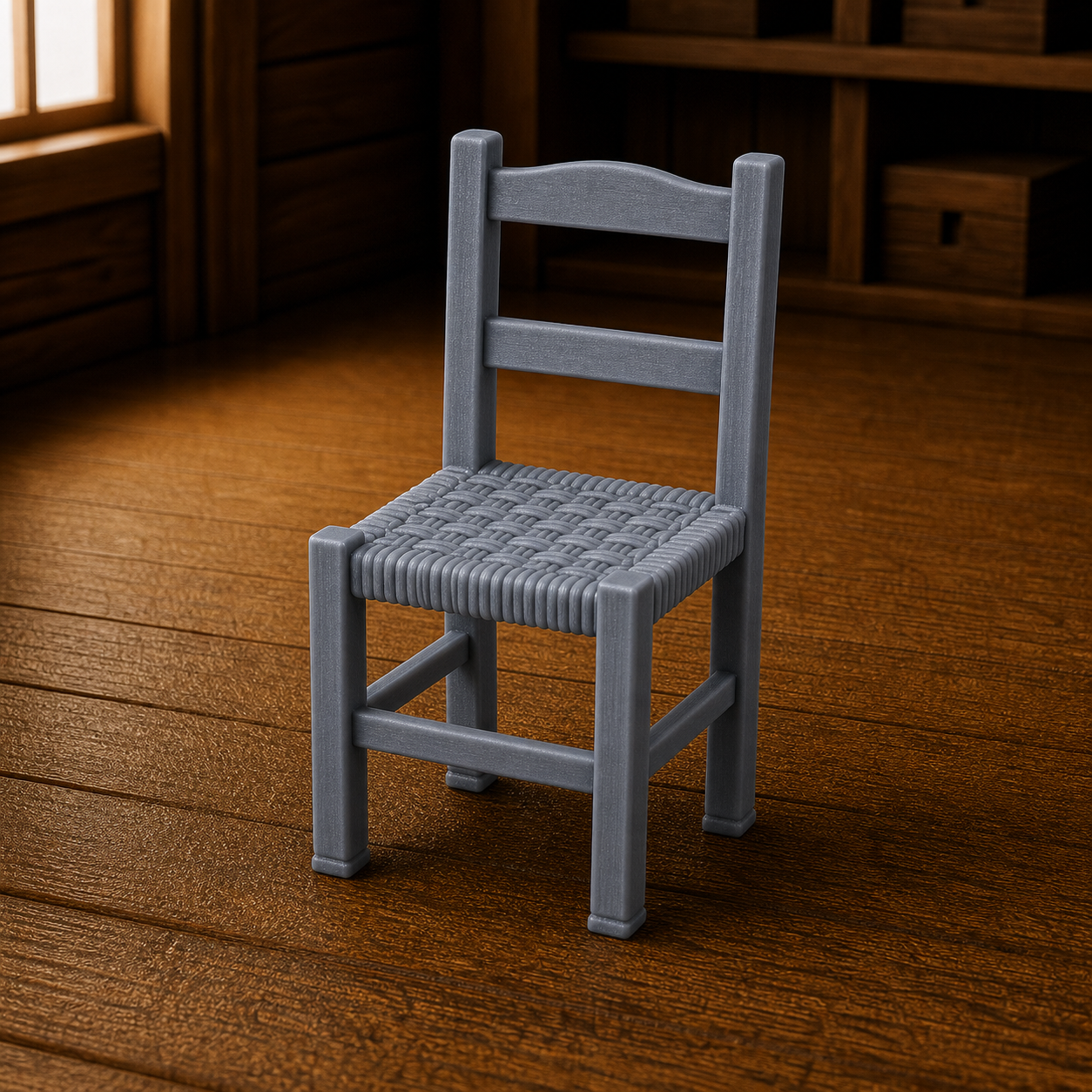
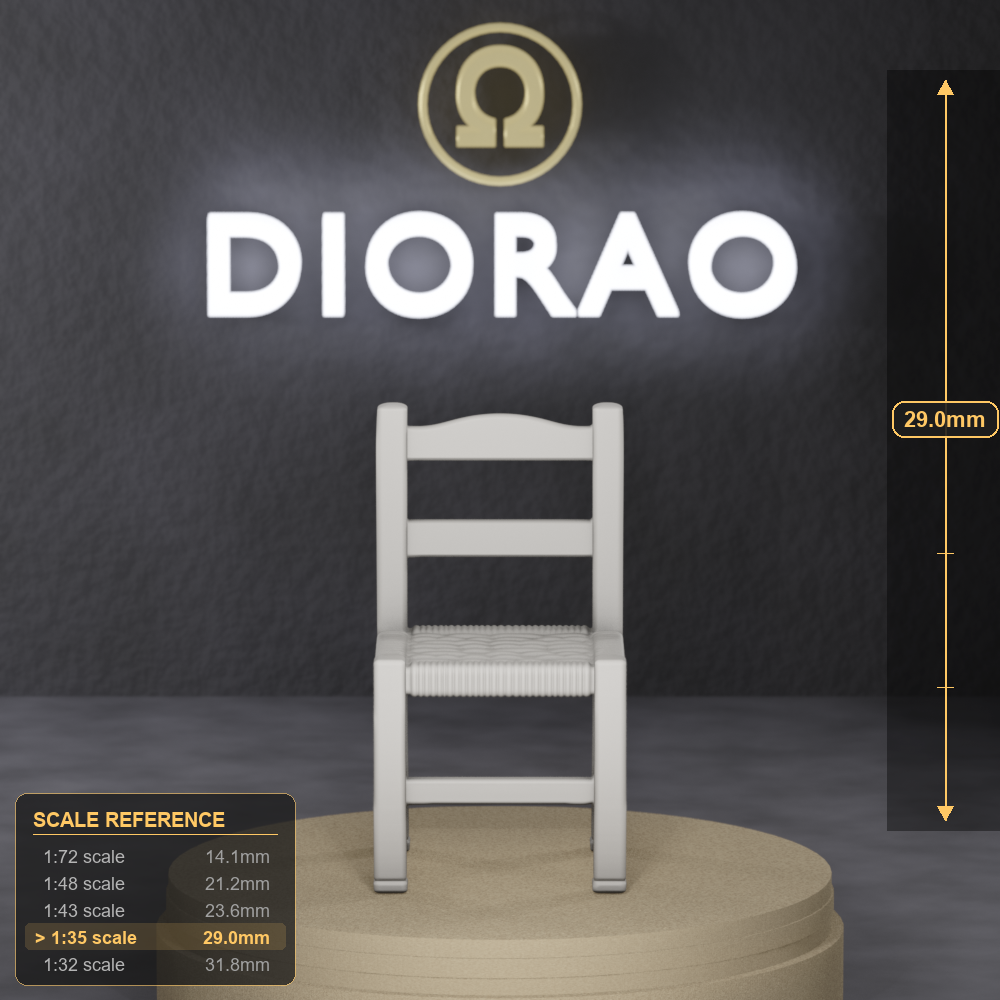
A chair with woven wicker seat panel - wood frame, hexagonal cane weave on the seat, simple back, turned legs. Period: multi-era, c. 1700 CE - 1900 CE.
Wicker- and cane-seated chairs - the European response to colonial imports of palm and bamboo techniques - dominated middle-class drawing rooms and kitchens from the 18th century forward. Light, breathable, easy to replace the seat.
Painting tips
- Wood frame: warm brown with sepia wash.
- Wicker seat: pale tan with sepia wash in the weave.
- Optional painted frame: dark green, black, or ivory enamel (period-correct).
- Dust at the foot contact.
Historical sources & further reading
- European wicker/cane chair references
- 18th-19th c. furniture studies
⚠ Small parts. Not suitable for children under 14.