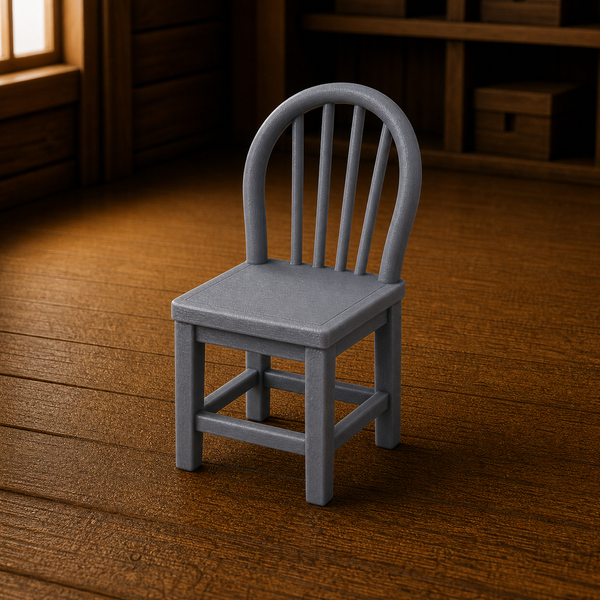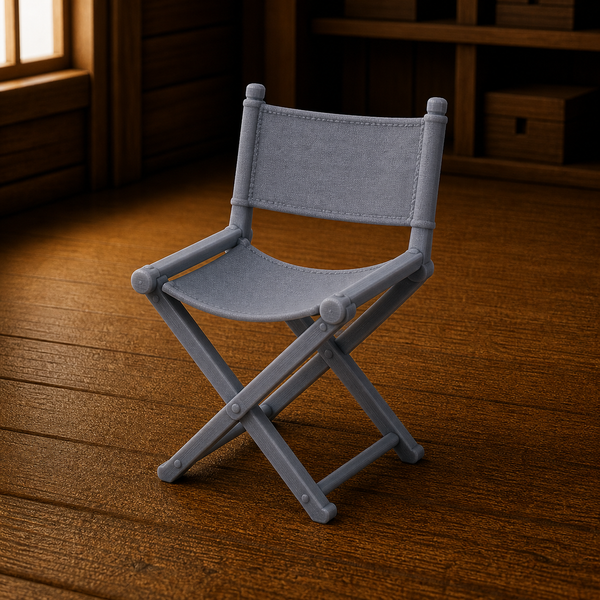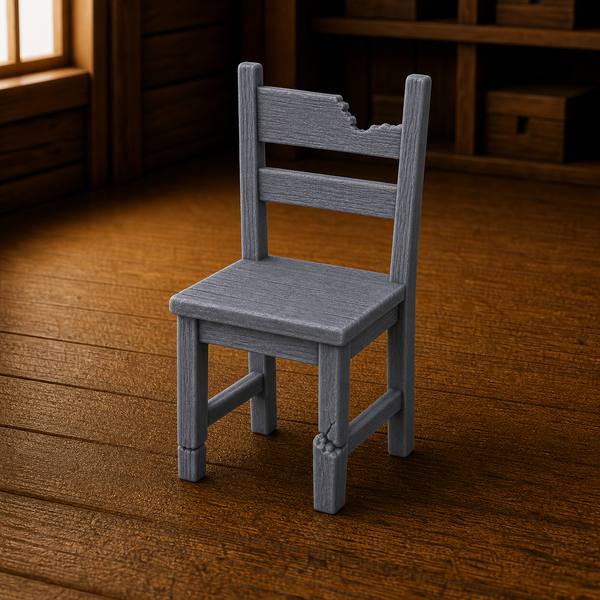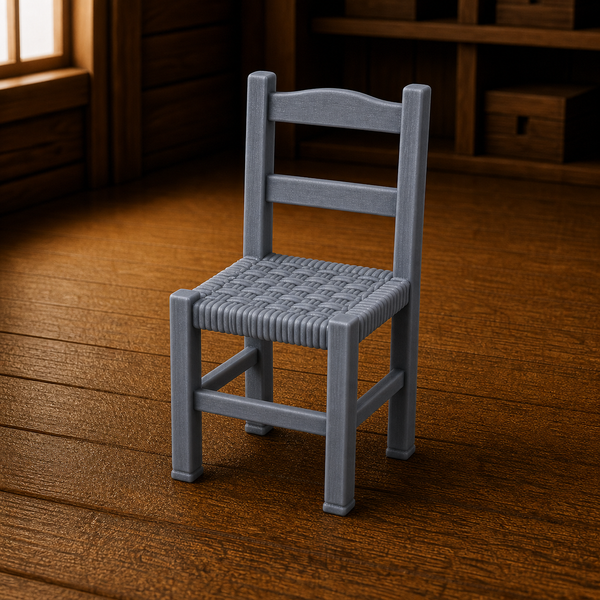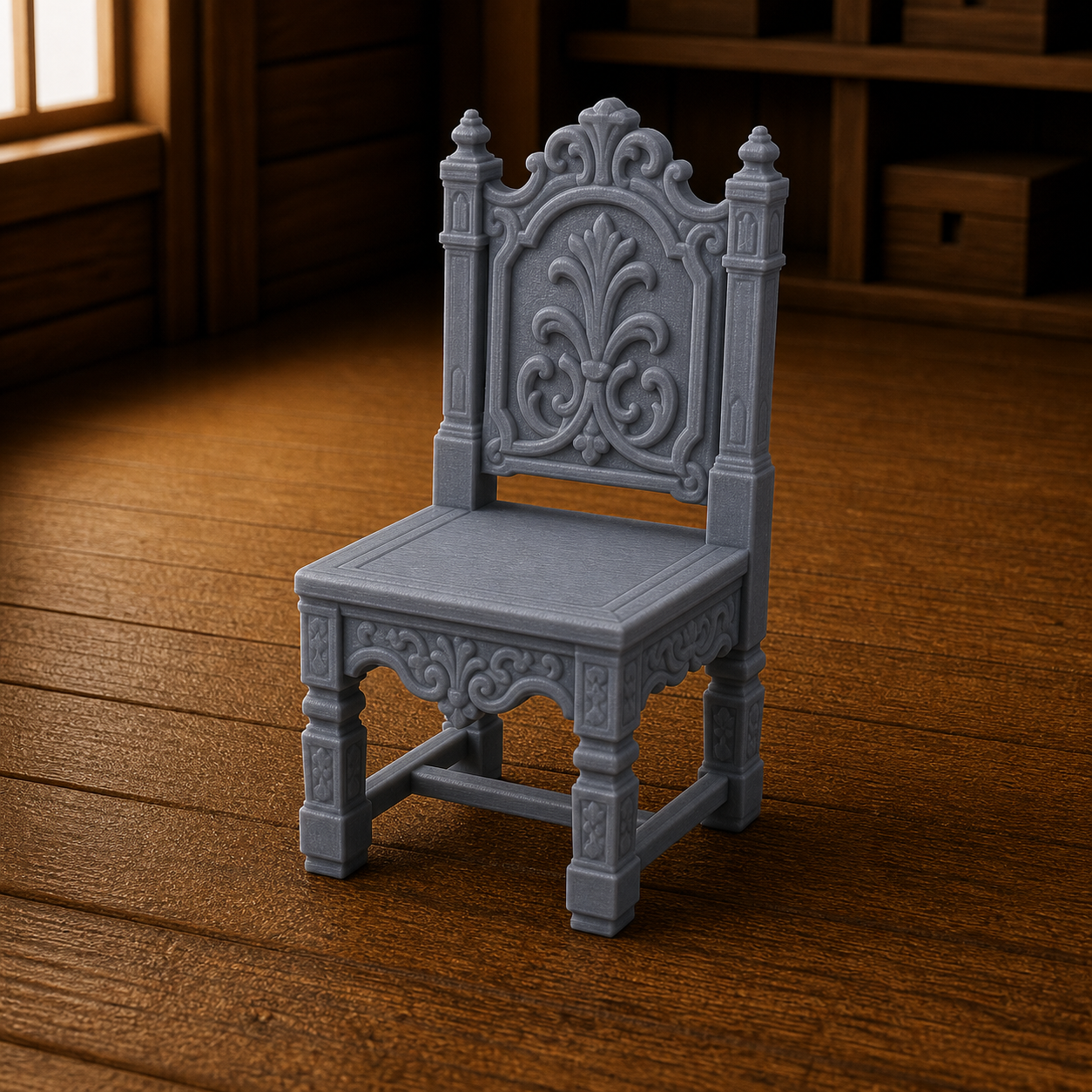
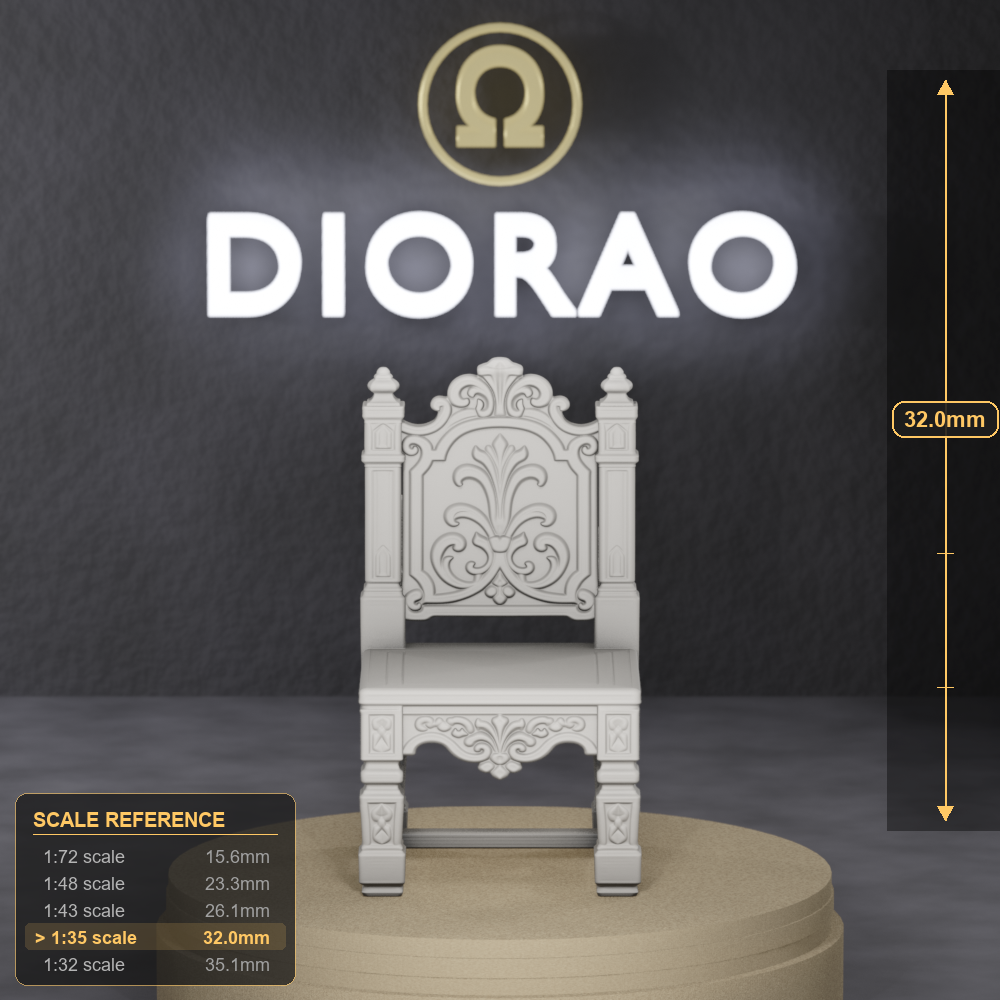
An elaborately carved high-status chair - relief panels on the back, turned and carved legs, plain seat for cushion. The status seat of a noble household, council chamber, or merchant guild. Period: multi-era, c. 1300 CE - 1800 CE.
Carved high-status chairs were furniture as politics - heavy oak, walnut, or rosewood, decorated with heraldic devices, religious imagery, or classical motifs. Lord's hall, merchant's house, guild meeting room, abbot's office.
Painting tips
- Wood: deep walnut or oak with rich sepia wash in carving recesses.
- Lighter drybrush on raised carving for relief contrast.
- Optional gilt highlights on key carving (kings' faces, crests).
- Optional red velvet or blue silk cushion on the seat.
Historical sources & further reading
- European noble furniture references
- Medieval and Renaissance carved furniture studies
⚠ Small parts. Not suitable for children under 14.