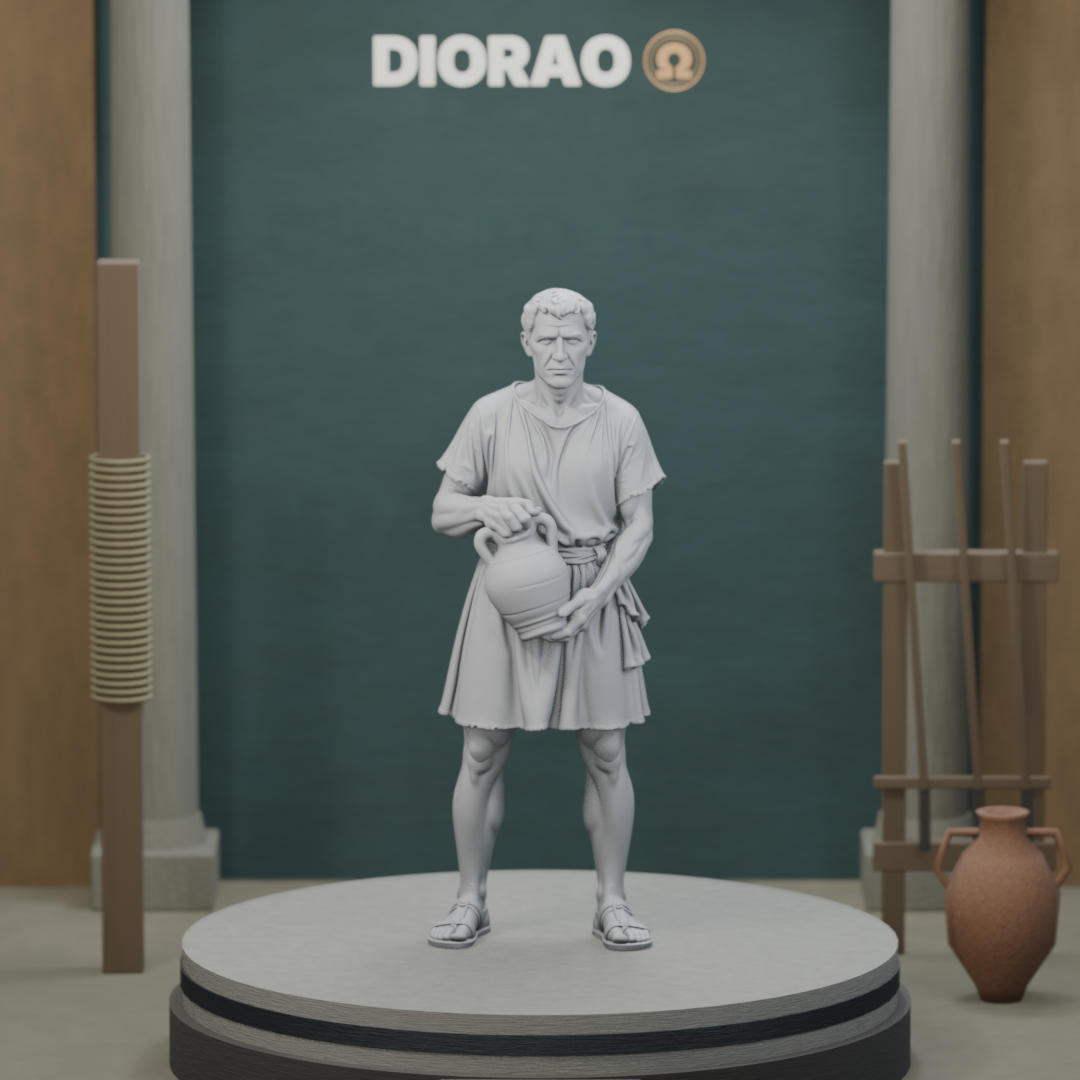
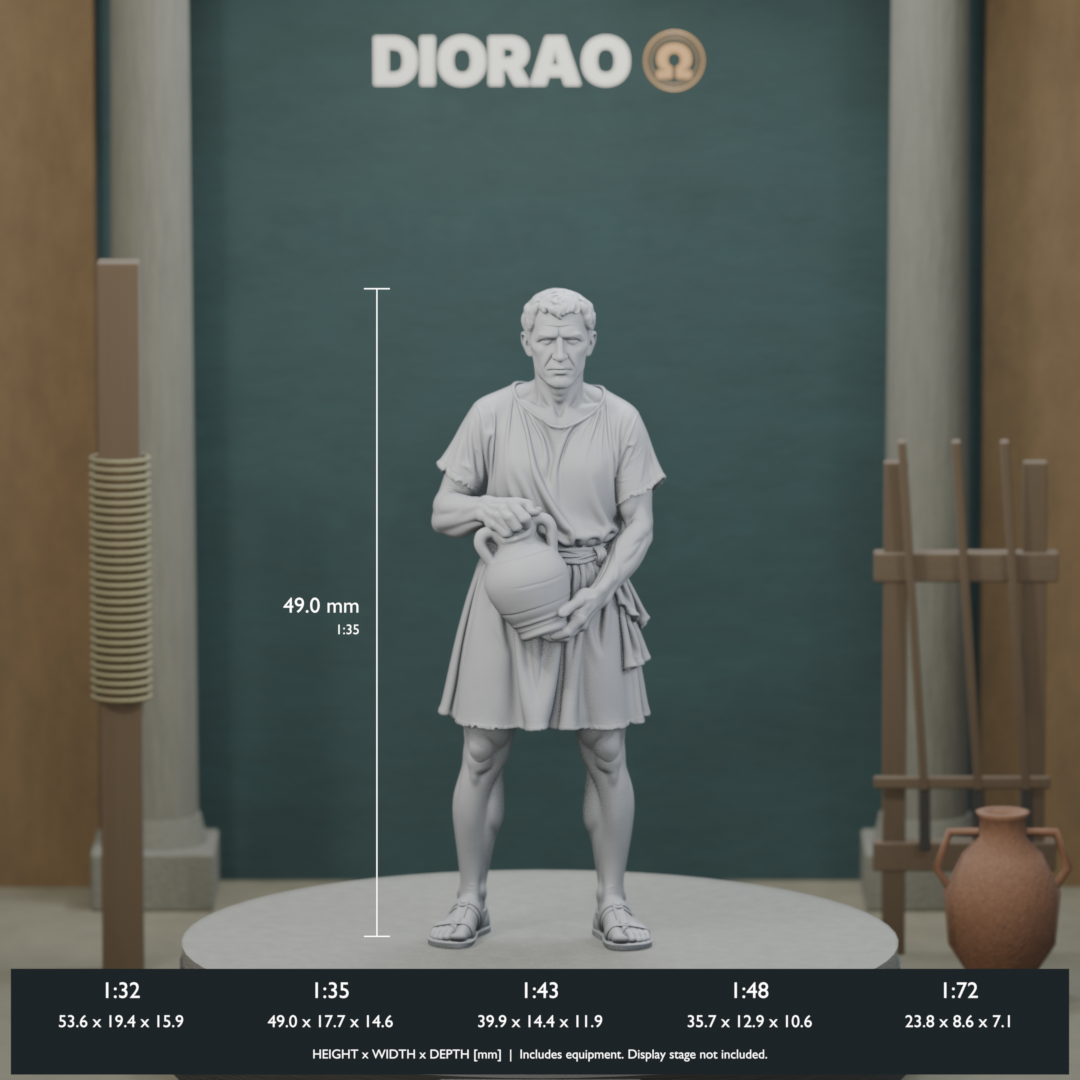
The aquarius was the water-carrier of a Roman household, gladiator school, or military camp - a low-status attendant, almost always a slave or freedman, responsible for hauling water from public fountains, cisterns, or the school's well to wherever it was needed. In a gladiator school the aquarius's job was relentless: trainees and gladiators pushed through long drill sessions in Mediterranean heat, and a single major ludus housing 100-300 men burned through enormous quantities of water every day for drinking, washing wounds, soaking leather, and rinsing the sand of the training yard.
This figure depicts a typical aquarius mid-task: a knee-length sleeveless tunic belted at the waist, no sandals (water-bearers often went barefoot for grip on wet floor), and a fired-clay water jug (urna or small amphora) carried at hip level. Roman water vessels of this size held 5-10 liters when full; a busy aquarius might haul dozens of trips a day between cistern and courtyard. The job was unglamorous and essential - the same role appears in countless household and military contexts across the Empire. Period: Roman antiquity, 1st c. BCE - 3rd c. CE.
Painting tips
- Tunic: off-white linen, sepia wash, water-darkened patches along front and lower hem.
- Skin: warm Mediterranean tones - slightly darker than free-Roman figures to suggest outdoor labor.
- Clay jug: terracotta base (warm orange-red), brown wash, dry-brush a pale tan highlight on the rim and handles.
- Leather belt: dark brown, edge highlight in tan.
- Optional water effect: thin gloss medium streaks down the jug for fresh-fill realism.
Historical sources & further reading
- Mau, August. Pompeii: Its Life and Art (1899) - household water systems
- Junkelmann, Marcus. Familia Gladiatoria (1996)
- Hodge, A. Trevor. Roman Aqueducts and Water Supply (1992)
⚠ Small parts. Not suitable for children under 14.