
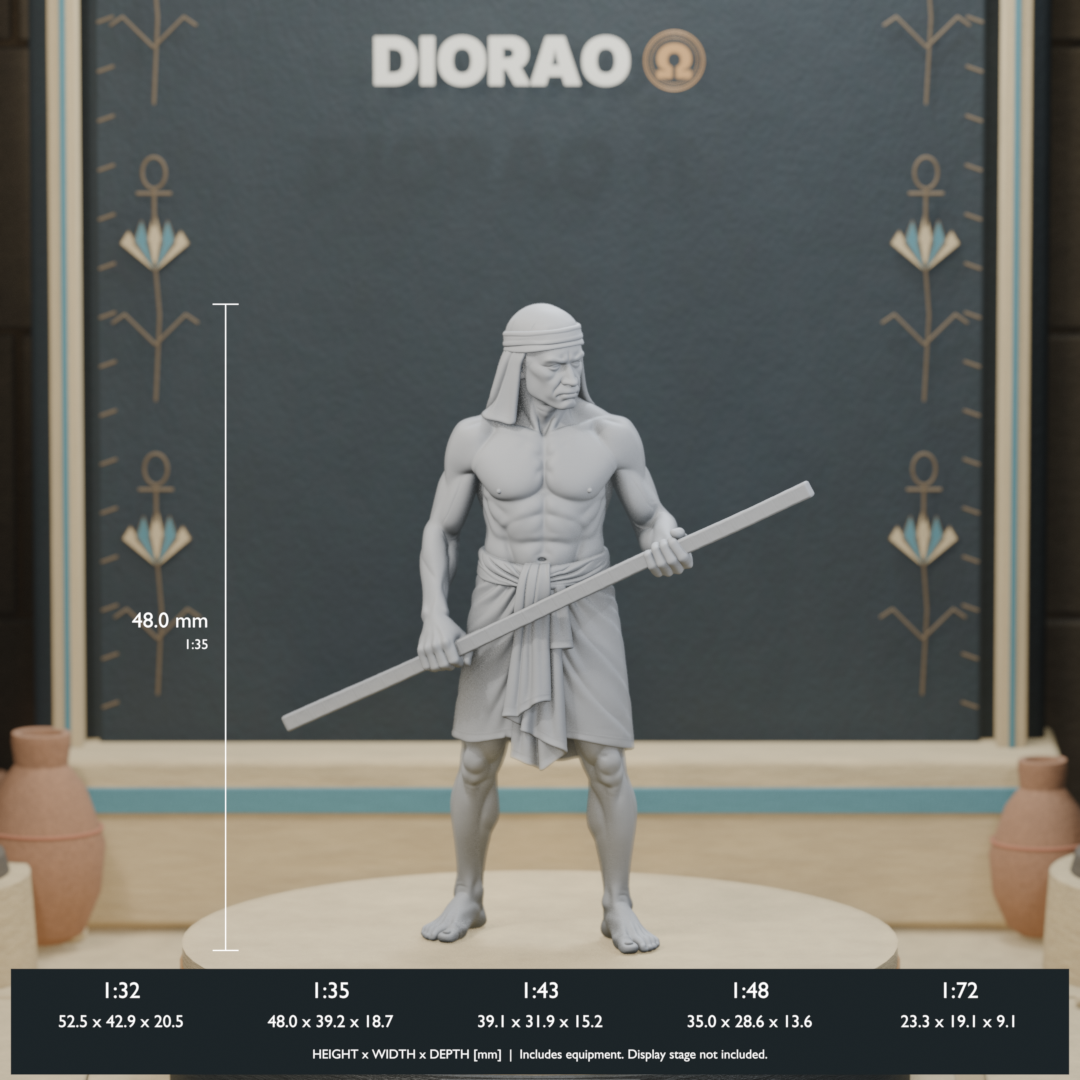
A pyramid-site overseer (imy-r) — longer kilt, staff or measuring rod planted, head turned to the work-line, the calm authority of a man who runs a thousand labourers a day. Period: Old Kingdom Egypt, c. 2686-2181 BCE.
Pyramid construction was managed by a layered hierarchy of overseers, each ranked below the royal vizier (tjati). The on-site overseer carried a measuring rod (khet) — usually one royal cubit long with finger and palm divisions — and used it to check block dimensions, ramp grade, and team-row spacing. He wore a longer ankle-length kilt to mark his rank, sometimes a short shoulder-cape, and held the rod vertical when watching the work and horizontal when measuring. This figure stands at the work-line edge with rod planted, head turned slightly — the lived posture of supervision.
Painting tips
- Skin: warm bronze-brown.
- Kilt: white linen, slightly cleaner than a labourer (this man does not haul).
- Rod: warm hardwood with darker measure marks.
- Optional: a small kohl line at the eyes for an aristocratic touch.
Historical sources & further reading
- Old Kingdom administrative titles (imy-r, tjati)
- Royal cubit-rod finds (Maya cubit, Turin Museum)
⚠ Small parts. Not suitable for children under 14.