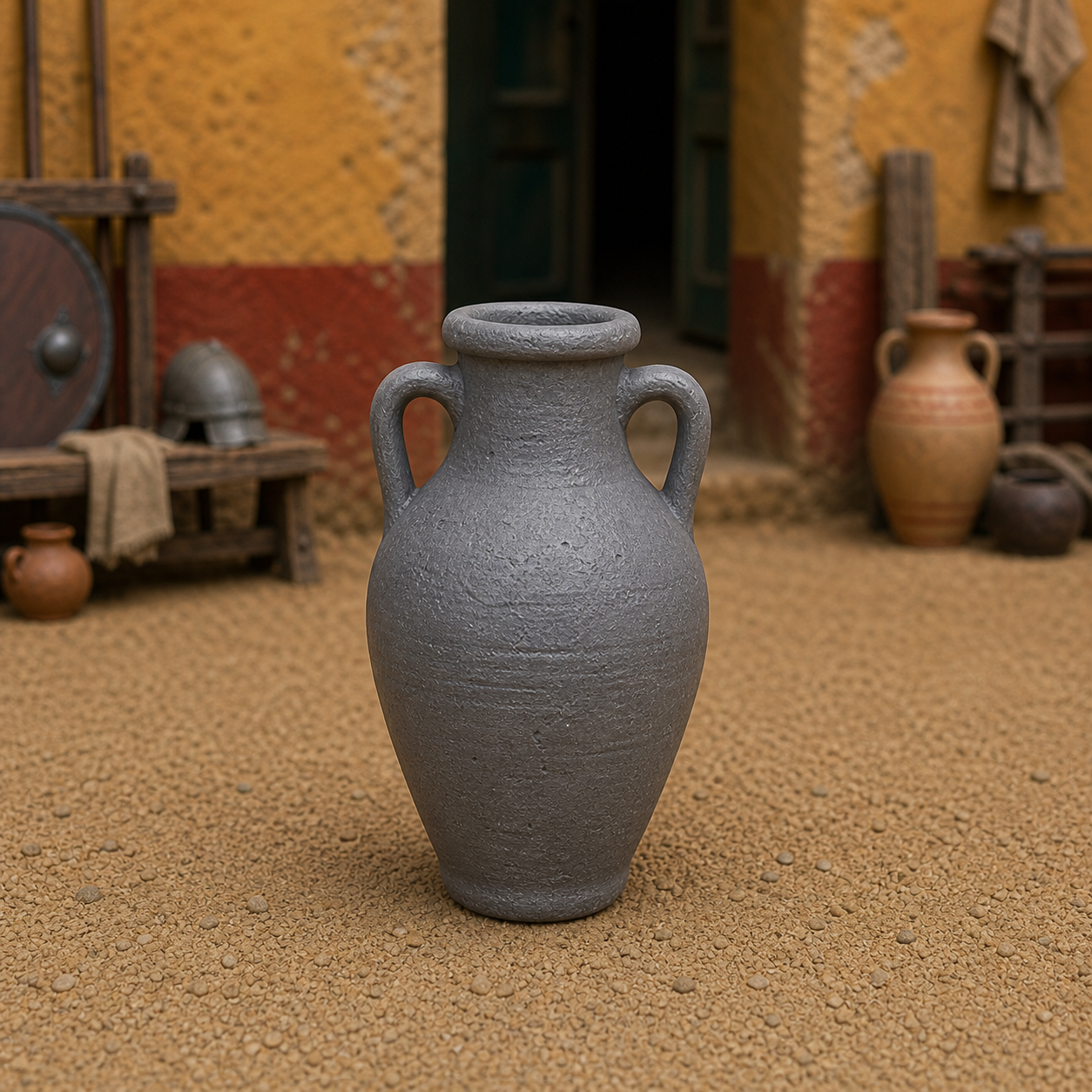
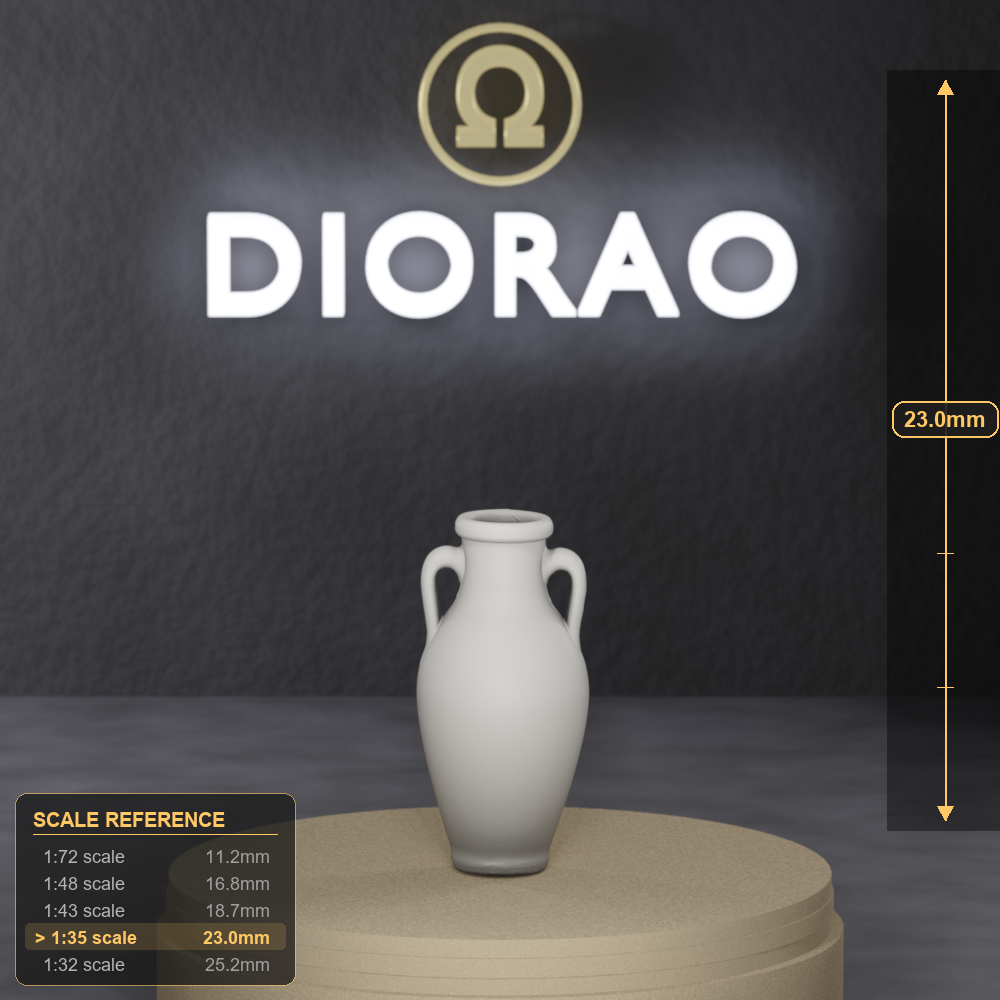
A Roman amphora - the universal two-handled clay vessel used across the Mediterranean for water, wine, oil, fish sauce (garum), and grain. Standard everyday-water amphorae stood roughly 60-80 cm tall and held 20-30 liters when full. Period: Roman antiquity, 1st c. BCE - 3rd c. CE.
Recovered amphorae from Pompeii, Ostia, and the Mediterranean shipwreck record show remarkable consistency - Roman pottery production was industrial-scale, with thousands of identical vessels per kiln. This prop depicts a typical pointed-base water amphora, ready to lean in a corner or be carried.
Painting tips
- Body: terracotta orange-red base, brown wash, pale tan dry-brush on raised areas.
- Optional darker streaks for water staining around the lip.
- Handles: slightly darker than the body to add depth.
Historical sources & further reading
- Peacock & Williams. Amphorae and the Roman Economy (1986)
- Pompeii excavations: household and storage finds
⚠ Small parts. Not suitable for children under 14.