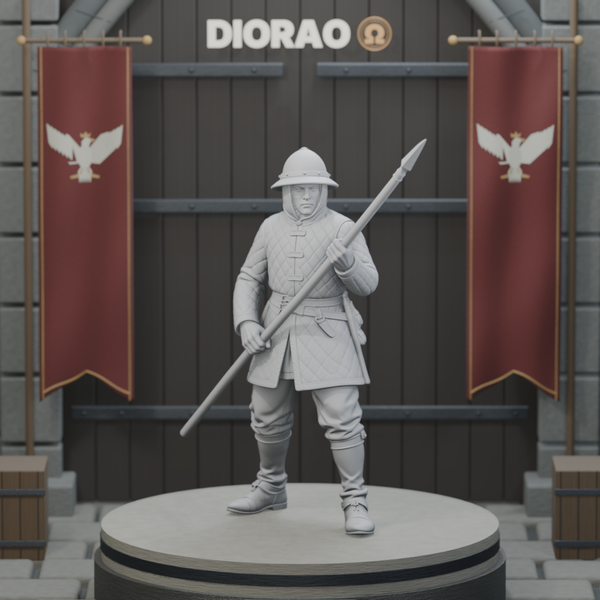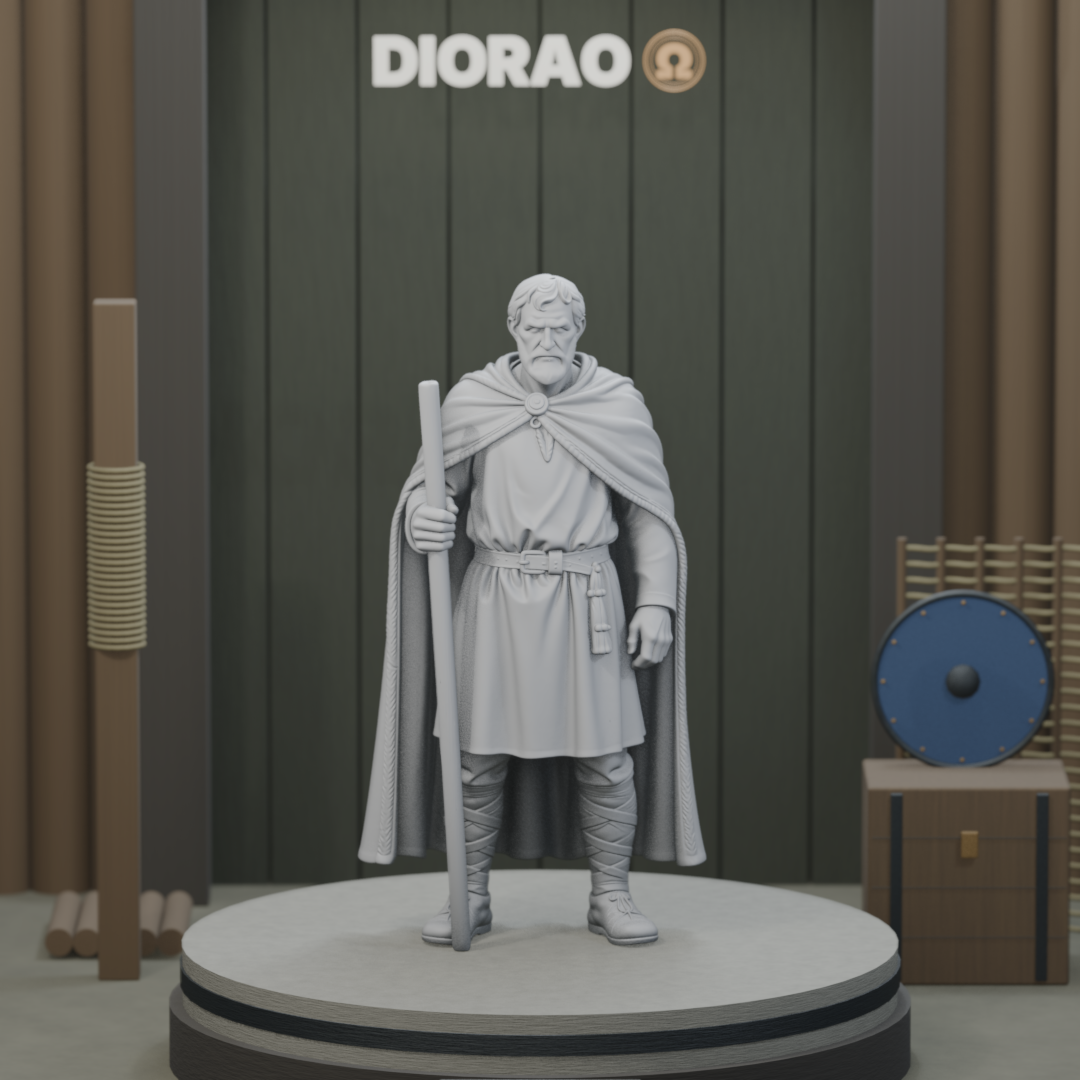
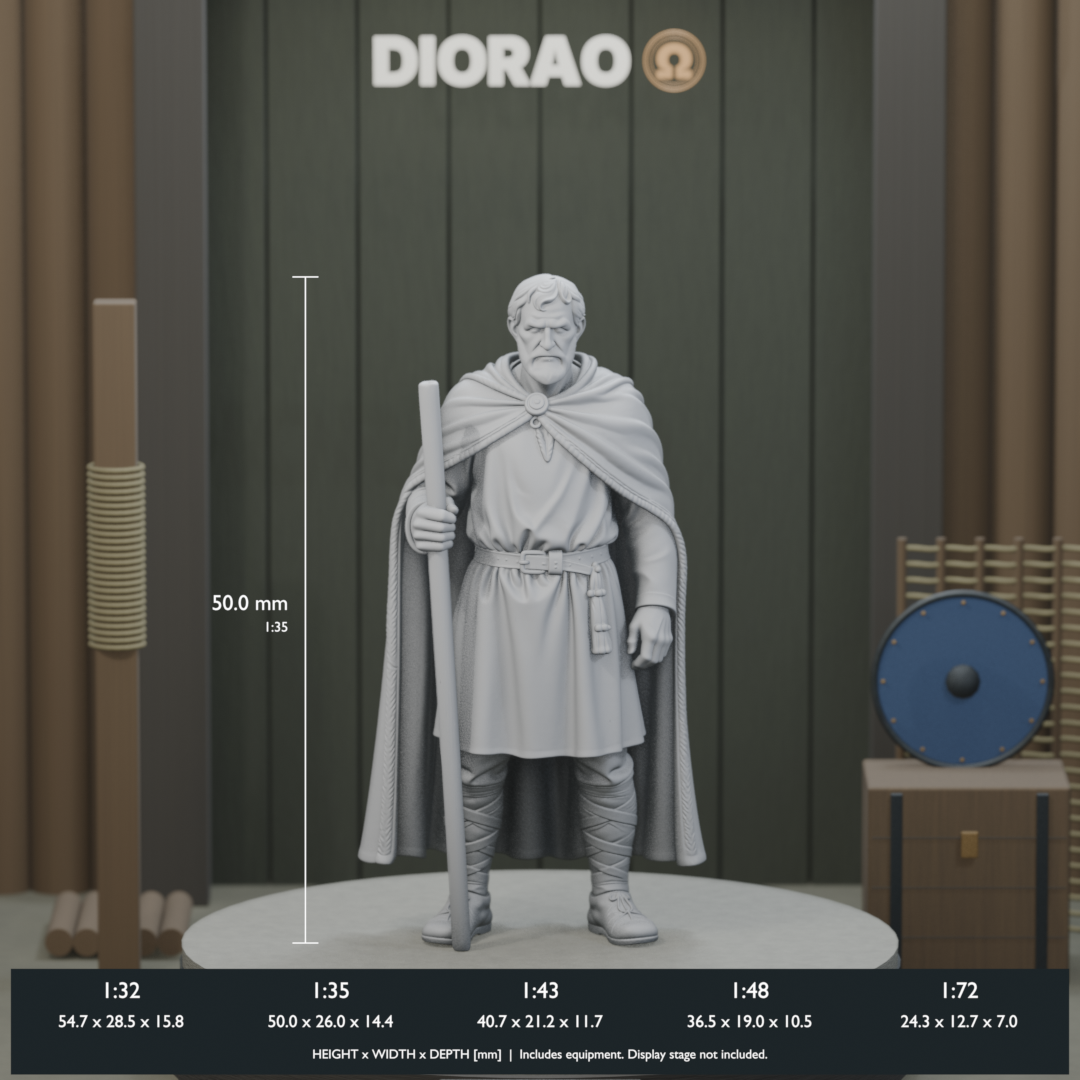
An Anglo-Saxon training yard instructor — wrapped mantle, belted tunic, leg-wraps, the calm authority of a man who has run the drill yard for a decade. Period: Early Middle Ages, c. 600-900 CE.
Anglo-Saxon kingdoms — Mercia, Wessex, Northumbria — kept household troops (gesith) drilled in the lord's burh. Instruction came from veterans: men who had stood in the shieldwall and lived through it. Beowulf, the Bayeux-era illuminations and the Maldon poem all describe the same picture: a calm, weathered figure showing recruits how to plant the foot, how to hold the line. This figure wears the everyday kit — knee-length tunic, woolen mantle wrapped over one shoulder, belt with a small pouch, leg-wraps to the knee. No display weapon; the rod or staff is the badge of office.
Painting tips
- Tunic: undyed wool grey-brown, sepia wash.
- Mantle: heavier ochre with a darker drape wash.
- Leg-wraps: lighter linen with a chequered weave-tone if you want detail.
- Belt: dark leather with a small bronze buckle highlight.
Historical sources & further reading
- Beowulf (gesith and burh references)
- Battle of Maldon (drill culture)
- Sutton Hoo and Staffordshire Hoard (kit detail)
⚠ Small parts. Not suitable for children under 14.