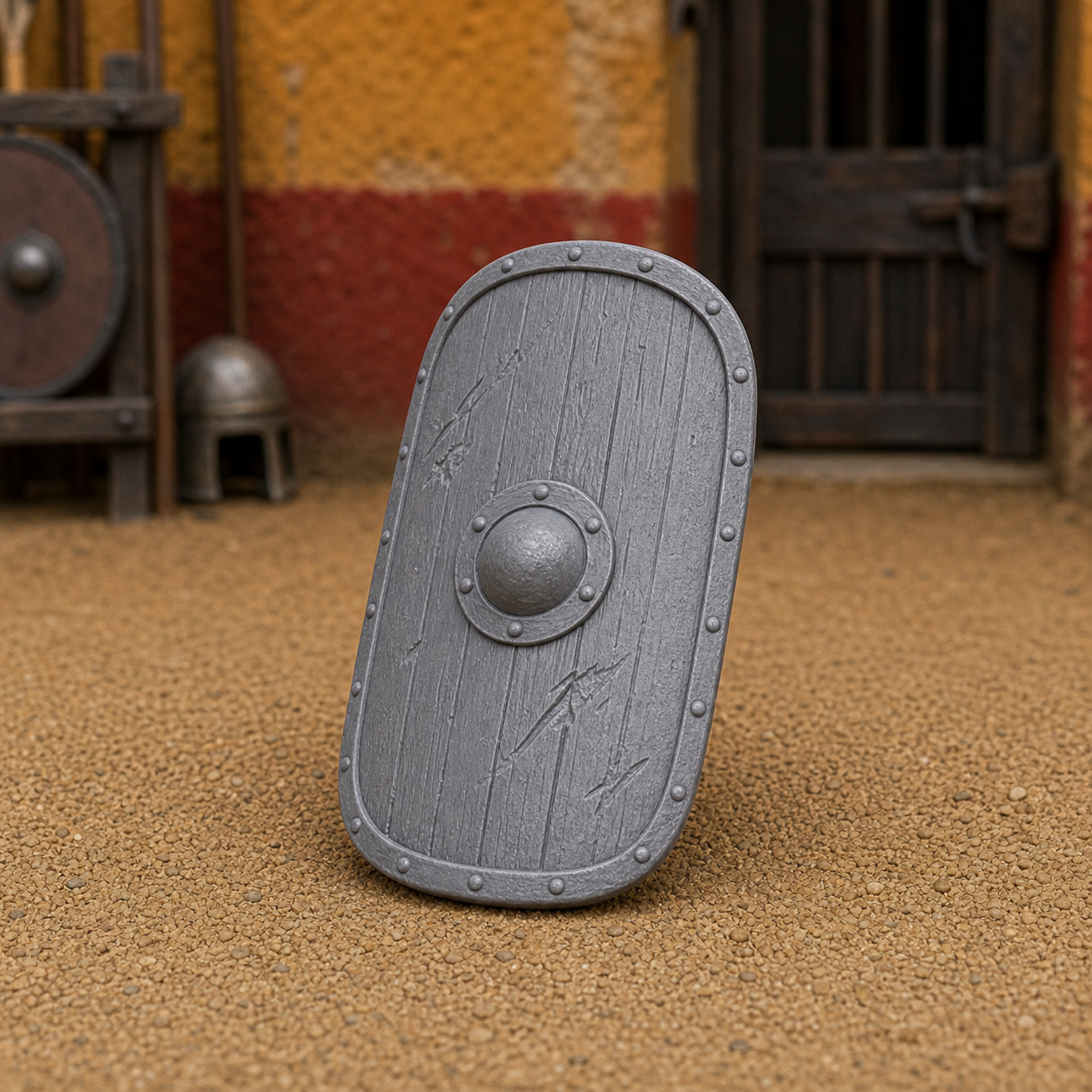

Roman gladiator and legionary recruits drilled with oversized, deliberately weighted training shields - typically a wicker-and-wood scutum built heavier and slightly larger than a real combat shield. Just like the wooden practice sword (gladius ligneus), the weighted training scutum overloaded the recruit's arm during drill, building the shield-side endurance needed for hours of arena or battlefield combat. Vegetius records the practice in De Re Militari Book I.
This prop depicts a chipped, well-used training shield - curved scutum profile, central iron boss (umbo), wood-and-leather body, and surface scuffing along the face from drill strikes. The piece can lean against a rack, sit on a bench, or rest on the courtyard sand as a detail in any working martial scene. Period: Roman antiquity, 1st c. BCE - 4th c. CE.
Painting tips
- Body: dark wood-brown base, sepia wash, dry-brush a paler tan along chipped edges.
- Iron umbo: cool iron-grey base, brown wash for rust pits, polished steel highlight on raised faces.
- Optional historical paint: bold red or white geometric design across the face - historically Roman shields had unit-recognizable patterns.
- Leather rim: rich brown with tan edge highlight.
Historical sources & further reading
- Vegetius, De Re Militari, Book I
- Bishop & Coulston. Roman Military Equipment (2nd ed., 2006)
- Junkelmann, Marcus. Familia Gladiatoria (1996)
⚠ Small parts. Not suitable for children under 14.