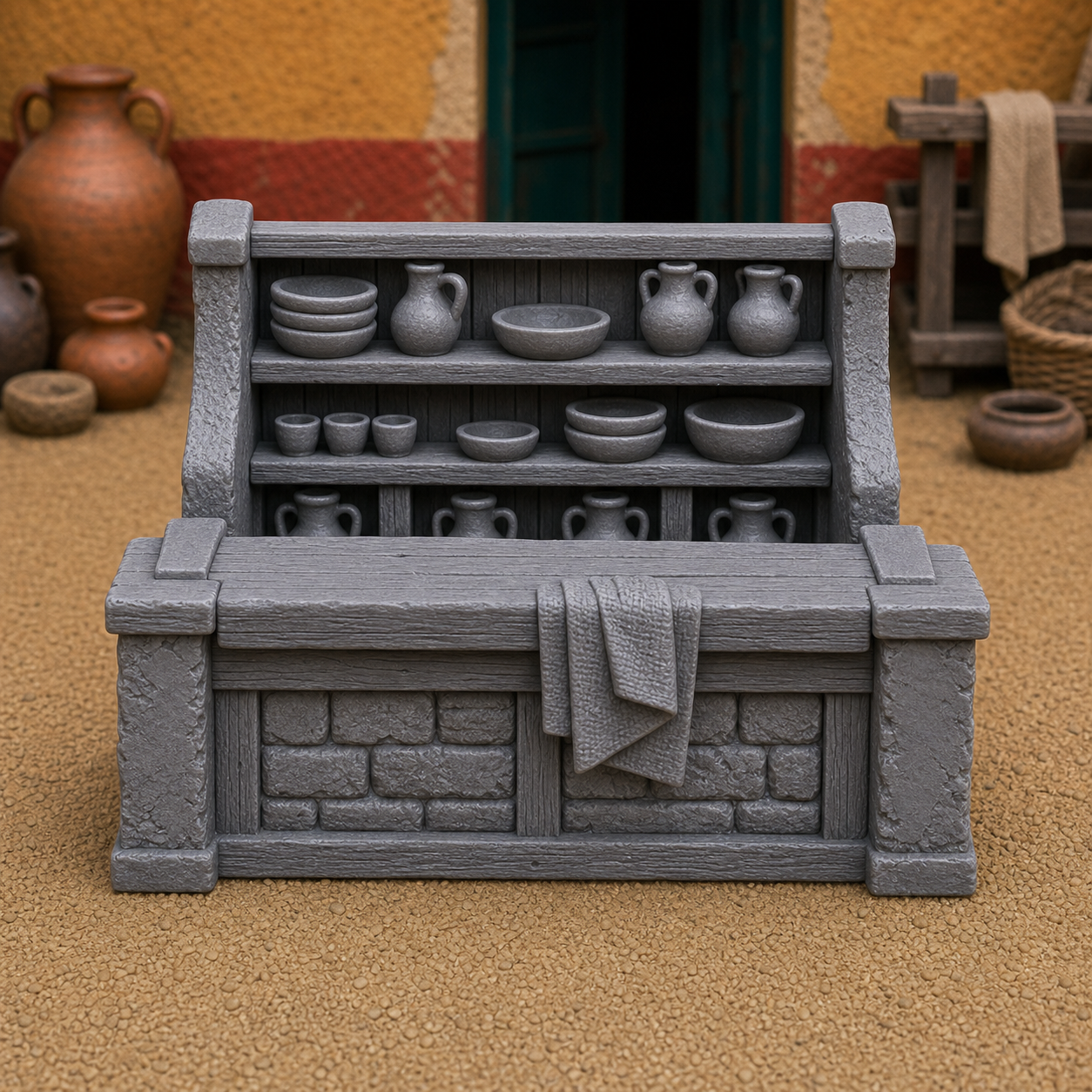
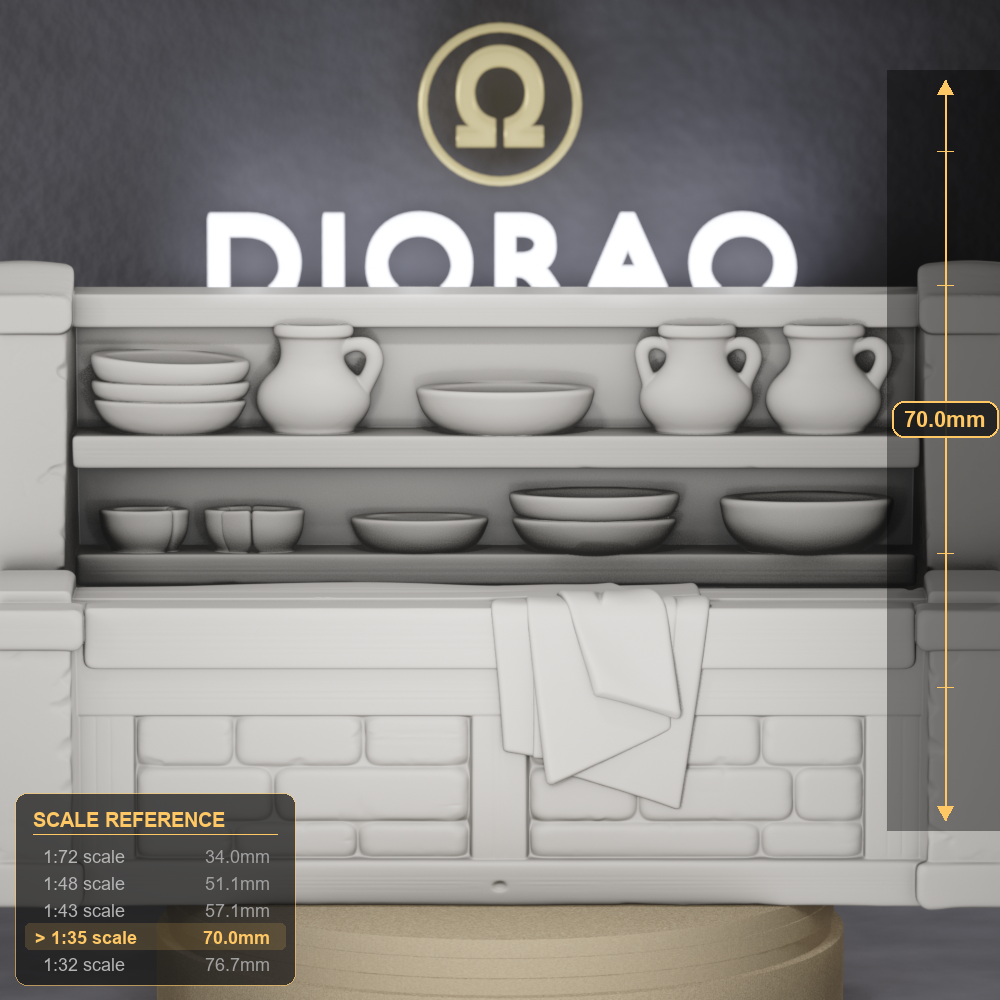
The taberna - Roman shop or tavern - opened directly onto the street through a wide front, with a stone counter built into the doorway. Embedded in the counter top sat large ceramic jars (dolia) holding wine, oil, hot food, or grain - customers stood on the sidewalk and were served from the counter. Period: Roman antiquity, 1st c. BCE - 3rd c. CE.
This counter front depicts a typical thermopolium-style taberna: an L-shaped masonry counter with three embedded dolia, a small recessed shelf, and the worn marks of daily use. Pompeii preserves over 150 tabernae in this exact configuration - the Thermopolium of Asellina and the Thermopolium of Vetutius Placidus are the best-preserved examples.
Painting tips
- Counter masonry: pale stone-grey base, brown wash, lighter dry-brush along the top.
- Dolia rims: warm terracotta with darker wash inside.
- Optional decorative paint or graffiti on the counter front (red ochre line is period-correct).
- Wear marks at the front edge: darker wash and small chips.
Historical sources & further reading
- Pompeii excavations: Thermopolium of Asellina (Regio IX)
- Ellis, Steven J. R. The Roman Retail Revolution (2018)
⚠ Small parts. Not suitable for children under 14.