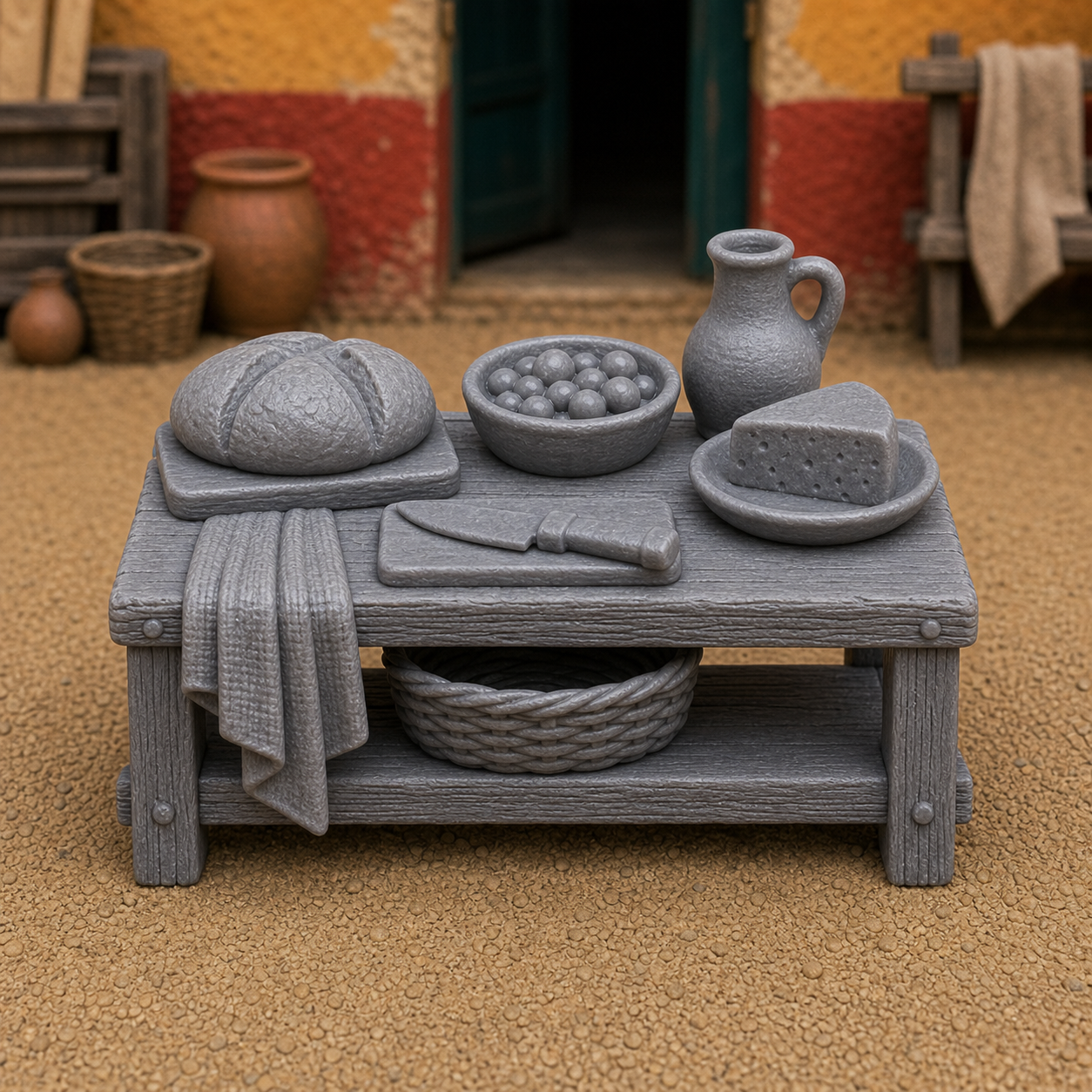
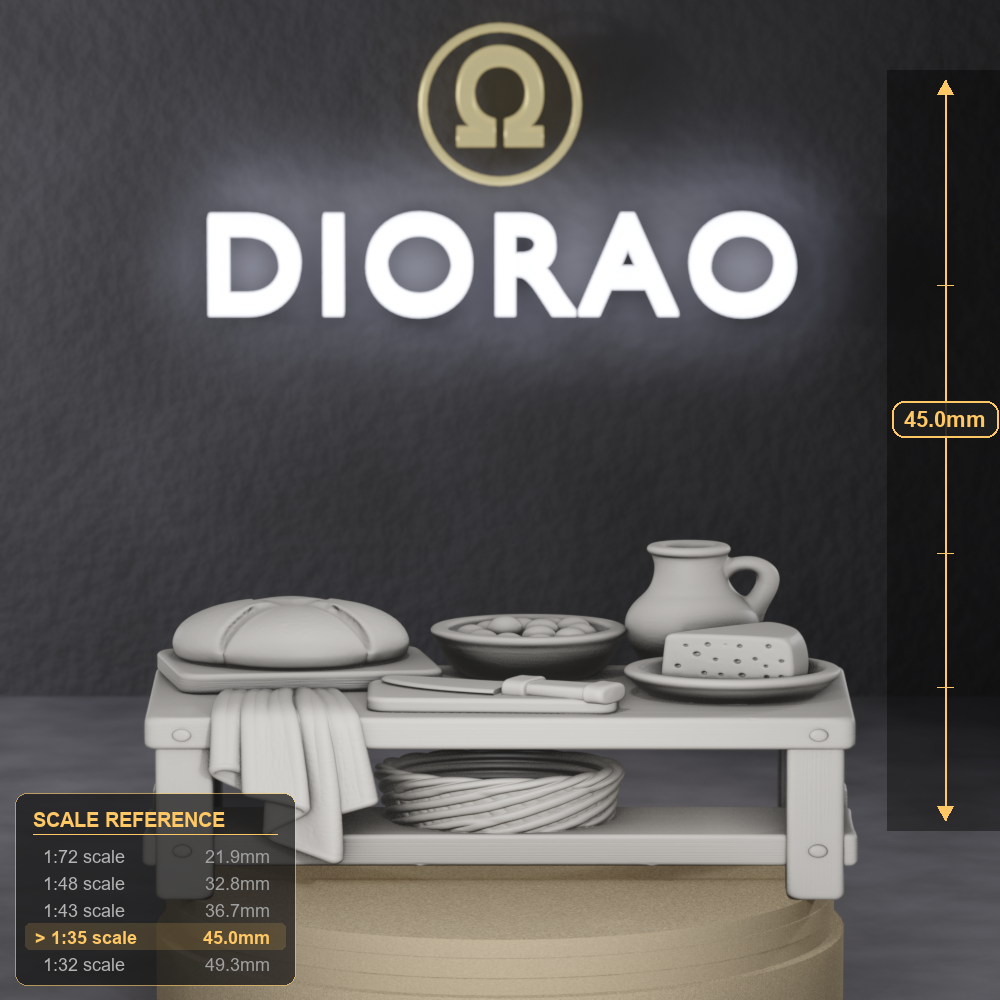
Most urban Romans ate street food - apartment kitchens were rare, and the thermopolium (hot-food shop) on every corner served the daily ration of stew, lentils, sausages, and watered wine. Prep tables like this one stood at the back of every shop, where slaves and freedmen chopped, ground, and assembled portions for the lunch crowd. Period: Roman antiquity, 1st c. BCE - 3rd c. CE.
This table depicts a typical thermopolium prep surface: a sturdy wooden top scattered with chopping board, herb bundles, ceramic mixing bowls, a small mortar and pestle, and a handful of cured sausages hanging from a frame above. Pompeii alone had over 80 thermopolia excavated; the Thermopolium of Vetutius Placidus preserves the layout intact.
Painting tips
- Wooden table: medium oak with brown wash, knife-marks dark-washed for wear.
- Herb bundles: dry sage-green base, sepia wash.
- Sausages: rich brown leather base, lighter highlights for fat marbling.
- Bowls: warm terracotta, dark wash.
Historical sources & further reading
- Pompeii excavations: Thermopolium of Vetutius Placidus, Regio I
- Ellis, Steven J. R. The Roman Retail Revolution (2018)
⚠ Small parts. Not suitable for children under 14.