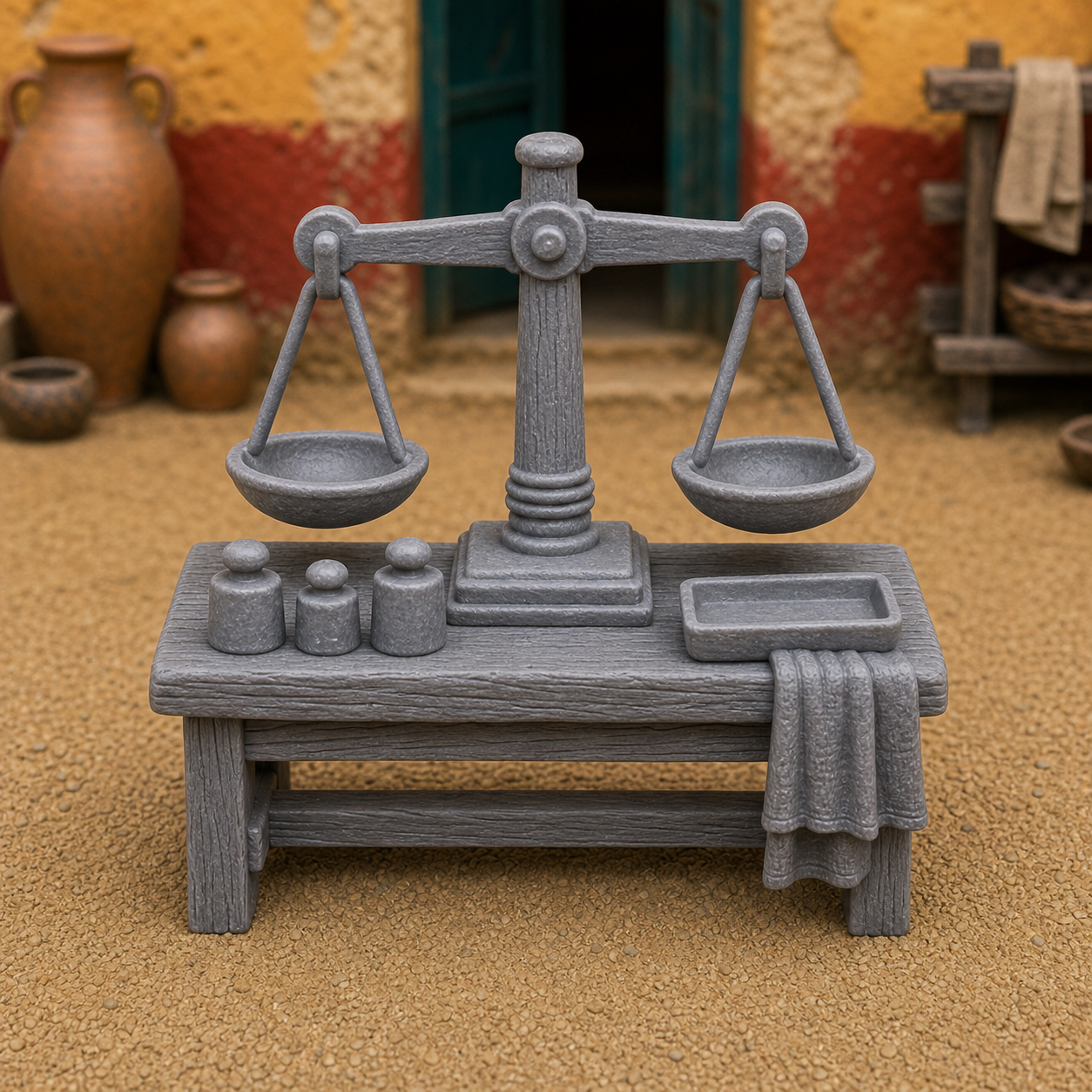
Every Roman vendor needed a balance. The libra (two-pan equal-arm scale) was the universal standard for weighing produce, spices, metals, and small valuables. State-issued bronze weights, marked with the official mark of the city aedile, kept the trade honest - fraud meant a fine and a public flogging. Period: Roman antiquity, 1st c. BCE - 3rd c. CE.
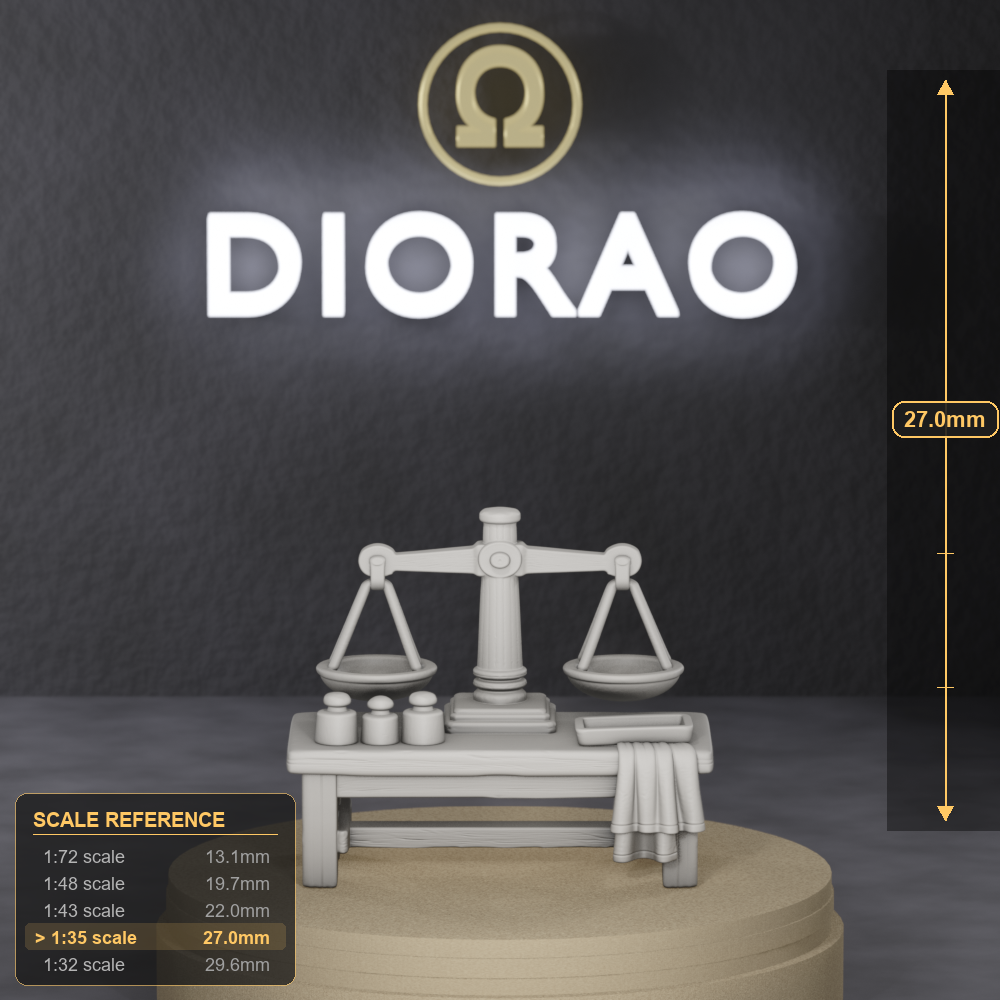
This prop depicts a typical small bronze libra: two shallow round pans hung from a horizontal beam by chains, with a central upright and pointer. Surviving examples from Pompeii's House of the Surgeon and the Nemi shipwrecks match this exact form.
Painting tips
- Bronze: warm copper-brown base, dark wash, polished gold highlights on raised edges.
- Optional verdigris (green tint) along the chains for an aged piece.
- Pans interior: pale ivory dust suggests use.
Historical sources & further reading
- Pompeii excavations: House of the Surgeon medical kit
- Nemi shipwreck finds (Lake Nemi, 1st c. CE)
⚠ Small parts. Not suitable for children under 14.