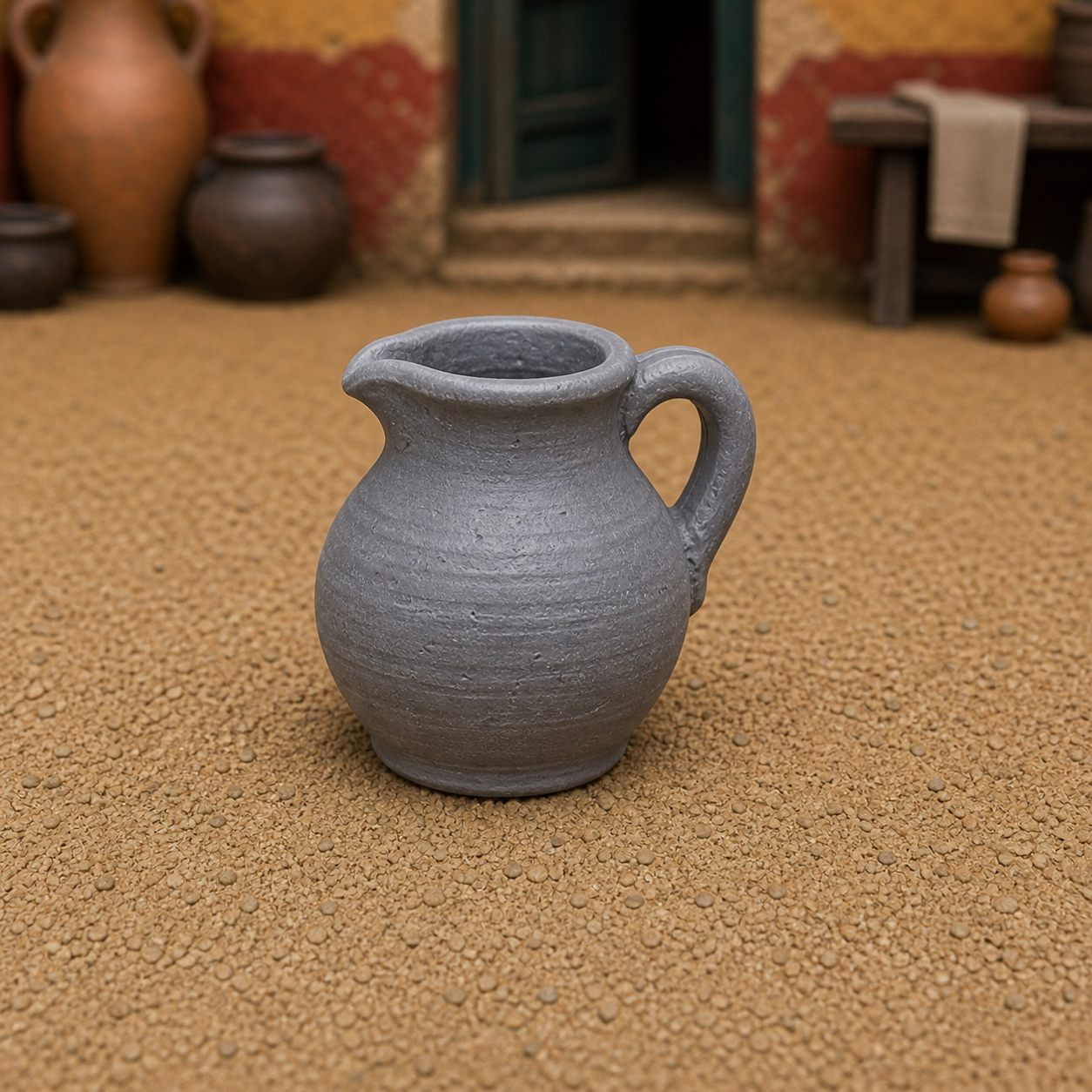
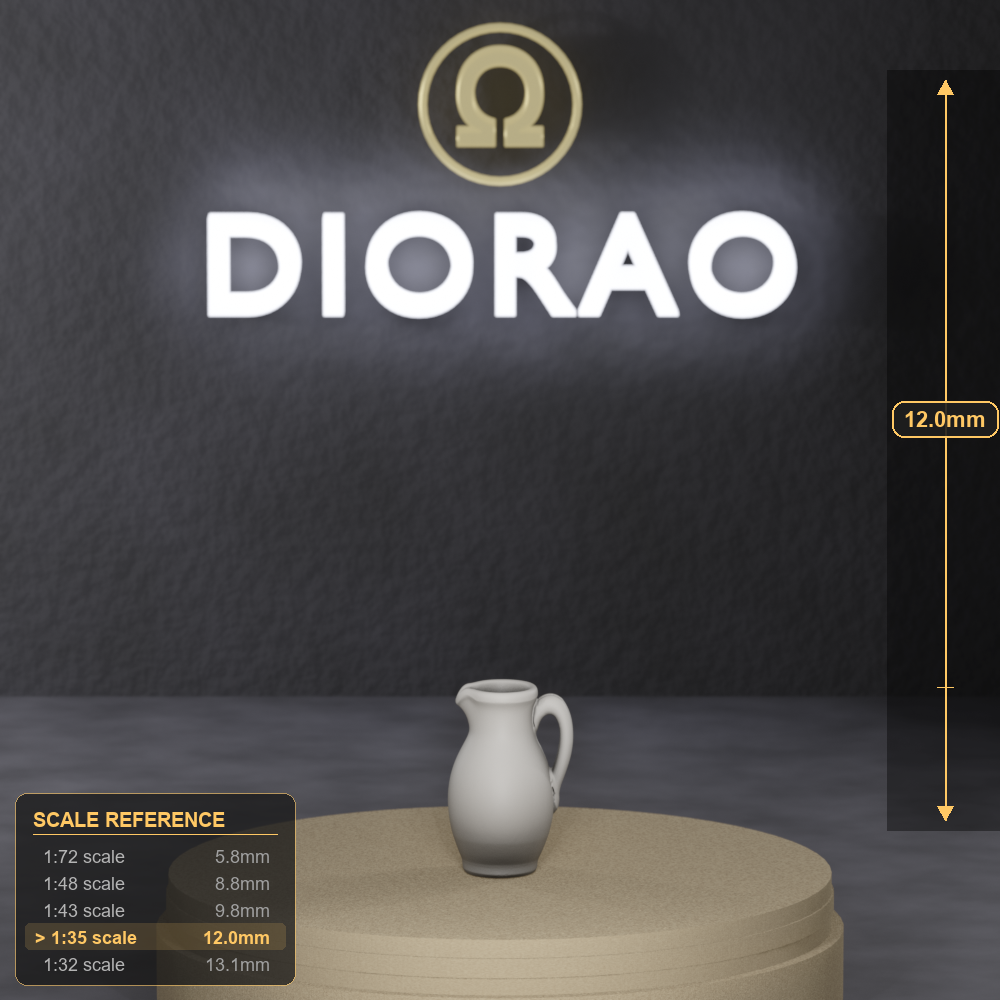
A small handheld water jug - the everyday Roman household form for drawing water from cisterns and amphorae. Single-handle, narrow neck, rounded body, capacity 1-3 liters. Used everywhere from kitchens to gladiator schools to legionary mess areas. Period: Roman antiquity, 1st c. BCE - 3rd c. CE.
Recovered jug forms from Pompeii kitchens (79 CE) and the Vindolanda fort (1st-3rd c. CE) match this prop closely. Made by the thousand in Roman pottery workshops, jugs like this were the most common single ceramic object in any Roman household.
Painting tips
- Terracotta base, sepia wash, pale highlight along the spout and handle.
- Optional dark moisture stain at the rim.
Historical sources & further reading
- Pompeii excavations: household pottery
- Vindolanda Trust: kitchen and storage finds
⚠ Small parts. Not suitable for children under 14.