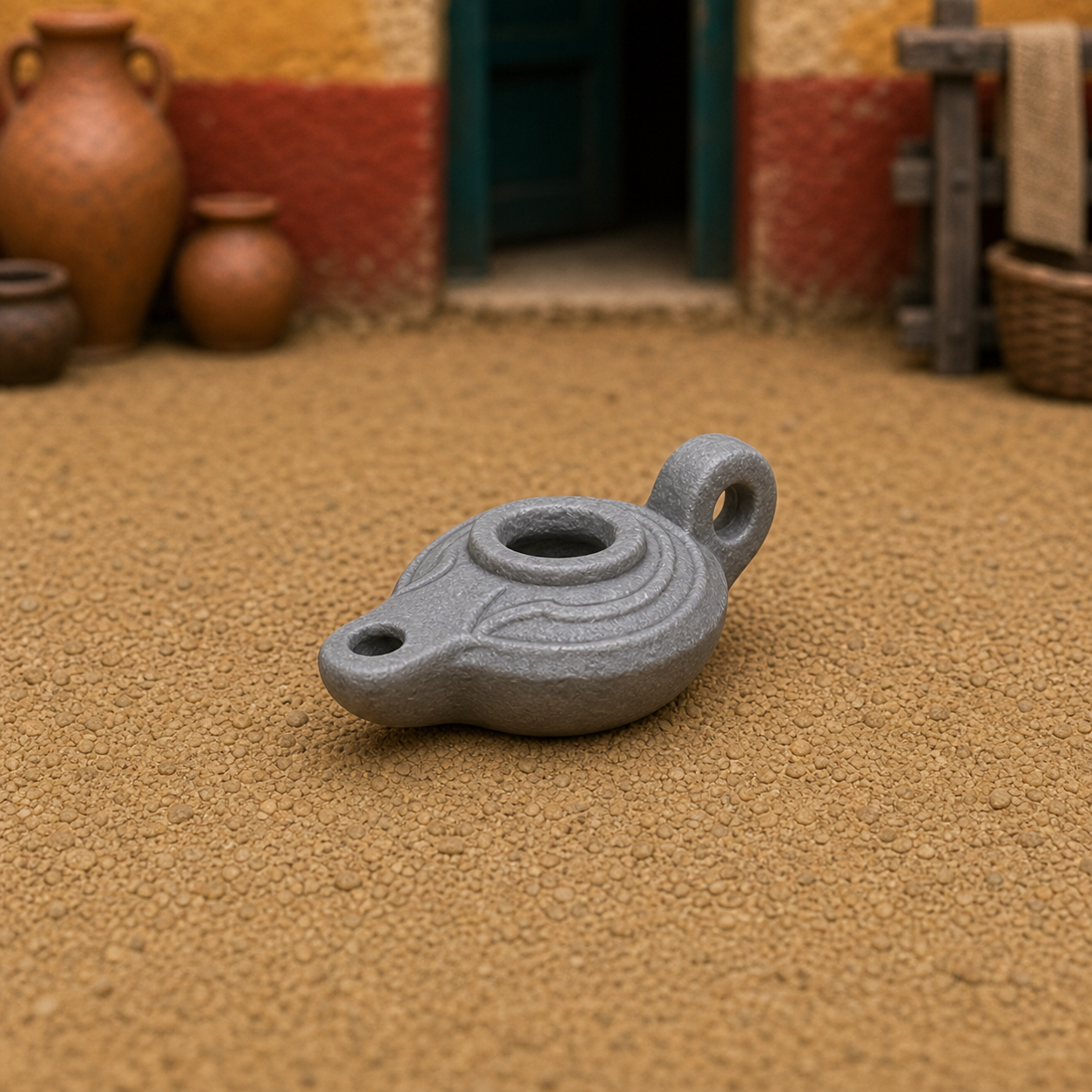
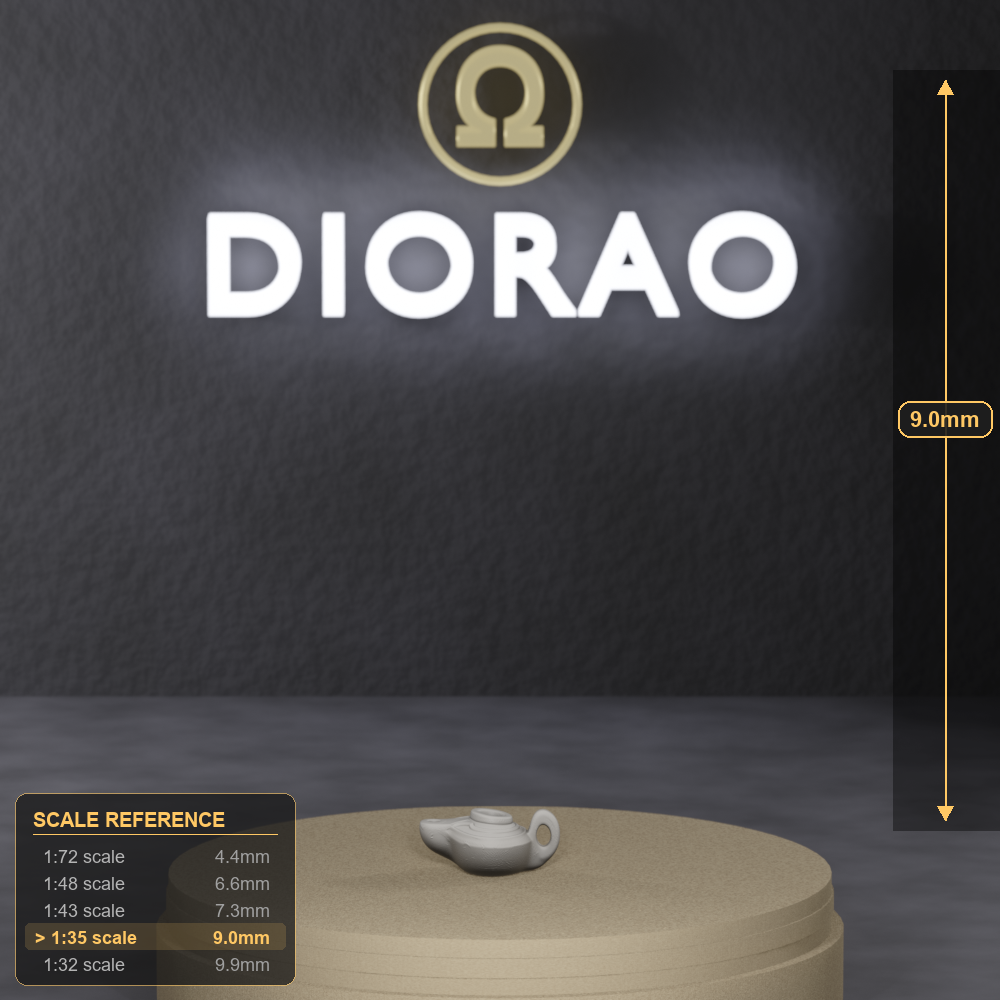
The Roman oil lamp (lucerna) - small, ceramic, fueled by olive oil - was the universal household light source. A single lucerna burned for 2-3 hours on a tablespoon of oil. Period: Roman antiquity, 1st c. BCE - 3rd c. CE.
This piece depicts a typical small lucerna: round body with a fill hole on top, a single short nozzle for the wick, and (in this version) a plain or lightly relief-decorated discus. Pompeii alone has yielded tens of thousands of these lamps, in every size and decorative pattern.
Painting tips
- Terracotta base, brown wash, pale highlight on the spout.
- Optional darker burn-stain at the wick nozzle.
- Thin oil shine on the body for a glazed-look example.
Historical sources & further reading
- Pompeii excavations: domestic lamp finds
- Bailey, Donald. A Catalogue of the Lamps in the British Museum (1980)
⚠ Small parts. Not suitable for children under 14.