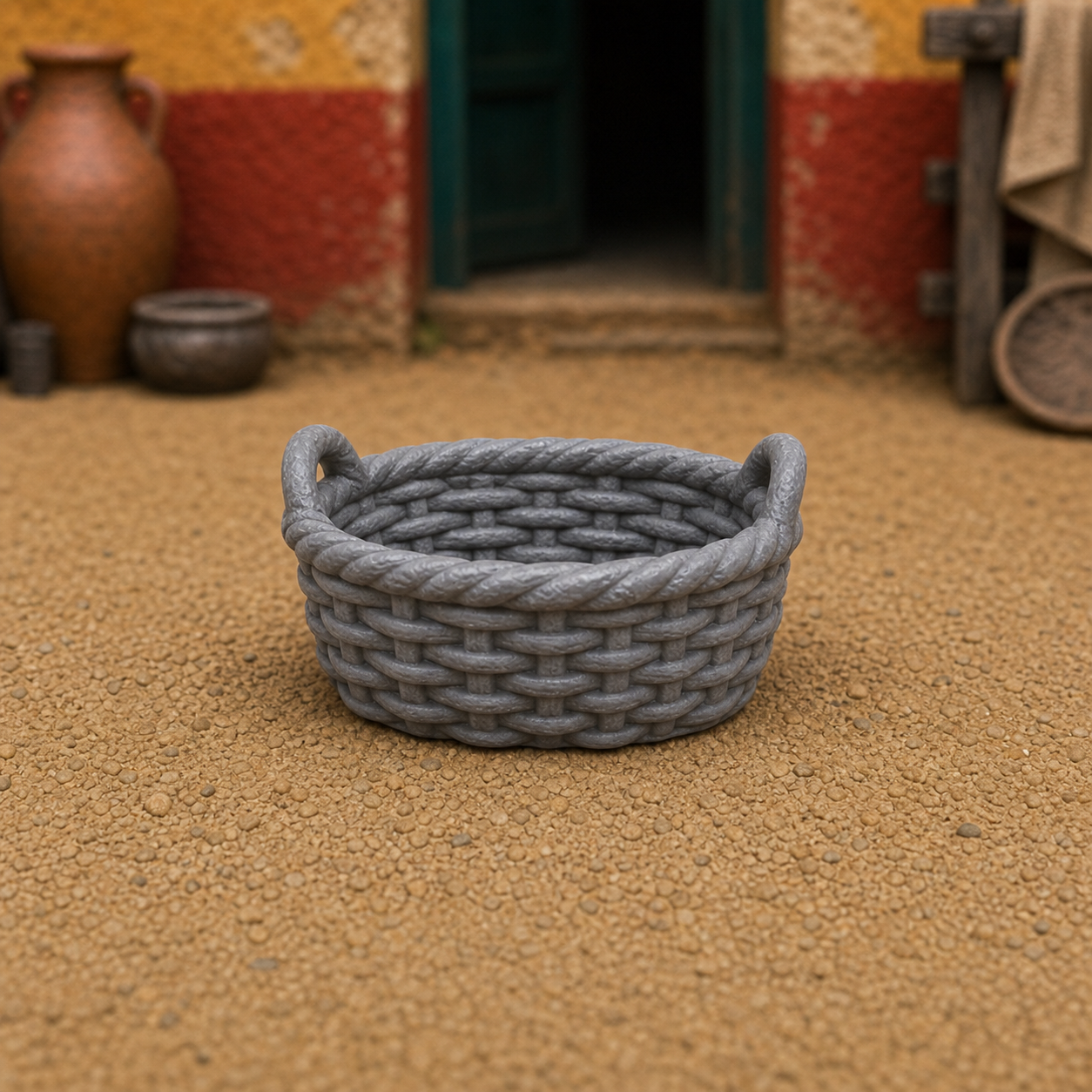
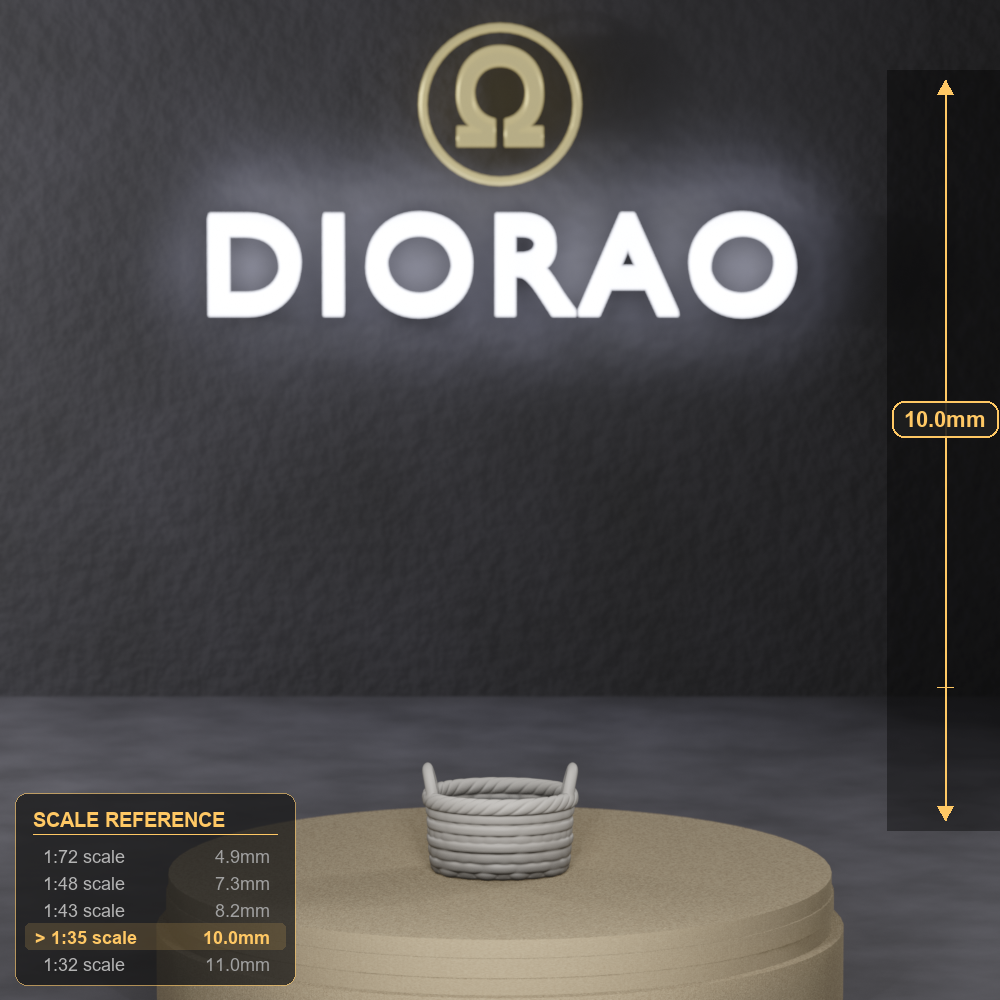
Wicker baskets (cophinus, fiscina) were the universal Roman shopping container - woven from willow, reed, or palm-leaf strips, light, cheap, and replaceable. Every household kept several; every market stall sold goods in them. Period: Roman antiquity, 1st c. BCE - 3rd c. CE.
This single-prop piece depicts a small empty round basket - the size used for figs, eggs, or small produce - standing ready on a shelf or table. Carbonized wicker fragments from Herculaneum (79 CE) match this exact form.
Painting tips
- Pale tan-beige base, sepia wash settles into the weave detail.
- Dry-brush highlight on raised weave loops.
- Optional darker rim for an aged piece.
Historical sources & further reading
- Herculaneum: carbonized wicker finds
- Pompeii: domestic basket fragments
⚠ Small parts. Not suitable for children under 14.