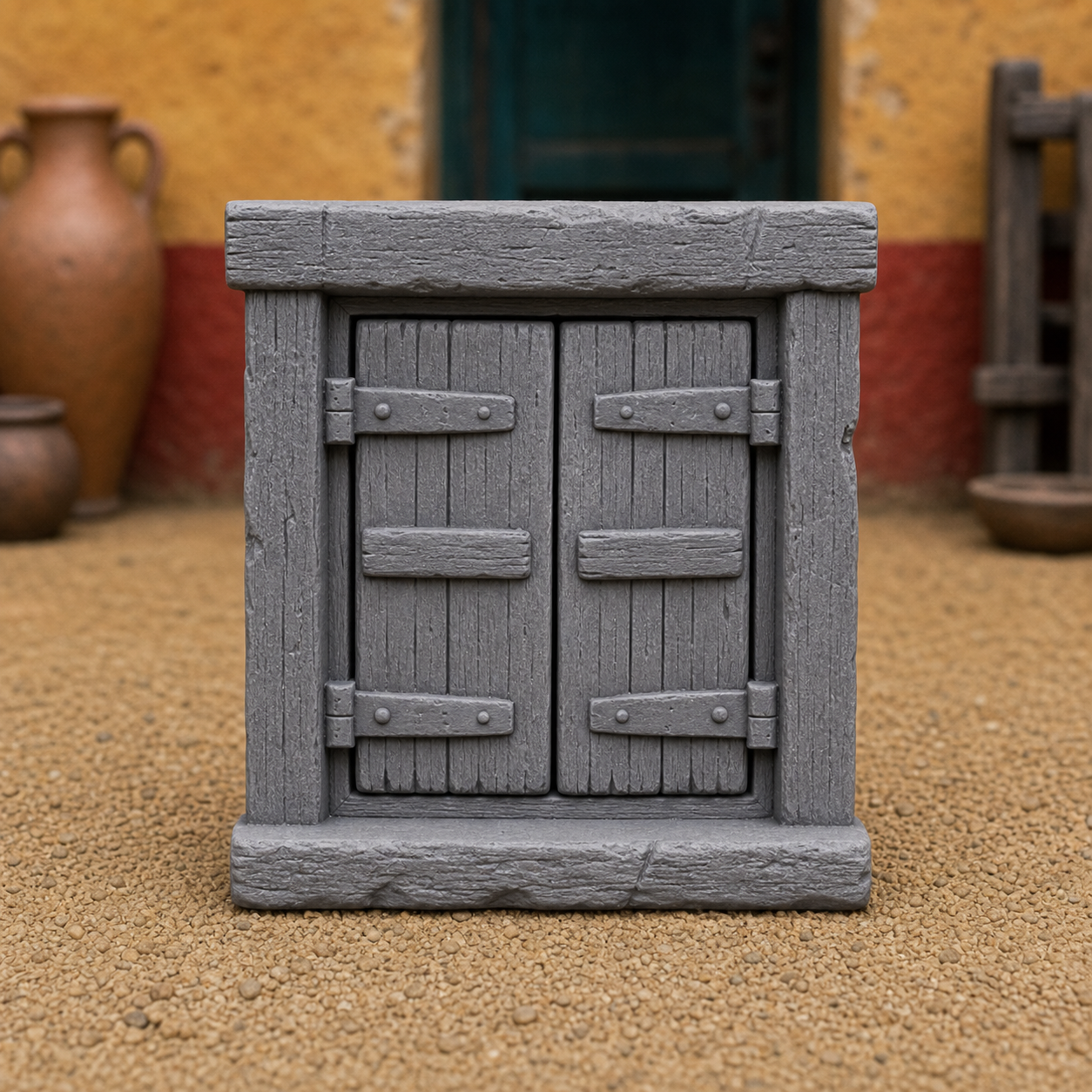
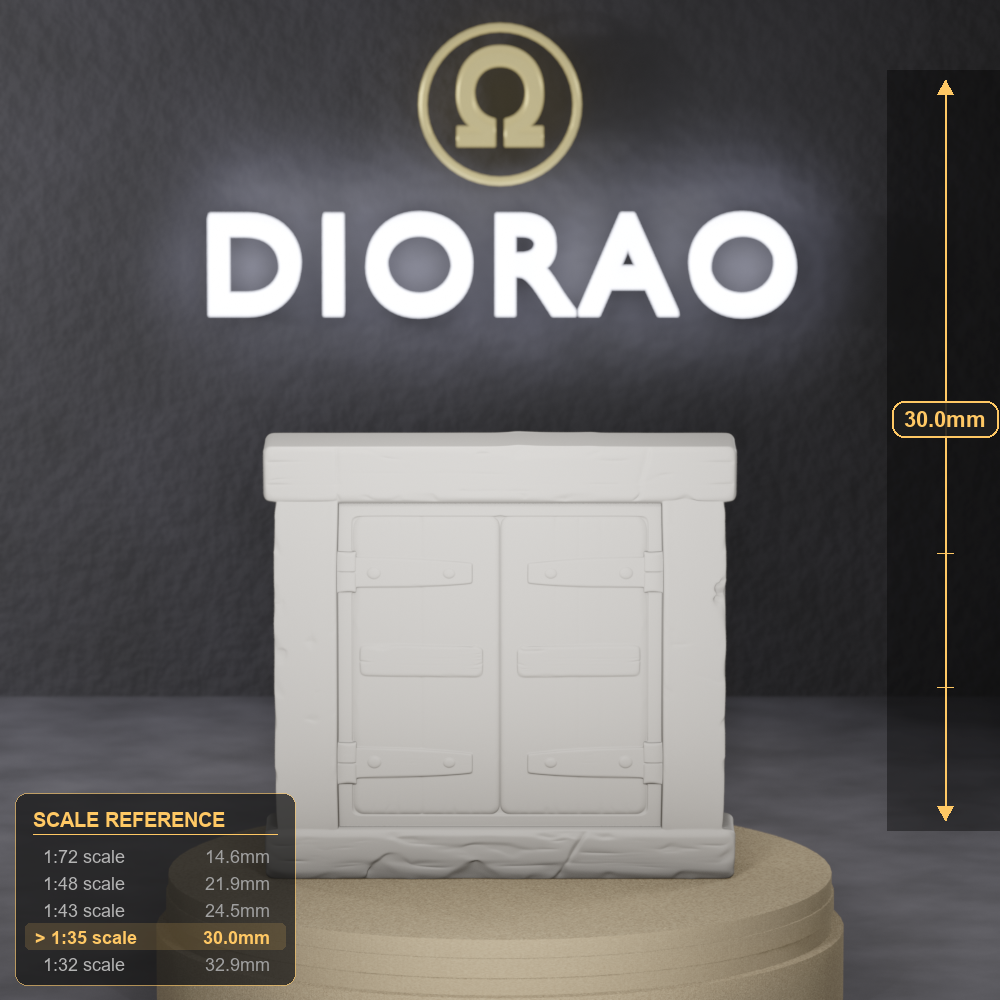
A simple Roman window with two hinged wooden shutters - the standard street-facing aperture of an insula apartment. Period: Roman antiquity, 1st c. BCE - 3rd c. CE.
Glass was rare and small in Roman housing; most windows were closed by pairs of plank shutters hung on iron pintles. By day they swung open against the wall; at night and in winter they latched shut. This piece is sculpted as a single fused window with shutters mid-position - readable from the street as inhabited.
Painting tips
- Shutters: weathered wood with a dark wash in the planks.
- Frame: stone or plaster tone matching your wall.
- Iron hinges: dark grey with slight rust.
Historical sources & further reading
- Pompeii window apertures
- Vitruvius, De Architectura VI
⚠ Small parts. Not suitable for children under 14.