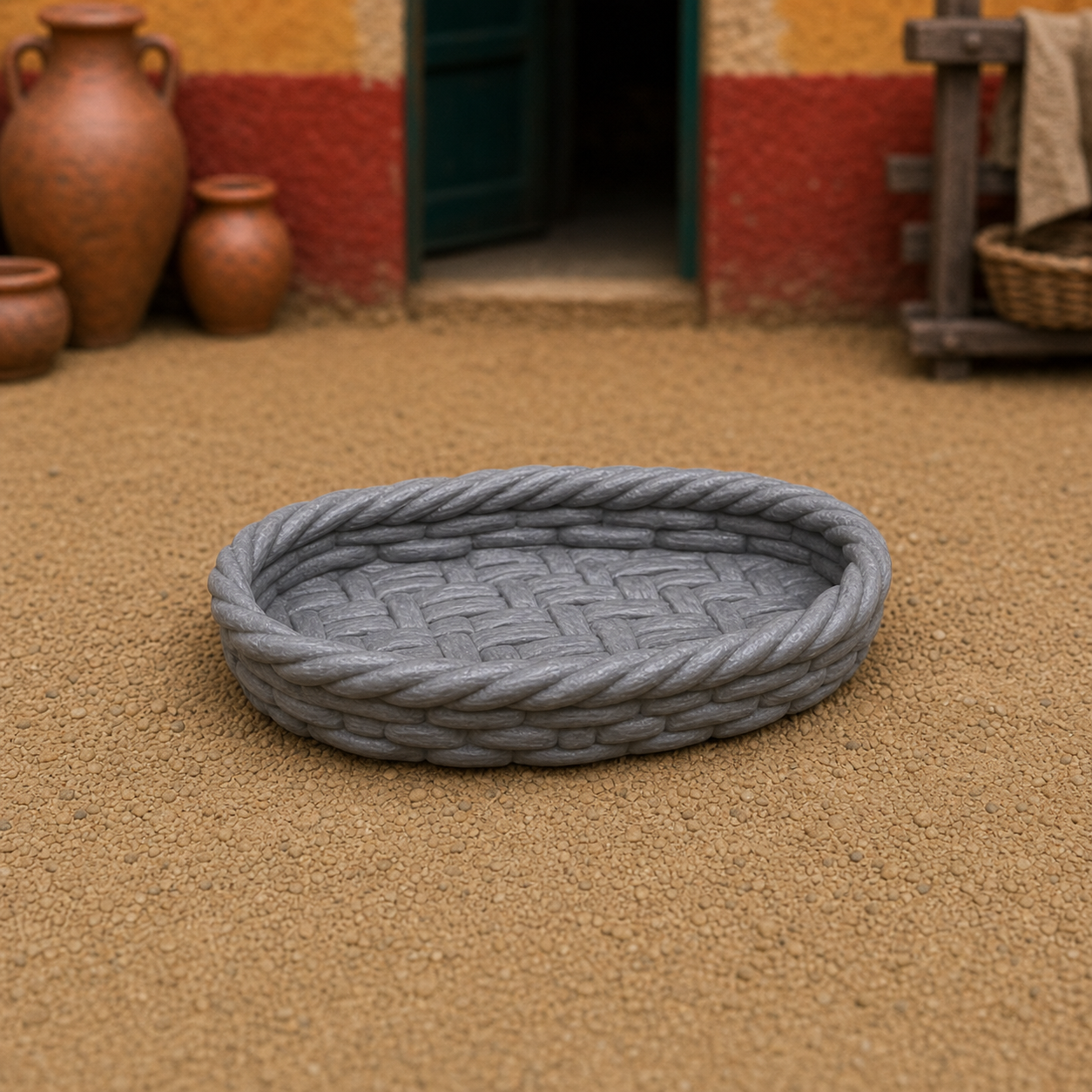
A shallow wooden tray (alveus) used by Roman marketplace vendors to display small produce - figs, dates, olives, or small fish - at eye level on table tops. The flat base and low rim let customers see and reach the goods without bruising. Period: Roman antiquity, 1st c. BCE - 3rd c. CE.
This piece depicts a typical small rectangular display tray, weathered from daily use. Wooden trays of this exact form survive in Pompeii's market and shop excavations.
Painting tips
- Wood: medium oak base, brown wash, lighter dry-brush on edges.
- Optional staining at corners (red wine, olive oil) for a used look.
Historical sources & further reading
- Pompeii: shop and market interior finds
- Holleran, Claire. Shopping in Ancient Rome (2012)
⚠ Small parts. Not suitable for children under 14.