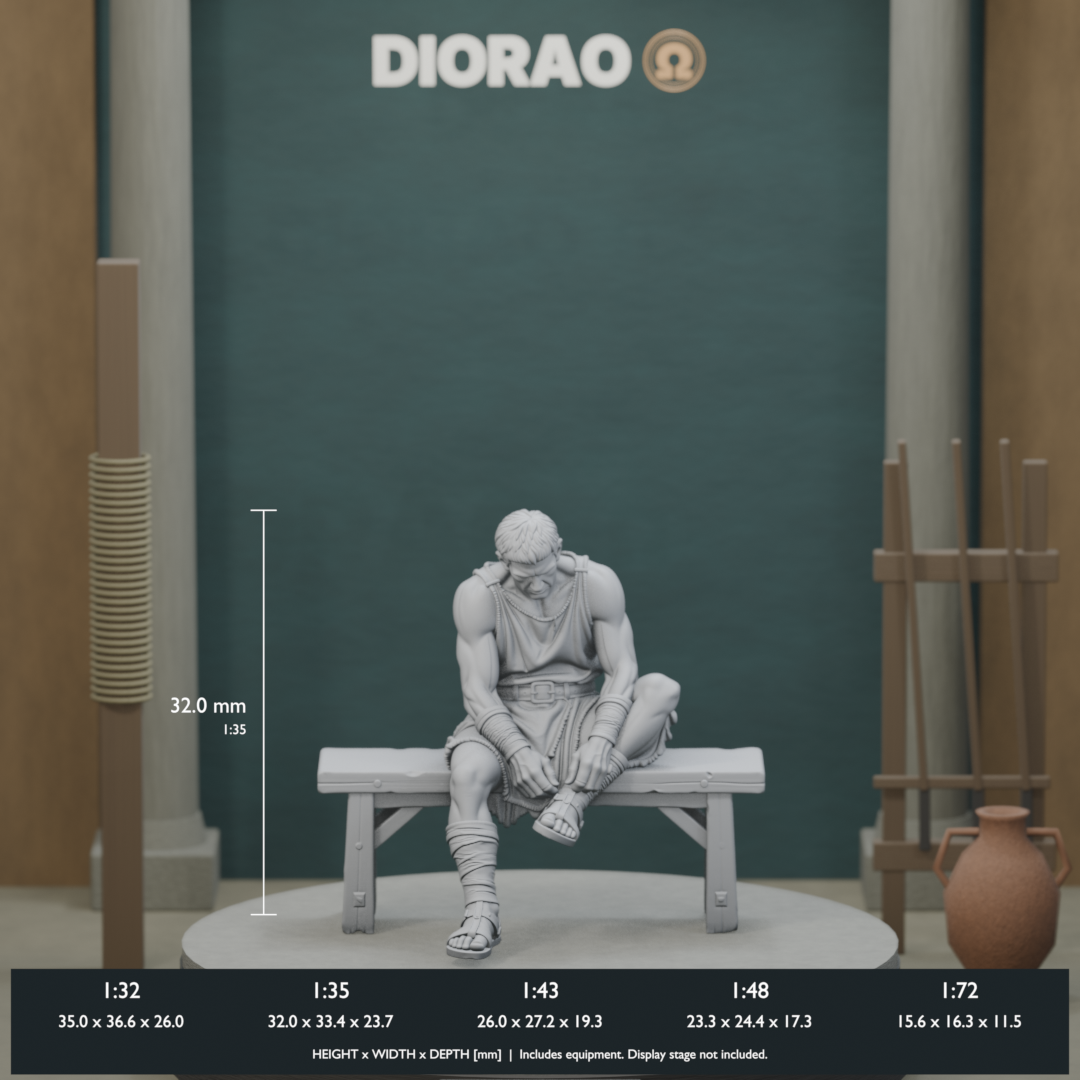
A gladiator trainee (tiro) caught in a between-drill moment - seated low on the courtyard sand, bent forward, adjusting a worn sandal strap after a long session against the palus. Roman gladiator schools (ludi) ran their recruits hard, but the daily texture inside one was shaped as much by short rests, gear repair, and meals as by combat drill itself. Period: Roman antiquity, 1st c. BCE - 3rd c. CE.
This figure is built around a quiet, practical pose: tunic rumpled, leather belt loose, one knee up, hand at the sandal strap. Recovered sandal soles from Pompeii (79 CE) and the Ludus Magnus excavations show the same wear pattern that drove these constant repair-pauses - the inside straps wore through fastest from foot pivots during drill. The unhealed forearm scar and calloused posture suggest a trainee already deep into his cohort: past the first weeks of basic drill but not yet ready for the arena.
Painting tips
- Tunic: off-white linen base, sepia wash, dirt along the lower hem.
- Skin: warm Mediterranean tones - terracotta base, flesh highlights, dust on shins.
- Sandals: rich brown leather, tan edge highlight, lighter tone on the worn straps.
- Optional bruising / scar on forearm: thin red-brown glaze.
- Sand under the figure: pale tan dry-brush blends with diorama groundwork.
Historical sources & further reading
- Pompeii excavations: gladiator barracks, Regio V Insula 5
- Ludus Magnus excavations, Rome (1937-1968)
- Junkelmann, Marcus. Familia Gladiatoria (1996)
- Vindolanda Trust: shoe and leatherwork records (1st-3rd c. CE)
⚠ Small parts. Not suitable for children under 14.