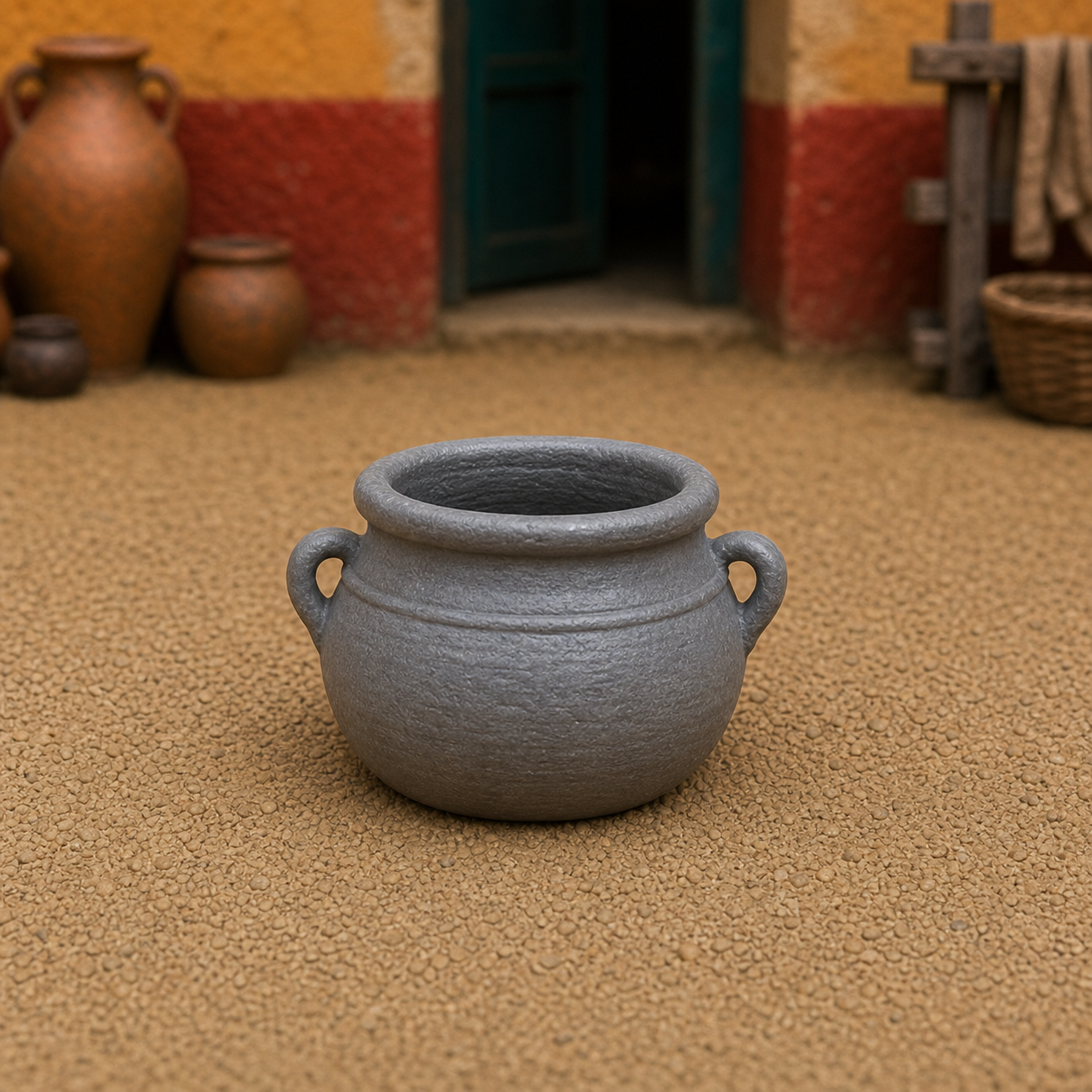
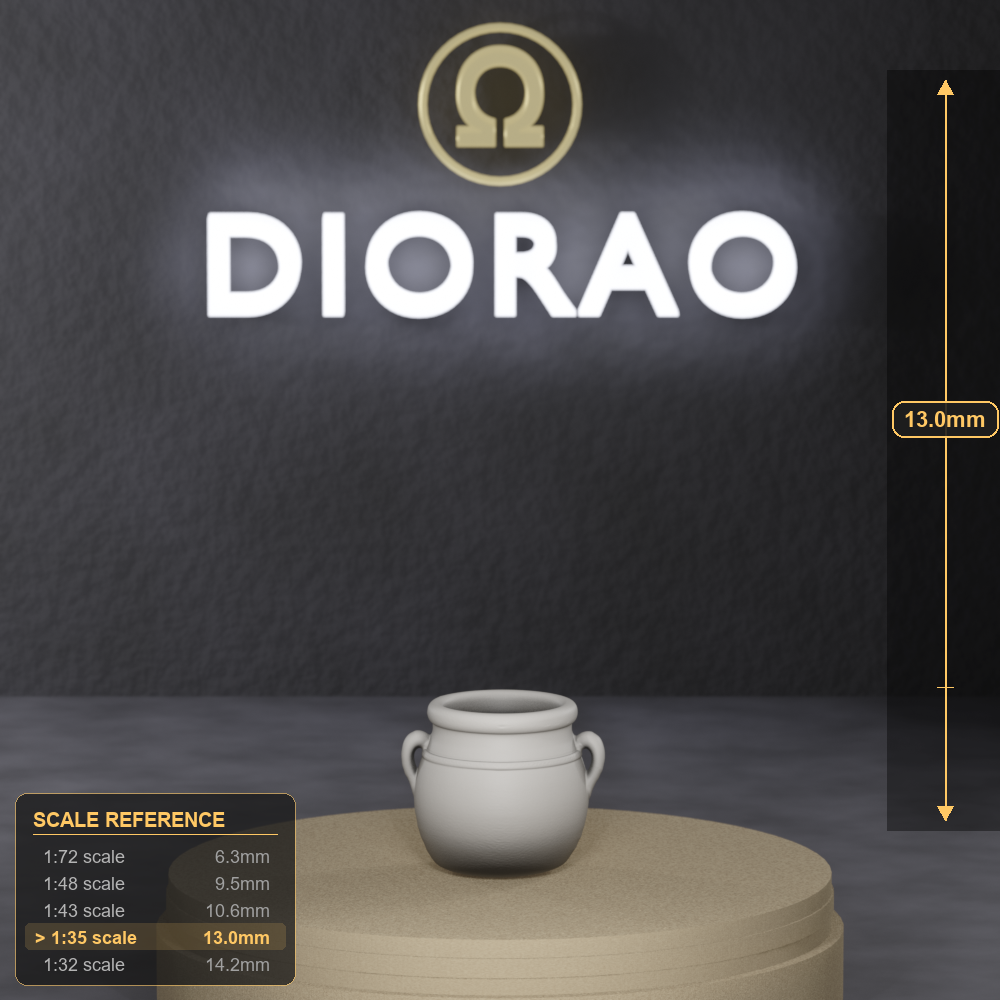
The Roman olla - round-bodied ceramic cooking pot - was the universal vessel for stews, lentils, porridges (puls, the daily Roman staple before bread), and slow-cooked dishes. Heated over wood fires in domestic kitchens or charcoal braziers in tabernae, the same form served from the late Republic through the late Empire. Period: Roman antiquity, 1st c. BCE - 3rd c. CE.
This piece depicts a typical mid-size cooking olla with a rounded body, narrow neck, and slightly flared rim. Soot stains on the bottom - sculpted into the surface - show daily use over a fire.
Painting tips
- Terracotta base, brown wash, pale tan dry-brush on the upper body.
- Soot at the base: dark grey-black, blended up into the body.
- Optional moisture stain near the rim.
Historical sources & further reading
- Pompeii: kitchen excavations
- Apicius, De Re Coquinaria (1st c. CE)
⚠ Small parts. Not suitable for children under 14.