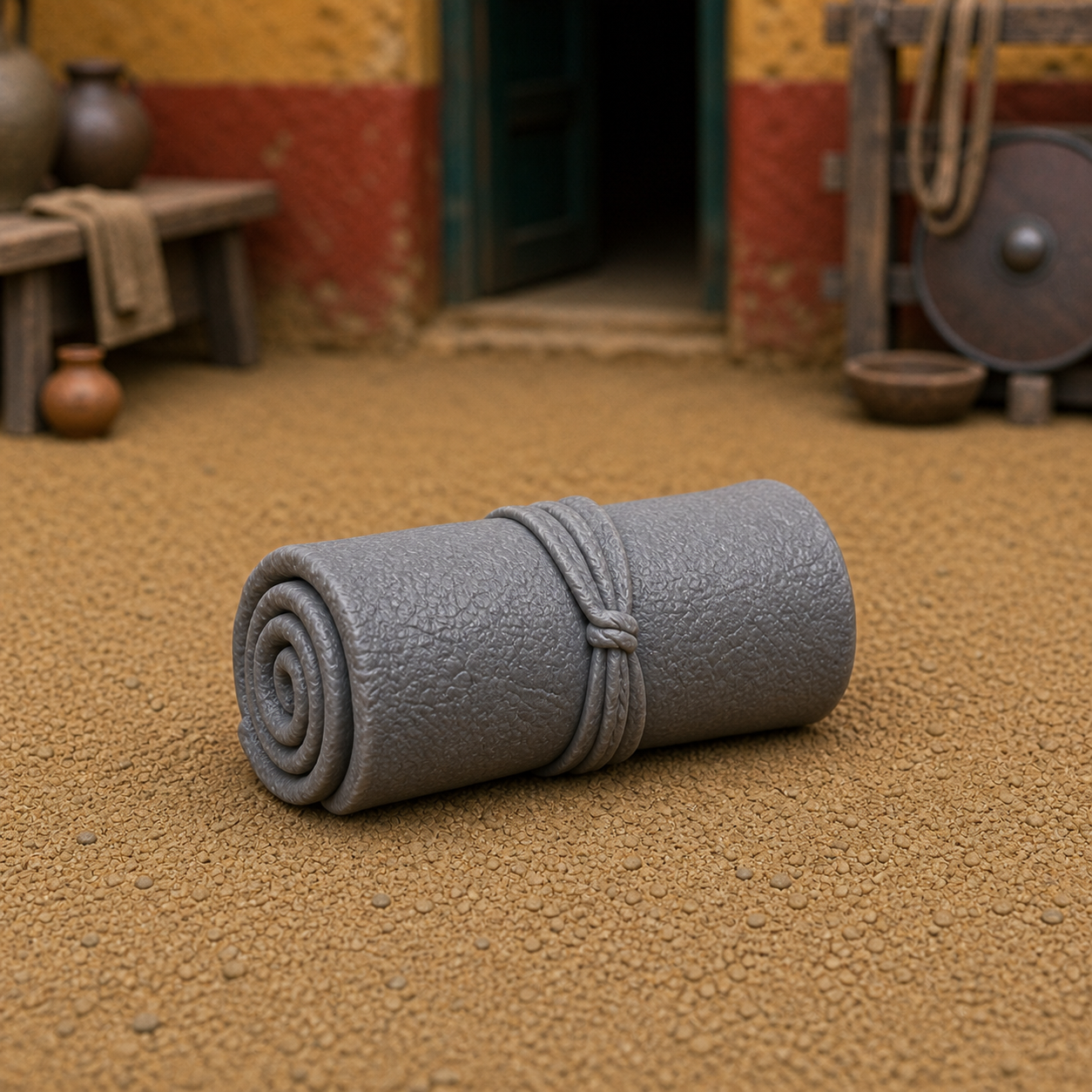
Cured leather was one of the central raw materials of any Roman workshop. Cowhide and goatskin, vegetable-tanned with oak bark and softened with beeswax, came to the leatherworker (sutor) in tightly bound rolls - easy to store, easy to transport, and easy to cut as needed. A working ludus, a marketplace stall, and a legionary leather-shop all used the same form factor.
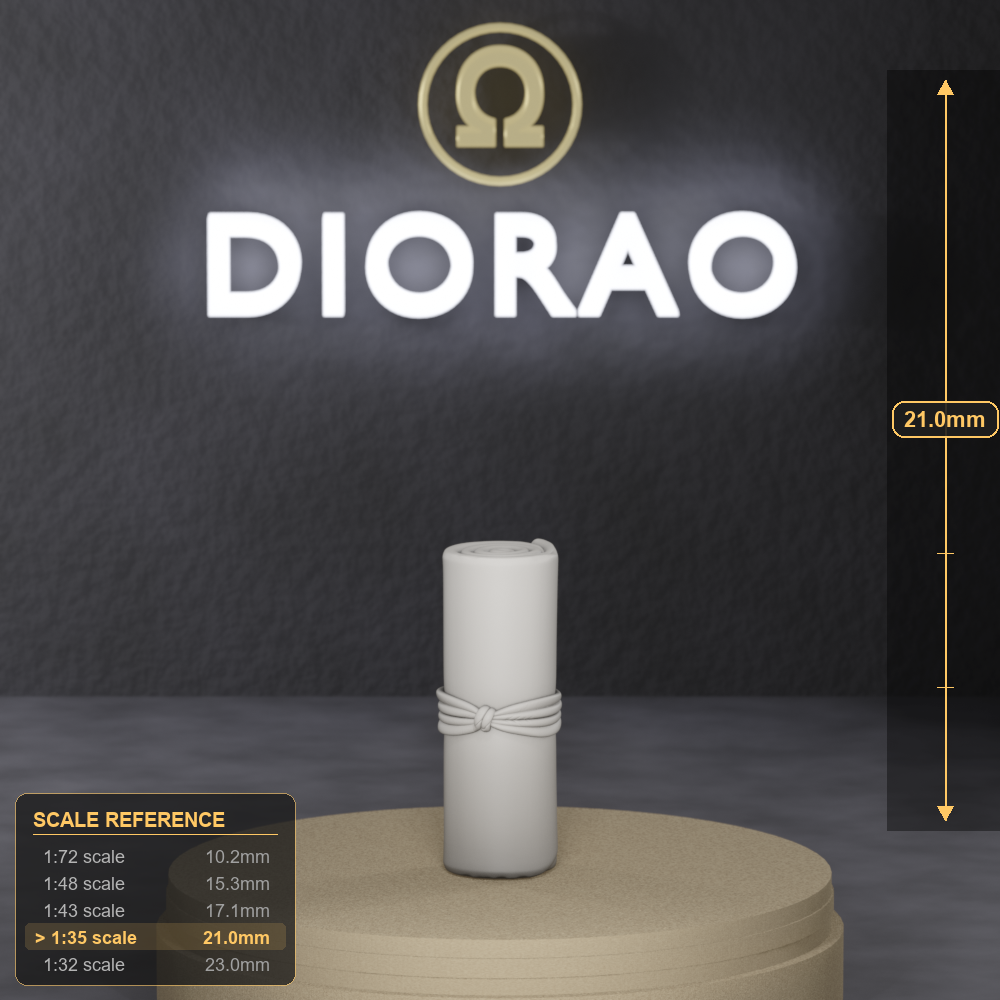
This prop depicts a tightly bound roll of cured hide, lashed at both ends with thin leather cord and resting on its side. The grain pattern of the outer surface and the variation in cured tone make it readable at any scale. Recovered parallels exist from Vindolanda (1st-3rd c. CE) and the Roman fort at Saalburg.
Painting tips
- Vary brown tones along the roll - richer on the outside, paler at the cut ends.
- Sepia wash to settle into the grain texture.
- Tan dry-brush highlight on the raised outer surface.
- Cord lashings: pick out in slightly darker brown.
Historical sources & further reading
- Vindolanda Trust: leather and shoe finds (1st-3rd c. CE)
- Junkelmann, Marcus. Reconstructing the Roman Gladiator (2000)
⚠ Small parts. Not suitable for children under 14.