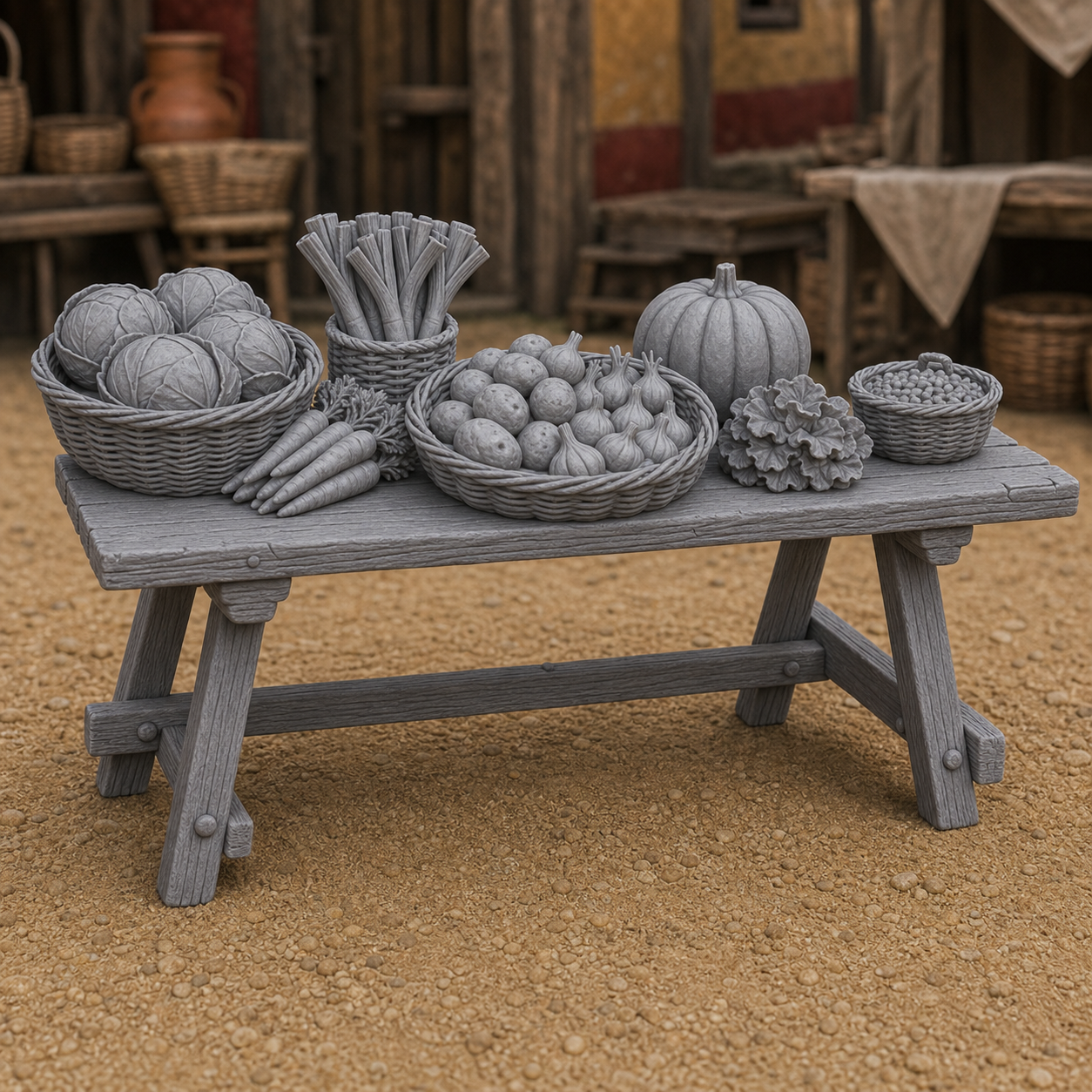
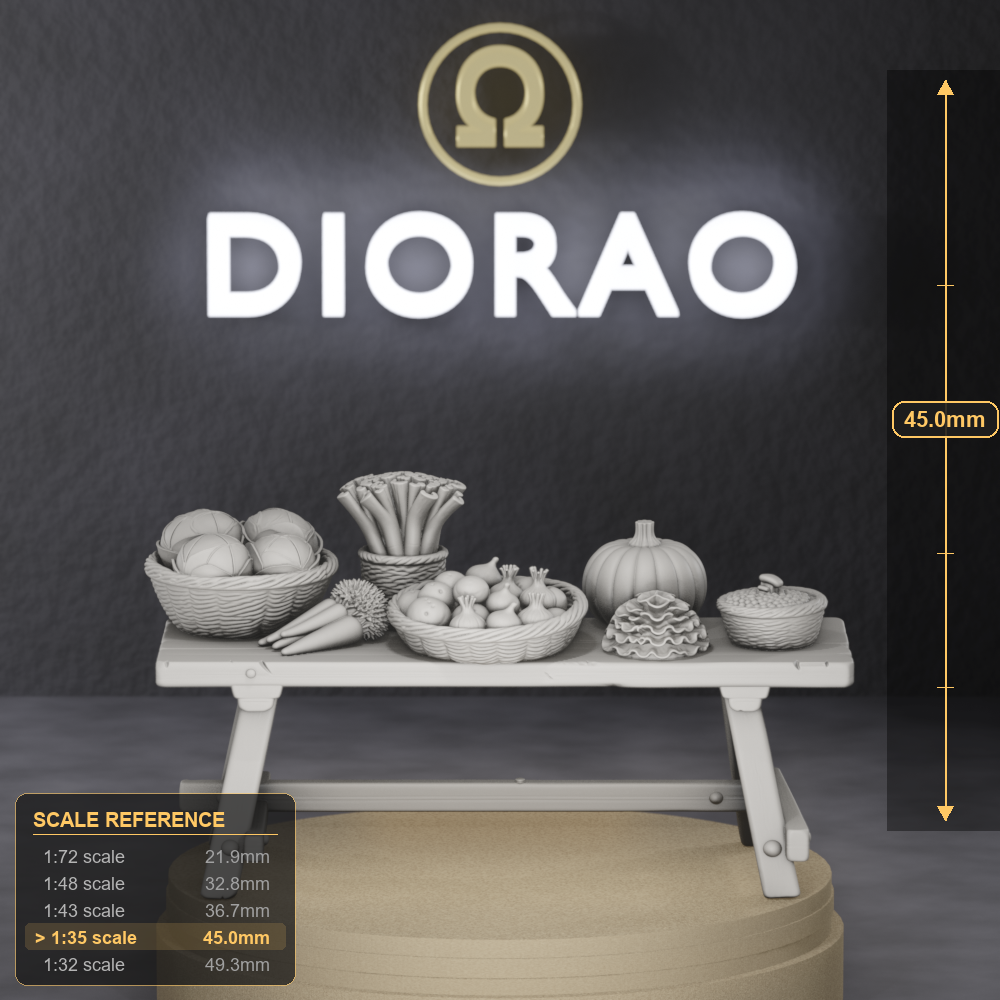
A simple trestle table loaded with the day's produce — rough planks on splayed legs, an honest market piece. Period: Early Middle Ages, c. 500-1000 CE.
Trestle tables collapsed flat for transport, then opened to make a market surface in seconds. In early-medieval Paris they carried turnips, leeks, apples, cheeses — whatever the riverbank gardens and Île-de-France villages were sending in that week. This piece sculpts the table with a small produce mass fused on top so it reads as a working stall, not an empty display.
Painting tips
- Wood: warm oak with a sepia wash.
- Produce mass: layered greens, ochres and reds; a final dot of red for apples.
- Legs: slightly darker, dirty at the foot.
Historical sources & further reading
- Carolingian polyptychs (estate produce records)
⚠ Small parts. Not suitable for children under 14.