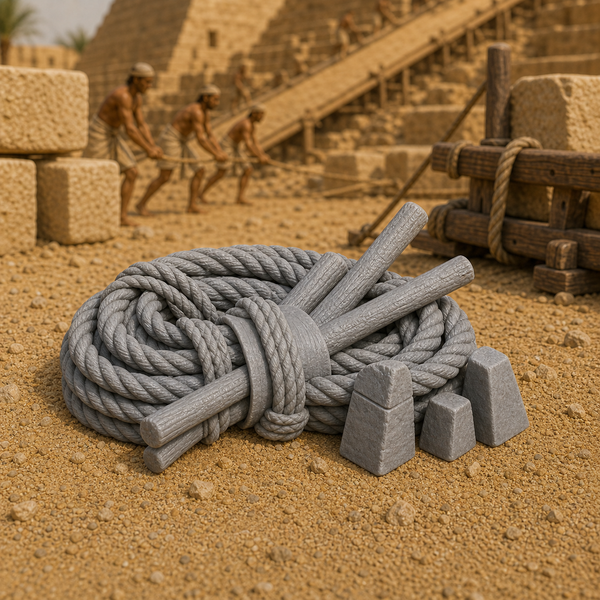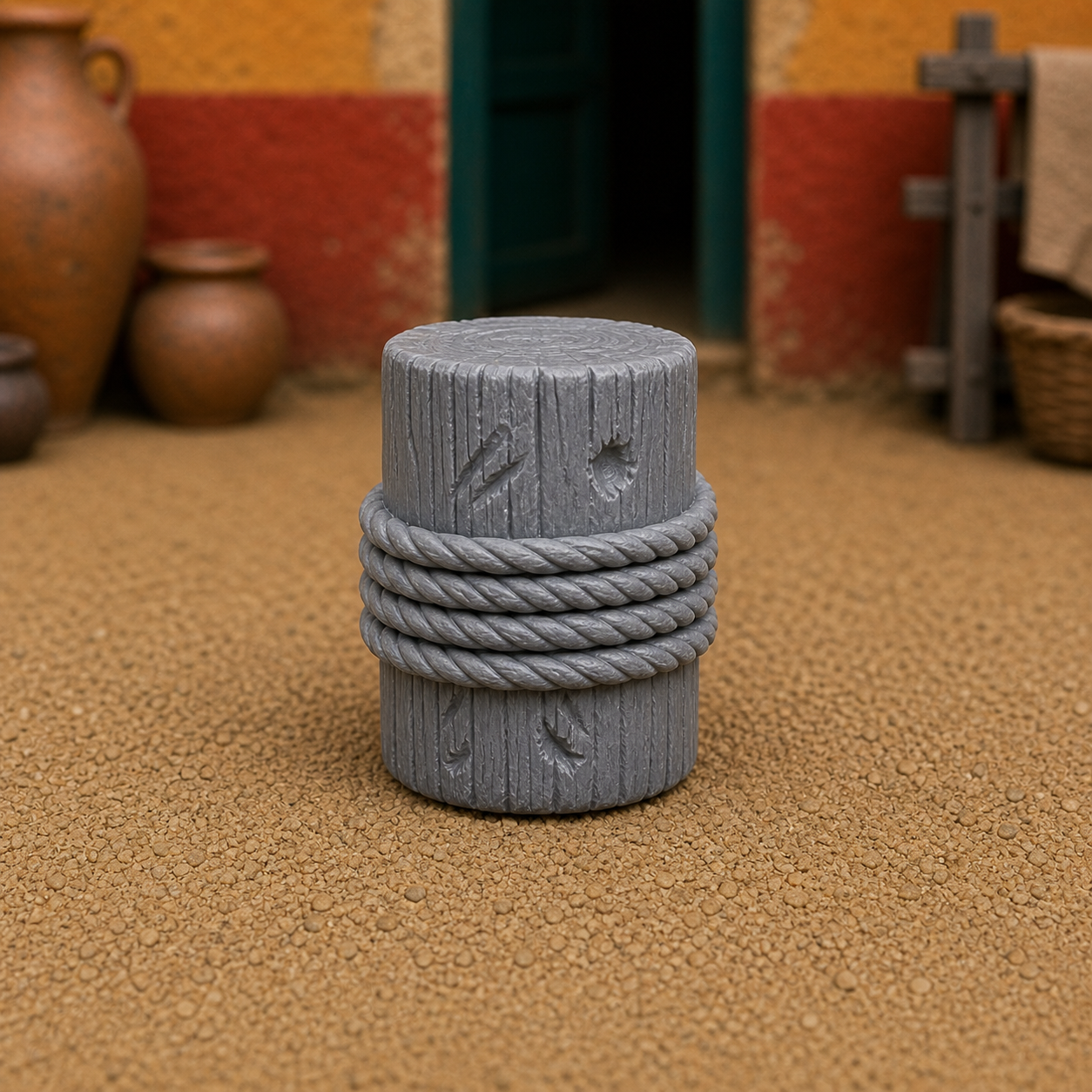
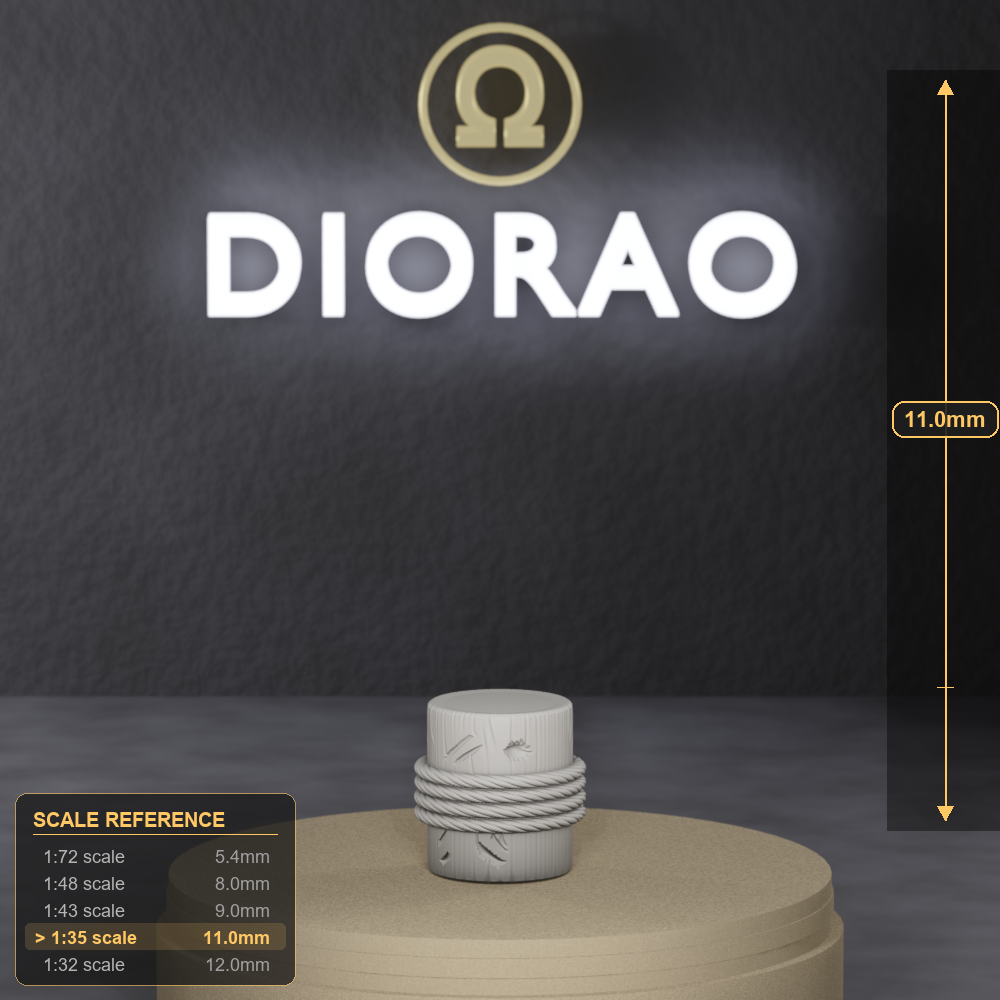
A coiled rope wrap - the kind used to cushion the strike-zone of a Roman palus training post (see DIO-003). Wrapped at recruit shoulder and waist height, the rope softened the impact of weighted wooden practice swords and protected both the post and the recruit's wrists during long drill sessions. Period: Roman antiquity, 1st c. BCE - 4th c. CE.
Roman ropes used hemp, linen, or esparto fiber - readily available across the Mediterranean. Surviving rope fragments from Vindolanda and Pompeii show consistent 3-strand twist construction. This prop is a separate coil - drop it next to a partially wrapped palus, on a workshop bench, or against a wall as scenery.
Painting tips
- Pale tan/beige base, sepia wash to settle into the twist texture.
- Dry-brush highlight in bone or pale yellow on the topmost strands.
- Optional dirt: light grey-tan along the bottom of the coil.
Historical sources & further reading
- Vindolanda Trust: rope and cordage finds
- Pompeii excavations: rigging and household ropes
⚠ Small parts. Not suitable for children under 14.