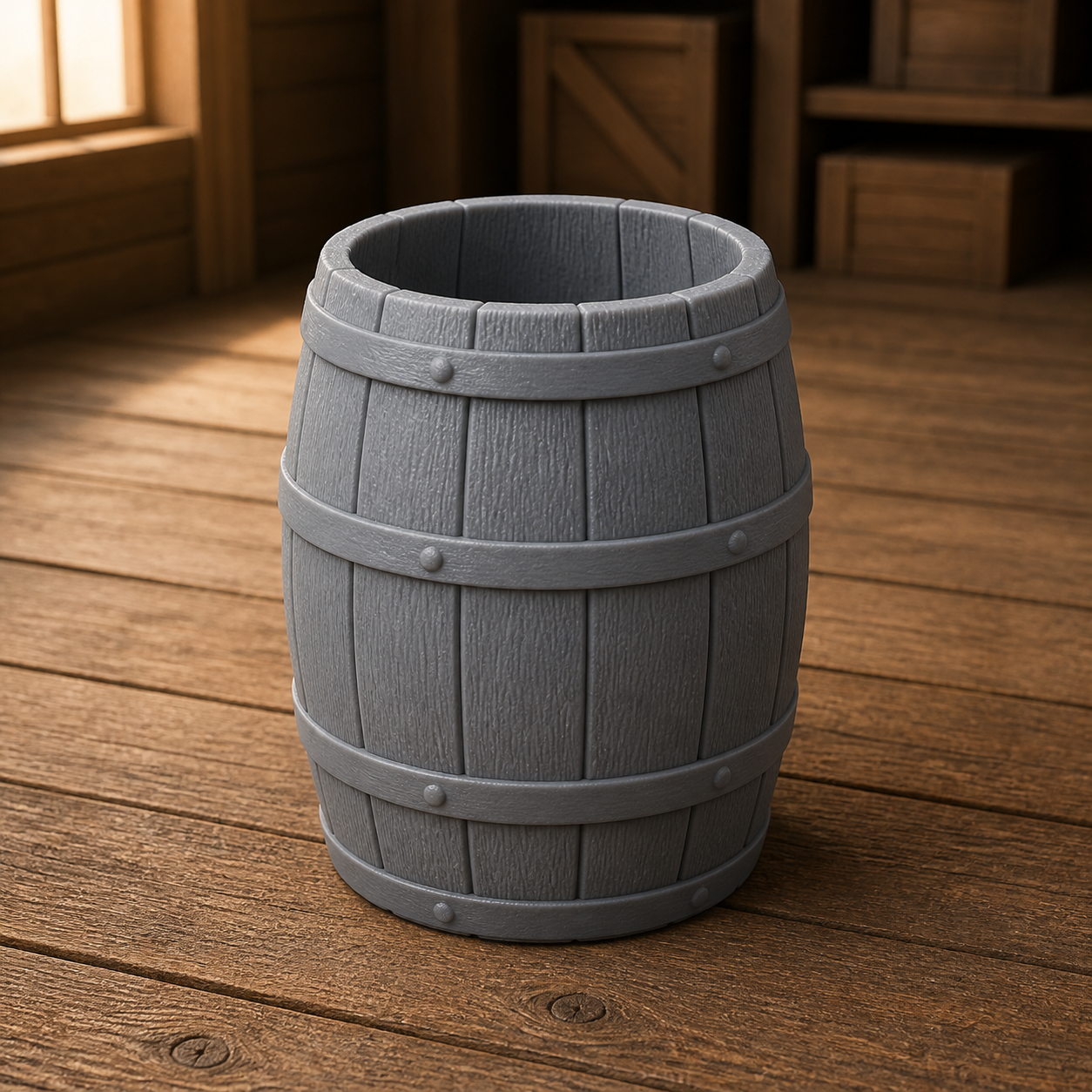
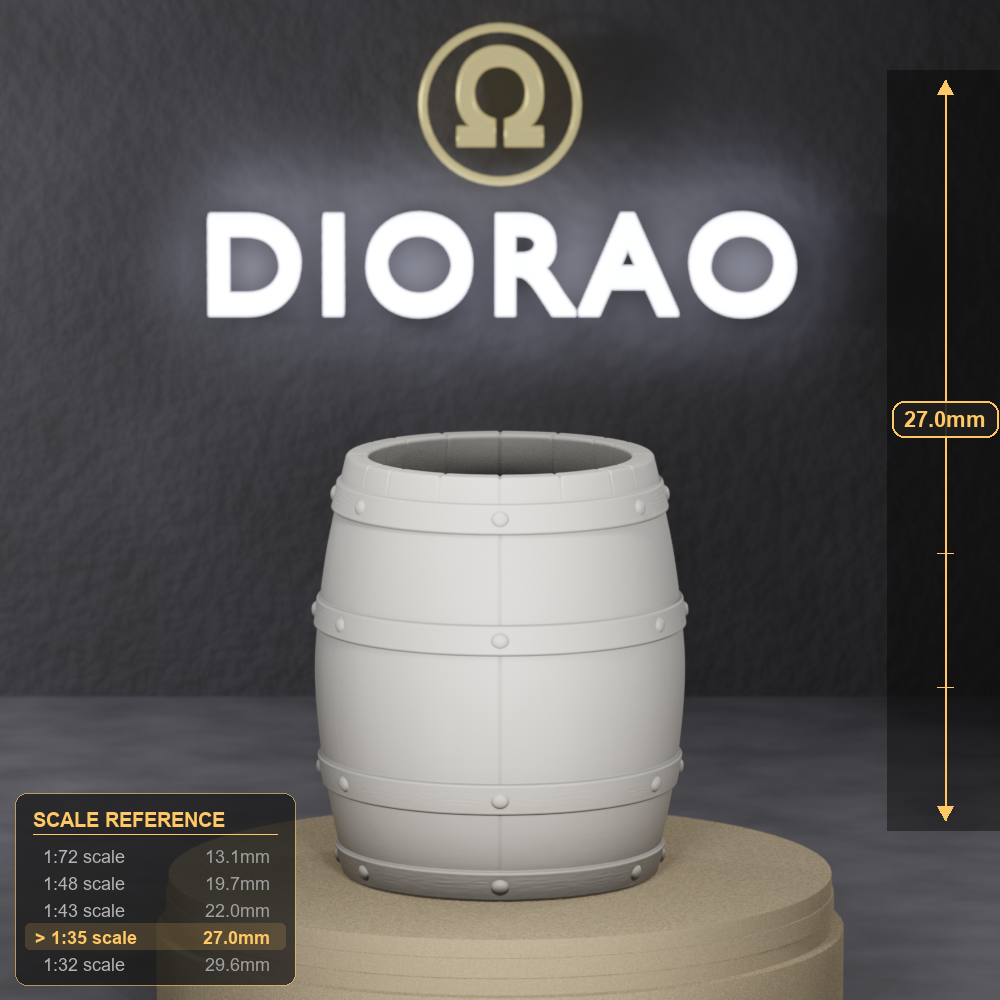
A barrel with no upper head - exposed interior wood, slightly darker at the staves where damp has settled. The rainwater catch, dry-good tub, or wash bucket of any rural household. Period: multi-era, c. 100 CE - 1900 CE.
Headless barrels ("open-top" or "tub-barrel") served as wash tubs, rain catchers, dry-grain storage, and animal water troughs across the pre-industrial world. The simplest possible adaptation of a worn cask.
Painting tips
- Outer staves: warm wood with sepia wash.
- Interior wood: slightly darker, damp shadow.
- Hoops: dark iron with rust.
- Optional water with gloss medium and faint surface reflection.
Historical sources & further reading
- Rural cooperage and household-water references
- Pre-industrial domestic storage studies
⚠ Small parts. Not suitable for children under 14.