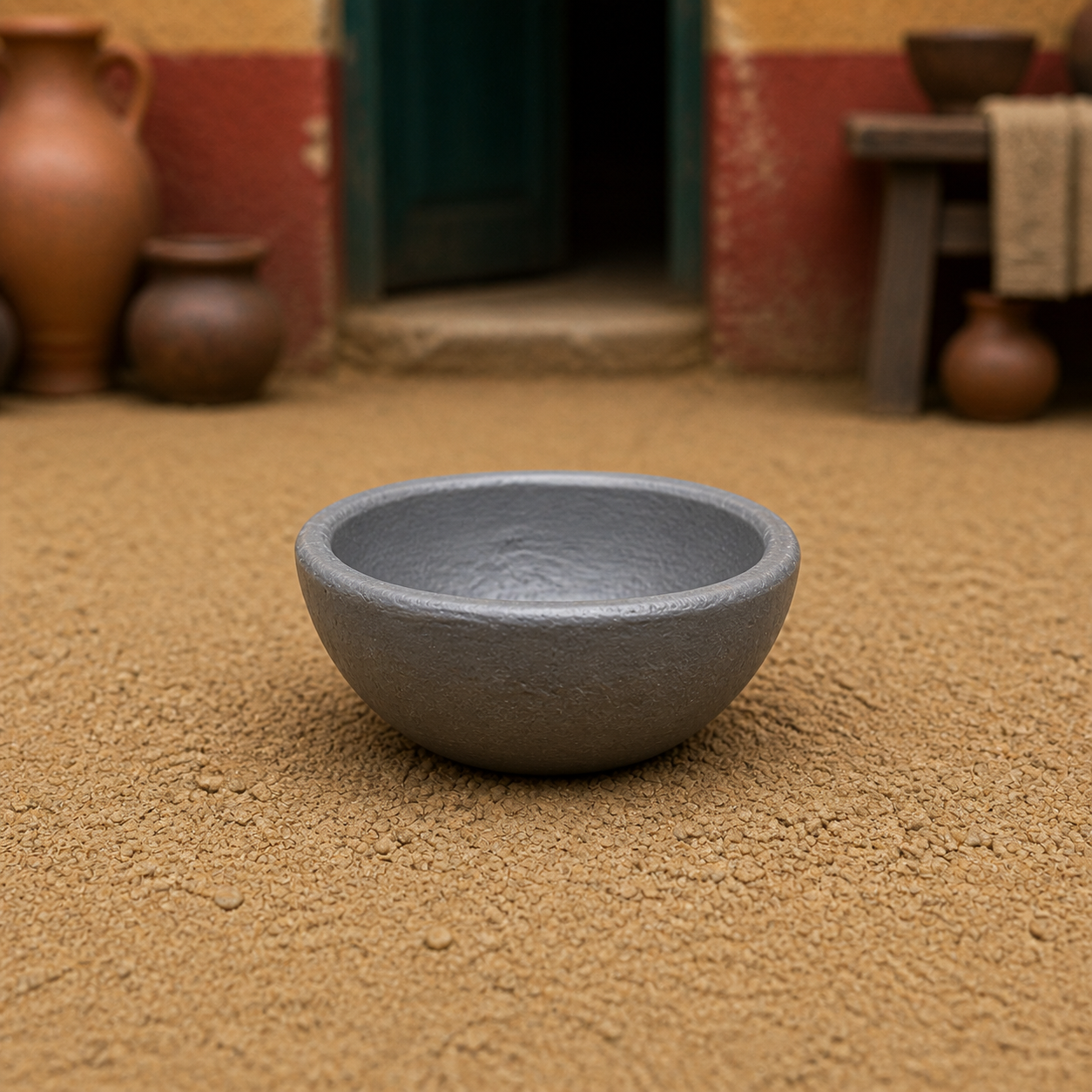
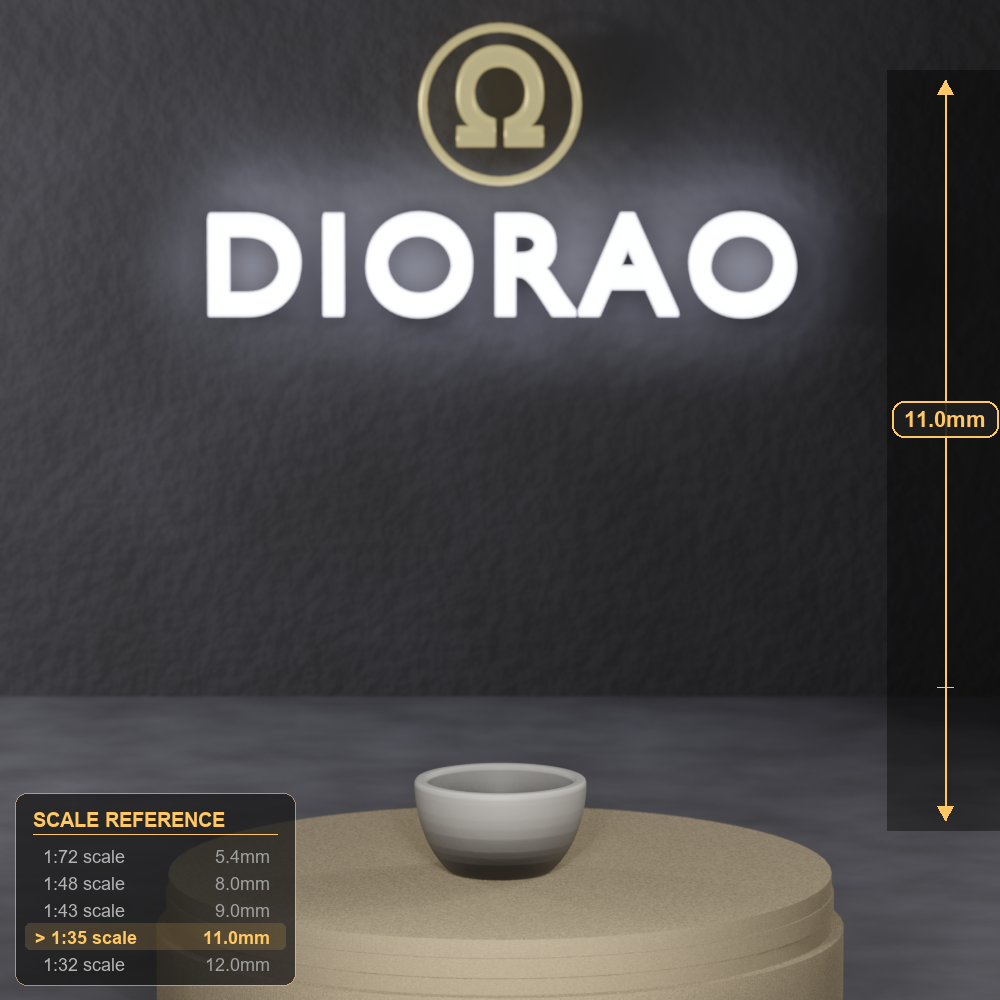
A shallow bronze treatment bowl - the kind used by a Roman medicus in a gladiator school or legionary camp for cleaning wounds, mixing salves, and bleeding. Roman ludi kept full-time medici on staff because injured gladiators were too valuable to lose: the famous physician Galen began his career as physician to the gladiators of Pergamum (157 CE) and built his anatomical knowledge from treating their wounds. Period: Roman antiquity, 1st c. BCE - 3rd c. CE.
Recovered medical kits from Pompeii (House of the Surgeon) and the Roman military hospital (valetudinarium) at Vetera include shallow bronze bowls of this exact form. This prop captures the bowl mid-use: water and a sponge inside, ready for a fresh wound.
Painting tips
- Bowl: bronze base with brown wash, polished gold highlights.
- Optional water inside: pale blue-grey glaze, gloss finish.
- Sponge: pale ochre, sepia wash.
- Slight verdigris (green tint) along seams suggests a well-used piece.
Historical sources & further reading
- Galen, De Anatomicis Administrationibus (2nd c. CE)
- Pompeii excavations: House of the Surgeon
- Künzl, Ernst. Medizinische Instrumente aus Sepulkralfunden (1983)
⚠ Small parts. Not suitable for children under 14.