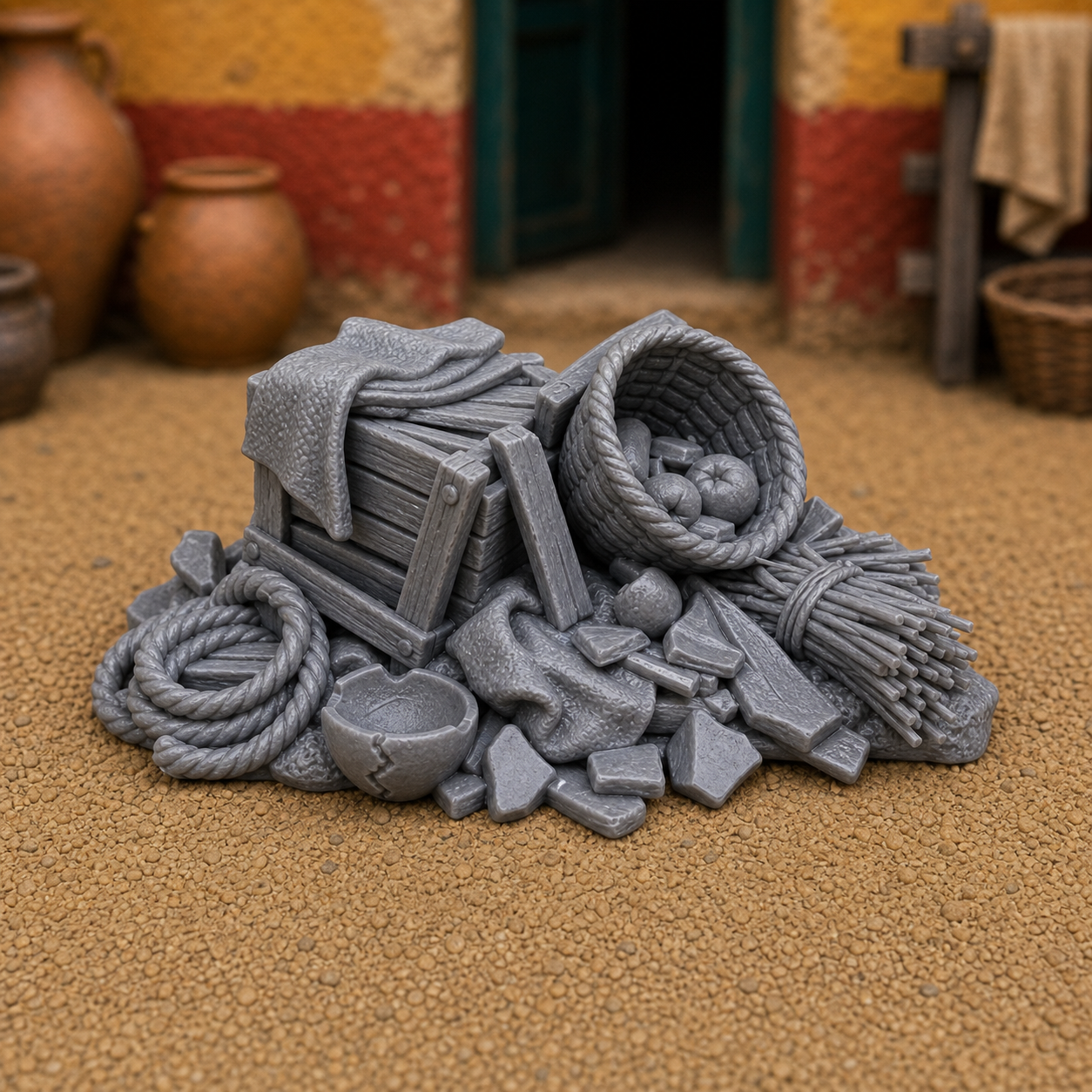
Roman street life produced constant clutter - broken pottery, discarded reed baskets, vegetable scraps, old amphora handles, scraps of cloth. By midday the gutters of any busy macellum or thermopolium street were lined with the day's debris until the night-shift waste haulers (scoparii) cleared it. Period: Roman antiquity, 1st c. BCE - 3rd c. CE.
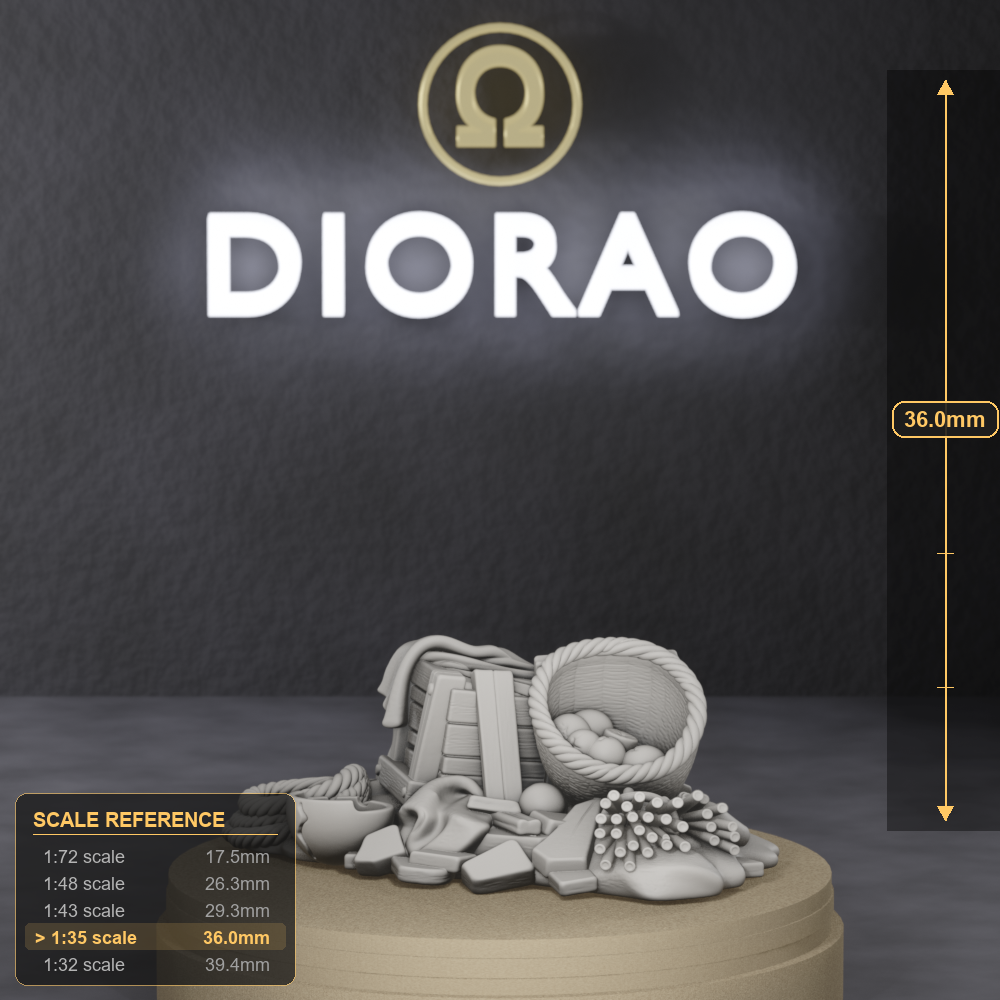
This pile captures the lived-in texture of a working market street: a broken amphora half-buried, a tipped basket spilling reeds, a stack of crate fragments, and scattered vegetable trimmings. Excavations of Roman gutters at Pompeii and Ostia recover identical material in stratified layers - the daily refuse of urban life.
Painting tips
- Broken pottery: terracotta base with darker wash; expose paler interior on cracks.
- Discarded baskets: pale beige with sepia wash and dirt on the underside.
- Vegetable scraps: muted greens, browns, and wilted yellows.
- Optional dirt and dust dry-brushed across the entire piece.
Historical sources & further reading
- Pompeii: gutter and drain excavations
- Ostia Antica: street and corridor finds
- Hobson, Barry. Latrinae et Foricae: Toilets in the Roman World (2009)
⚠ Small parts. Not suitable for children under 14.