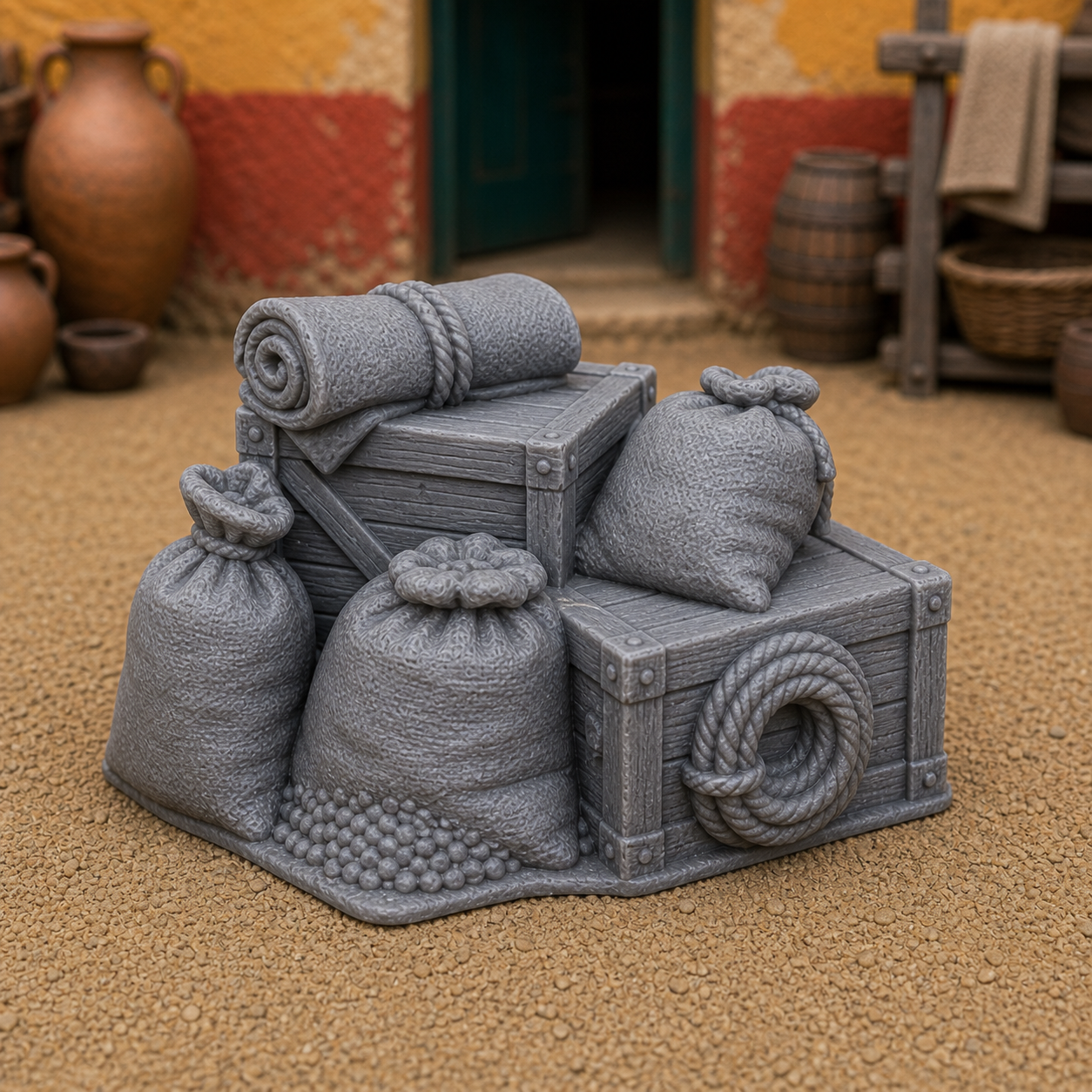
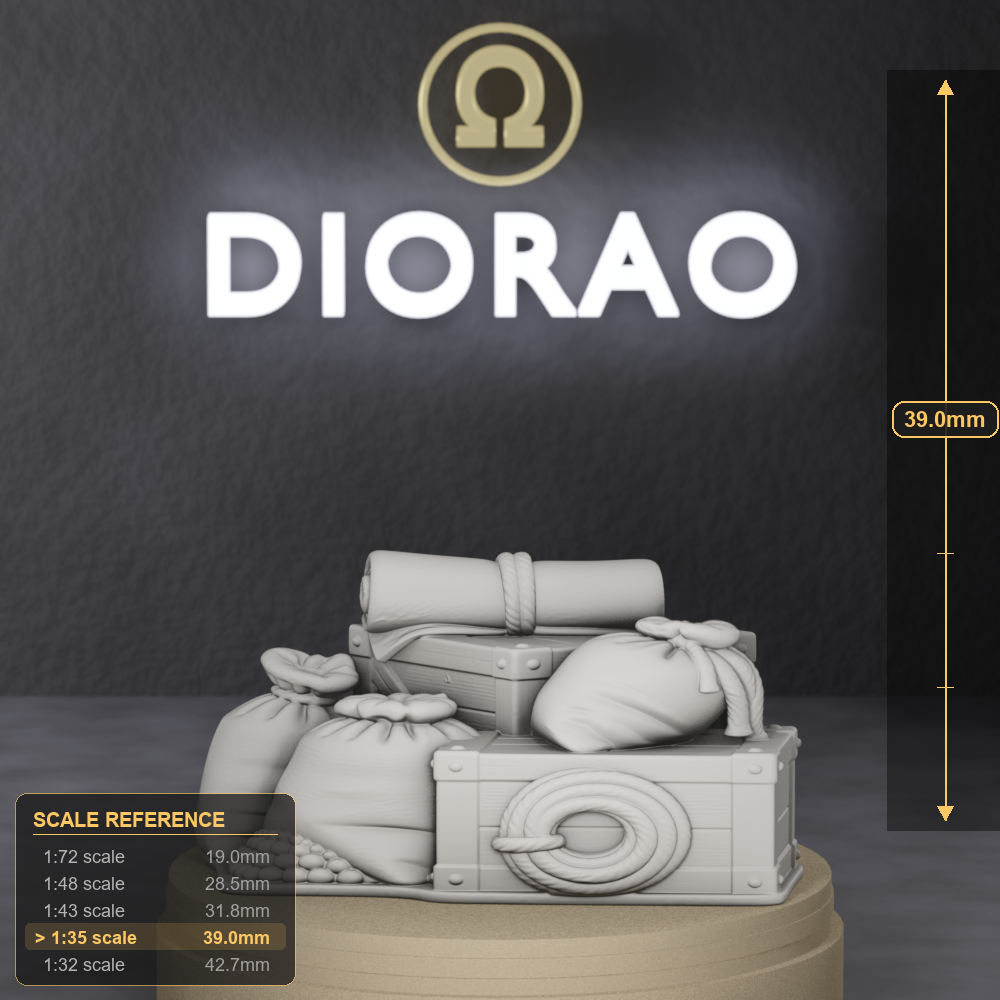
Behind every Roman market stall stood a working pile of crates and sacks - the storage end of the supply chain that fed the morning trade. Wooden crates (capsae) carried wine bottles, ceramics, and imported goods; linen sacks (sacci) held grain, lentils, dried legumes, and raw wool. Period: Roman antiquity, 1st c. BCE - 3rd c. CE.
This pile depicts a typical back-of-stall arrangement: stacked rectangular crates with iron banding, leaning sacks tied with hemp cord, and a couple of round baskets at the base. Recovered crate fragments from Herculaneum show consistent dimensions and iron-banded construction across the empire.
Painting tips
- Crates: medium oak base, dark brown wash, edge-highlight along iron bands in steel-grey.
- Sacks: alternate beige and pale tan to suggest different contents.
- Cord ties: slightly darker brown.
- Optional spilled grain: dry-brush of pale yellow at the base.
Historical sources & further reading
- Herculaneum: warehouse and shop excavations
- Pompeii: macellum back-room finds
- Holleran, Claire. Shopping in Ancient Rome (2012)
⚠ Small parts. Not suitable for children under 14.