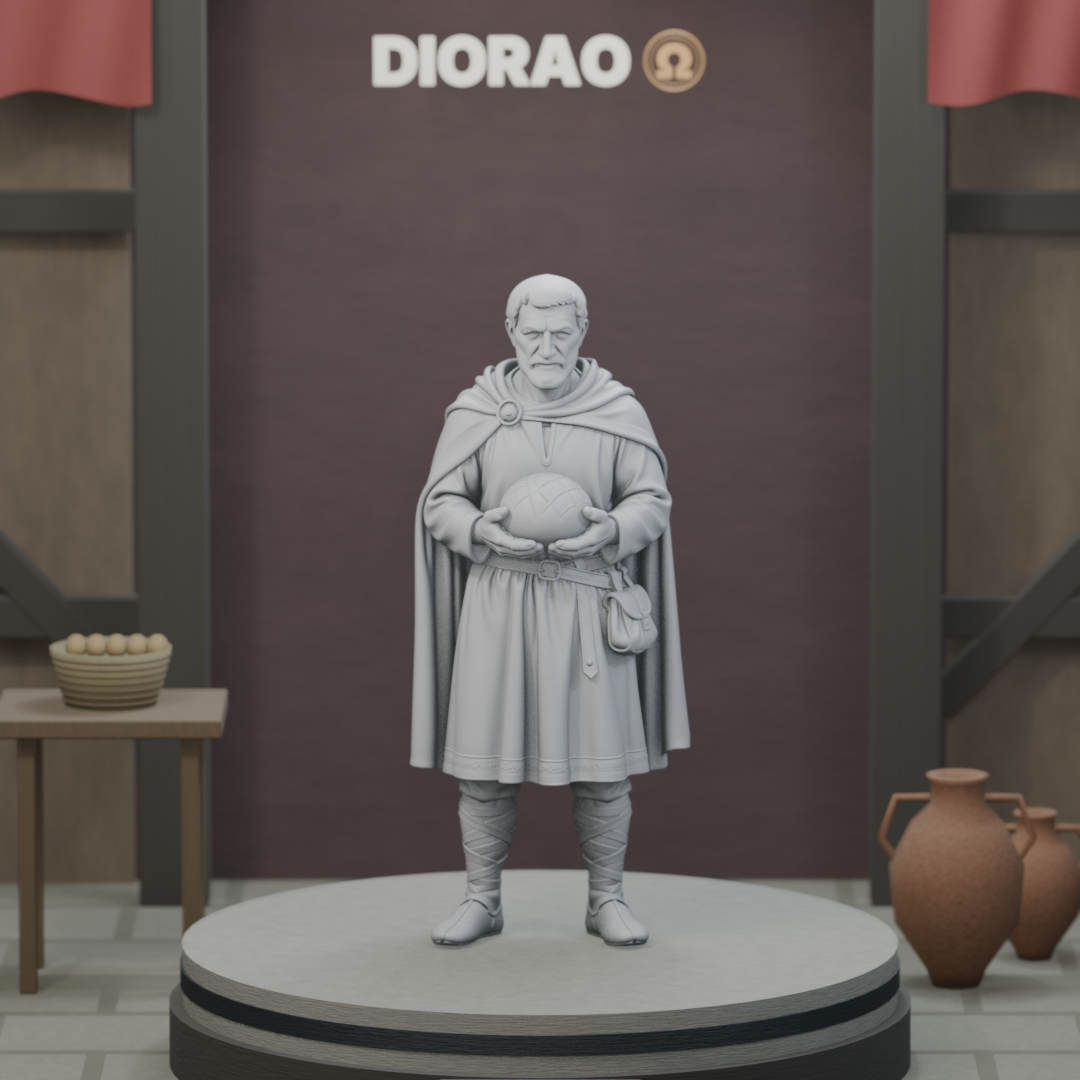
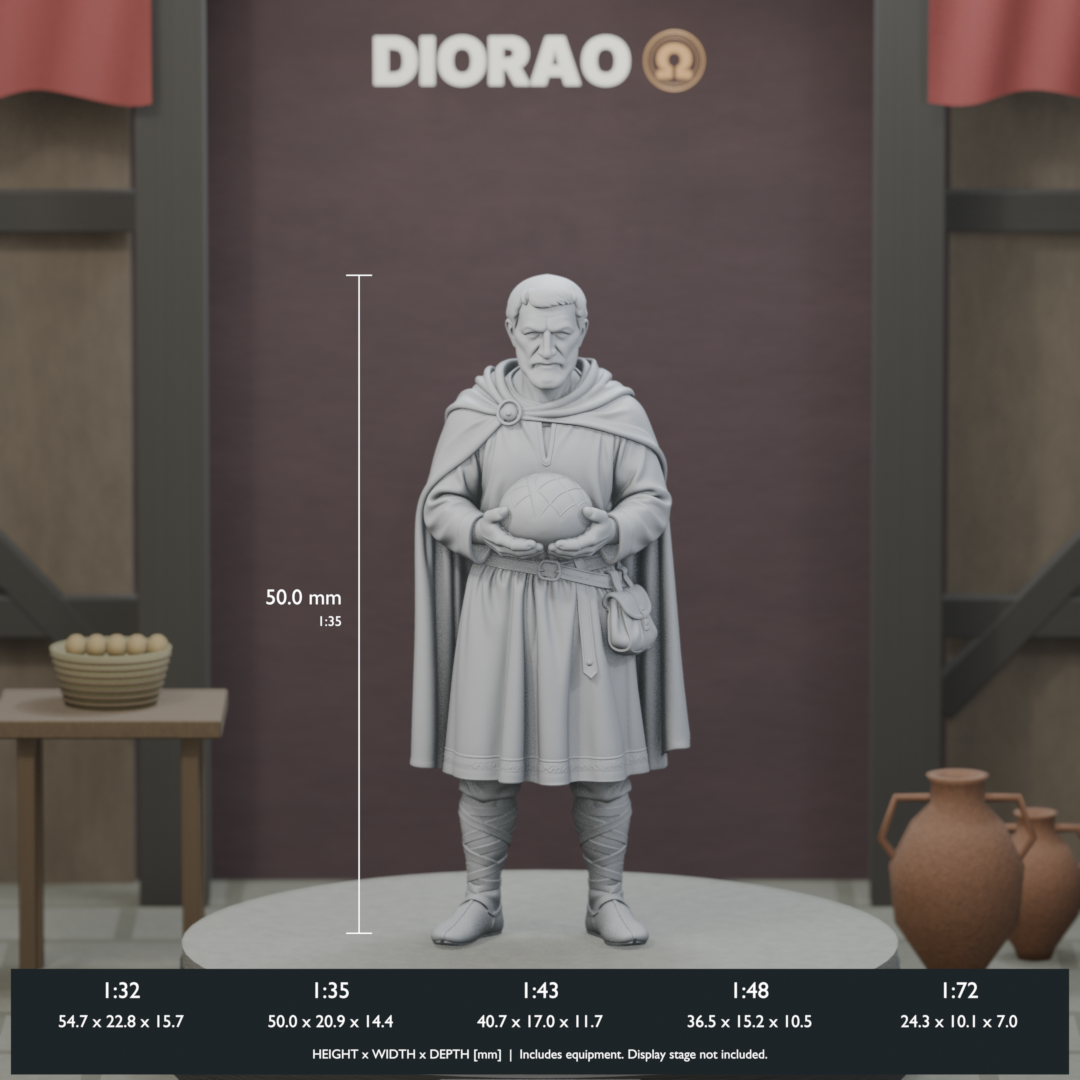
A Parisian bread seller of the early Middle Ages — apron, belted tunic, a basket of dense rye loaves on the hip, calling out the day's price. Period: Early Middle Ages, c. 500-1000 CE.
Bread in Merovingian and Carolingian Paris was a daily commodity, baked at communal ovens (furnus) and walked to market in stacked baskets. The seller — often a baker's wife, son or hired runner — was the first contact a customer made on a market morning. This figure is mid-call: weight on one foot, basket fused to the hip, apron creased, loaves visible at the rim. Pose is alive, not a museum standing-pose.
Painting tips
- Tunic: undyed wool, sepia wash.
- Apron: darker, flour-dusted highlights at hip and chest.
- Basket: warm tan with sepia weave wash.
- Loaves: dark crust, lighter top dust of flour.
Historical sources & further reading
- Carolingian capitulary on bread weights
- Île-de-France early-medieval baker finds
⚠ Small parts. Not suitable for children under 14.