HISTORY · CONTEXT

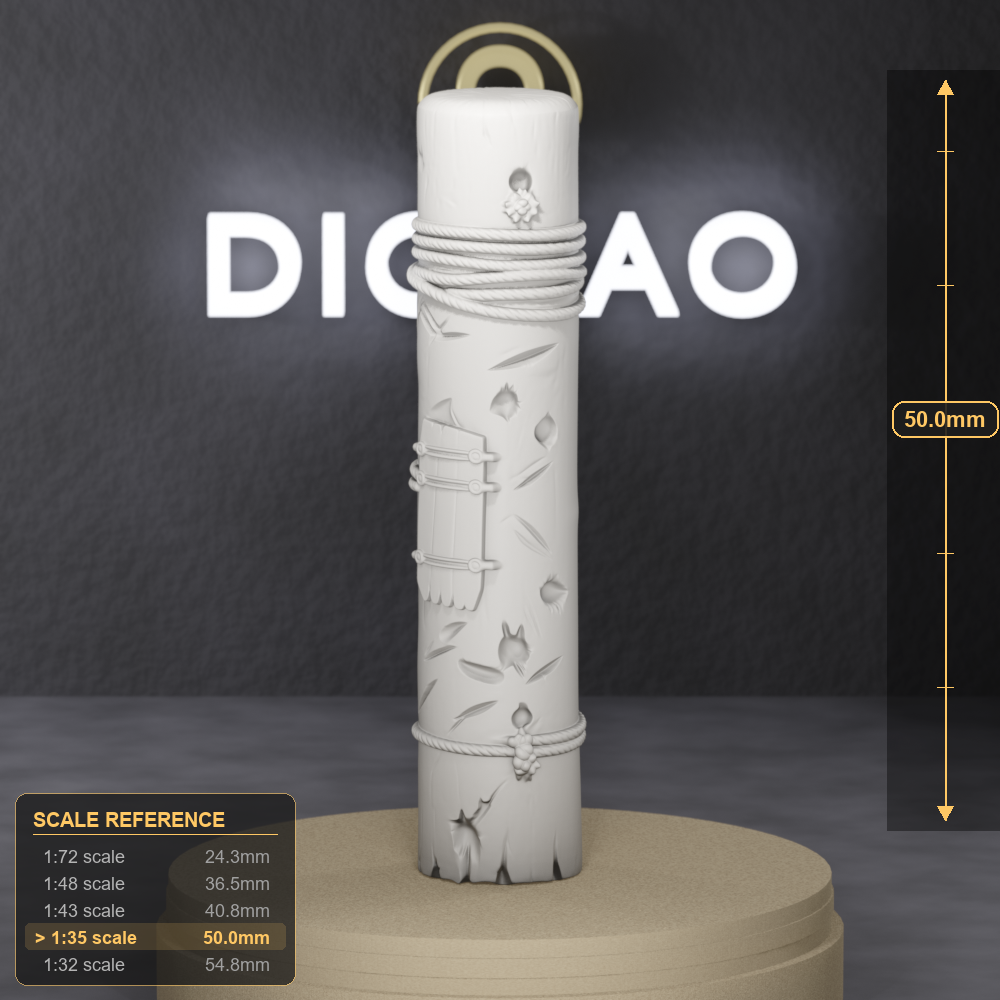
Ludus Training Post

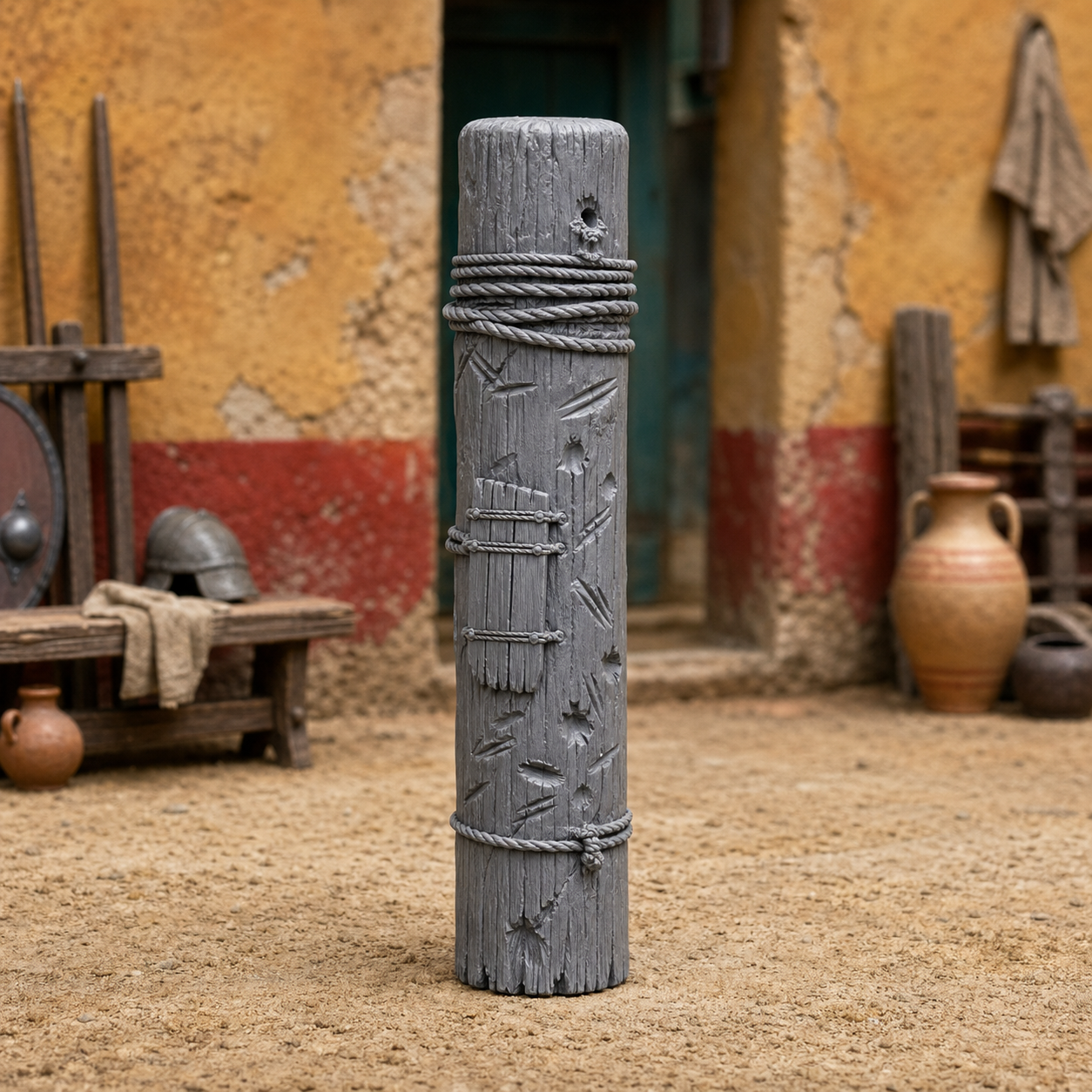
The palus was the central training tool of every Roman gladiator school and legionary camp. A roughly six-foot wooden post (about 1.8 meters) sunk into the sand of a training yard, the palus served as a passive sparring partner: recruits attacked it for hours daily with weighted wooden practice swords (gladii lignei) and oversized practice shields, drilling thrust angles, footwork, stamina, and shield-arm endurance without risking injury to a live opponent. The 4th-century Roman military writer Vegetius called the ad palum drill the foundation of all soldierly fitness:

"No soldier is fit to fight until he has fought the palus."
- Vegetius, De Re Militari, Book I, ch. 11 (c. 4th century CE)

Roman gladiator ranks themselves were measured in palus terminology. A primus palus was the top fighter in the school; secundus palus the second-ranked, and so on down the cadre. To earn a palus was to be ranked among the best of one's training group. The post itself absorbed thousands of strikes over years of use: archaeological surveys of the Ludus Magnus in Rome - the largest imperial gladiator school, just east of the Colosseum, excavated 1937-1968 - suggest each post was replaced periodically as the wood splintered. This miniature depicts a heavily-used palus in a working ludus: oak or beech grain visible, two horizontal rope wraps for cushioning at attacker's shoulder and waist height, and the diagonal cut marks of thousands of practice strikes. No integrated base - the post sits directly in a sand-textured terrain tile or diorama groundwork.

Painting tips

  • Wood: medium oak base, dark brown wash, dry-brush highlights with bone for the strike-worn edges.
  • Strike marks: pick out diagonal cuts with a slightly lighter tone to suggest fresh wood exposure.
  • Rope wraps: pale beige base, sepia wash, dry-brush highlight.
  • Bottom edge: stronger weathering - embed in sand-texture groundwork for a buried look.
  • Optional decoration: a faint red ochre stripe on Roman military variants.

Historical sources & further reading

  • Vegetius, De Re Militari, Book I, chapters 11-18 (c. 4th century CE)
  • Excavations at the Ludus Magnus, Rome (1937-1968)
  • Plutarch, Life of Crassus, chapter 8
  • Junkelmann, Marcus. Familia Gladiatoria (1996)
  • Goldsworthy, Adrian. The Complete Roman Army (2003)

⚠ Small parts. Not suitable for children under 14.
IN THE BOX

What you receive.

01

The figure

Resin-printed on our 16K MSLA printer in tougher ABS-Like resin. Washed, UV-cured, quality-checked, separated from supports by hand.

02

Foam-in-box packaging

Every order ships in die-cut protective foam inside a branded cardboard box. Thin parts do not snap in transit — guaranteed.

03

Studio gift

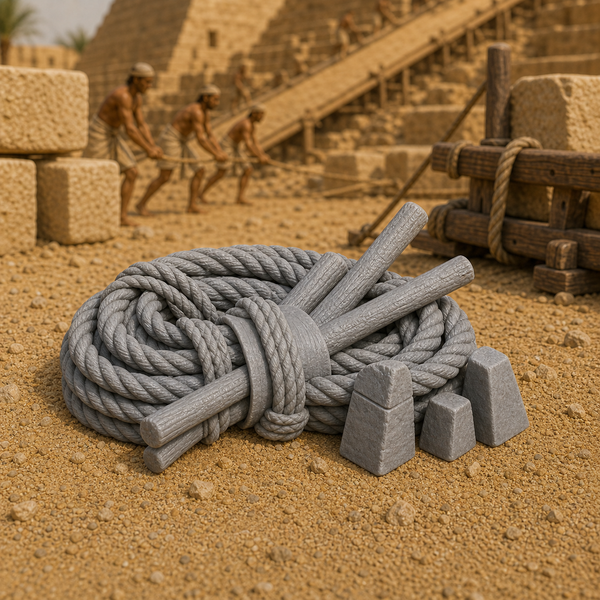
Every order ships with a small surprise — a miniature diorama prop from the studio. A crate, a shield stand, a shell casing, a scatter piece. Something extra to stage your figure on the shelf.

SCALE TABLE · LUDUS TRAINING POST

How tall this figure stands.

We offer five scales. Scale is a ratio (1:35 = 1/35 of life-size), not a flat number — actual figure height depends on the sculpt. Heights below are for this specific figure. 1:35 is the default shown in the main product photo.

Scale This figure Use case
1:32 55.9 mm Showcase · 1:32 vehicles
1:35 · default 51.0 mm Classic military diorama
1:43 41.6 mm Diecast · model railway
1:48 37.2 mm Collector · 1:48 kits
1:72 24.8 mm Wargaming · mass battle

ADDITIONAL TREATMENTS

Primer — pick your finish.

NO PRIMER

Raw dark-grey resin. Fully usable as-is for display. Default option.

BLACK PRIMER

Stynylrez matte black, applied at the studio. Ready for zenithal highlighting or dry-brush painting.

WHITE PRIMER

Stynylrez matte white, applied at the studio. Maximum visibility of sculpted details under paint.

PRIMER SELECTED AT CHECKOUT

VOICES · EARLY ACCESS

From the hobby bench.

Λ
Detail on the shield rim and the helmet crest is genuinely museum-grade. Primed straight out of the box and painted it the same evening.
— Hobby modeler, Warsaw
Ω
I've been building dioramas for fifteen years. This is the first 3D-printed Spartan where the proportions and the cape drape look right.
— Diorama builder, London
Three days to Berlin. Packaging is proper foam-in-box, figure arrived with zero damage and the primer finish is crisp.
— Wargamer, Berlin

SHIPPING & RETURNS

Straightforward.

PRODUCTION

Up to 5 business days.

Every figure is printed after you order, not pulled from stock. Wash, UV-cure, hand-support removal, QA — then it ships.

SHIPPING

Worldwide tracked.

Poland 1–2 days · Europe 3–6 days · US · Canada · Australia 7–12 days. Total order time typically 5–17 days depending on region.

RETURNS

30-day money back.

Don't like it? Return within 30 days of delivery for a full refund — no explanation required. Original packaging preferred, return shipping on you. Damaged on arrival? We cover everything.

WHY DIORAO

Four reasons, no marketing.

01

16K precision

Detail down to 0.05 mm. Chainmail, laurel, leather stitching — printed cleanly, nothing hand-finished.

02

ABS-Like resin

Tougher than standard hobby resin. Spear shafts, banner poles, horns — they don't snap.

03

30-day guarantee

Not happy? Send it back within 30 days for a full refund. Zero questions.

04

Studio-crafted

Printed, cured, packaged in-house by the team. Every figure goes through human QA before it ships.