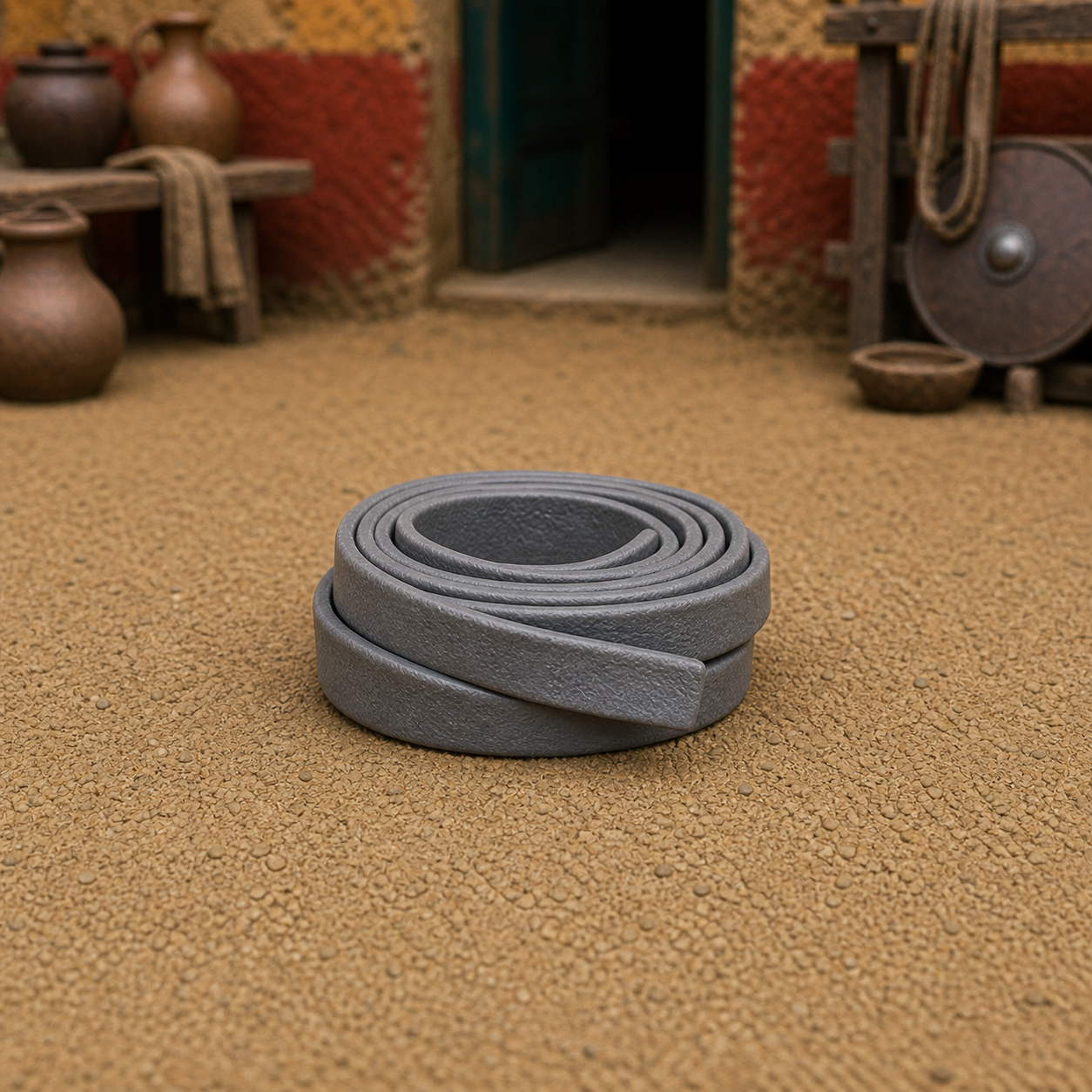

A coiled length of cured leather strap - the kind a Roman sutor (leatherworker) kept on hand for repairs to gladiator gear, sandals, helmet liners, and shield grips. Cured cowhide cut to consistent width and rolled tight stored compactly and stayed supple for months. Period: Roman antiquity, 1st c. BCE - 3rd c. CE.
Leather straps were among the highest-volume consumables in any Roman gladiator school, military camp, or harness workshop. Vindolanda finds (1st-3rd c. CE) and the gladiator barracks at Pompeii both yielded coiled stocks of cut straps in this exact form factor.
Painting tips
- Rich brown leather base, sepia wash, tan edge highlight on the visible coil edge.
- Vary tone slightly between coils to suggest different cured batches.
Historical sources & further reading
- Vindolanda Trust: leather finds
- Junkelmann, Marcus. Reconstructing the Roman Gladiator (2000)
⚠ Small parts. Not suitable for children under 14.