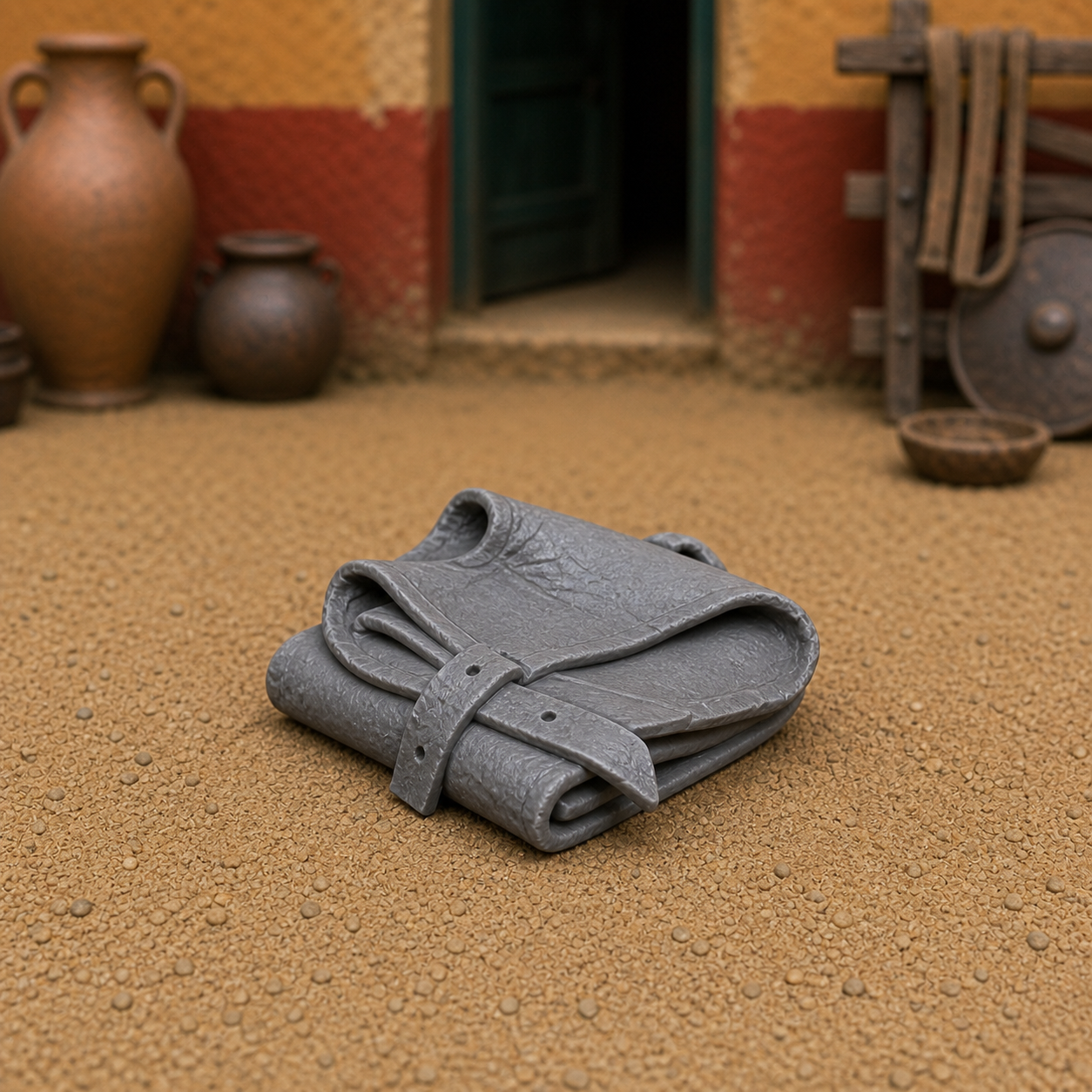
The leather apron (subucula coriacea) was the standard working dress of a Roman sutor, smith, butcher, or any craftsman dealing with sharp tools and rough materials. Heavy cowhide, cut to chest-and-thigh length, tied at the back of the neck and waist with simple cords - folded across the workshop bench at the end of a shift, ready for the next morning.
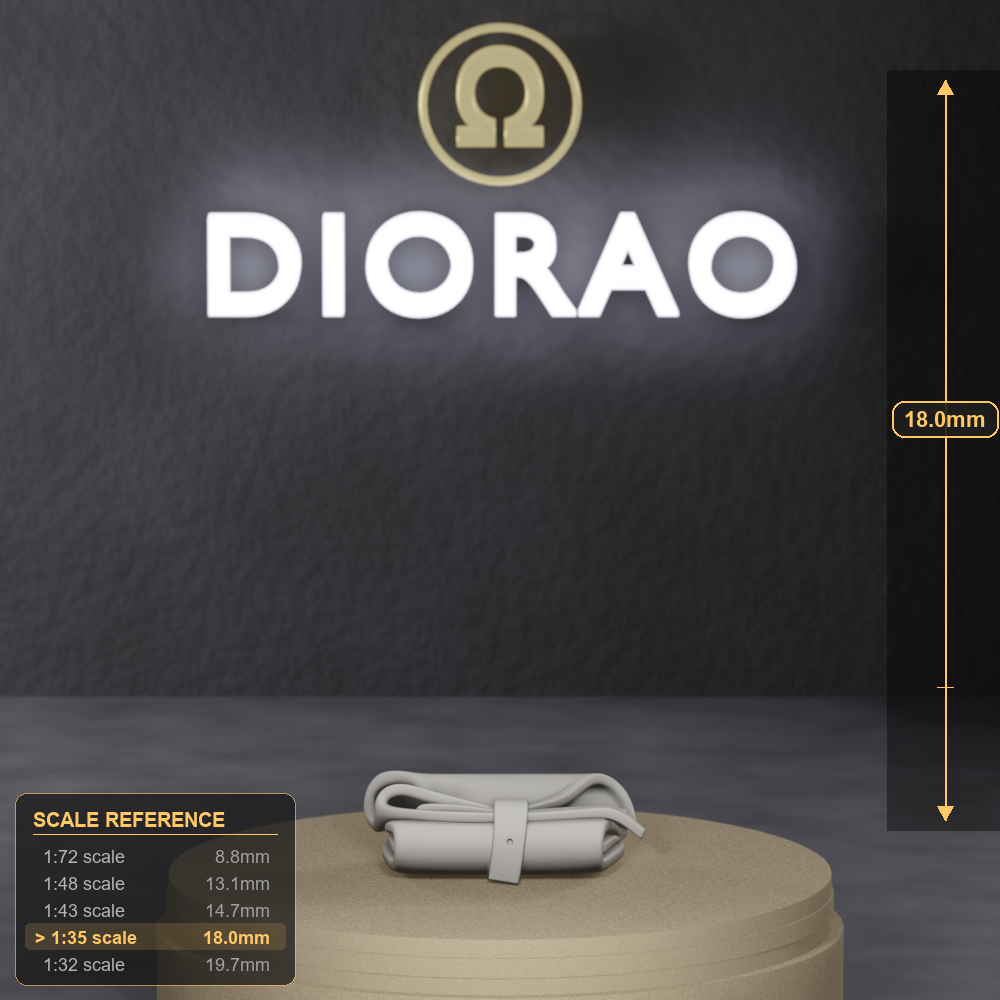
This prop depicts a thick leather apron neatly folded on its long side: visible grain, edge stitching, a bit of pale wear along the front face from contact with the bench. A characterful detail piece for a workshop diorama, even without a worker present - it implies recent activity. Period: Roman antiquity, 1st c. BCE - 4th c. CE.
Painting tips
- Rich dark brown leather base, sepia wash settles into the folds.
- Tan edge-highlight along the visible creases.
- Slightly paler patch on the front face suggests bench-wear.
- Cord ties: pick out in tan or pale beige.
Historical sources & further reading
- Junkelmann, Marcus. Reconstructing the Roman Gladiator (2000)
- Vindolanda Trust: leather finds
⚠ Small parts. Not suitable for children under 14.