Roman herb sellers (aromatarii) and apothecaries (medici, pigmentarii) sold dried and fresh herbs from market stalls and dedicated shops. Sage, rosemary, thyme, fennel, coriander, and rue were the everyday cooking herbs; saffron, pepper, and silphium were the luxury imports. Period: Roman antiquity, 1st c. BCE - 3rd c. CE.
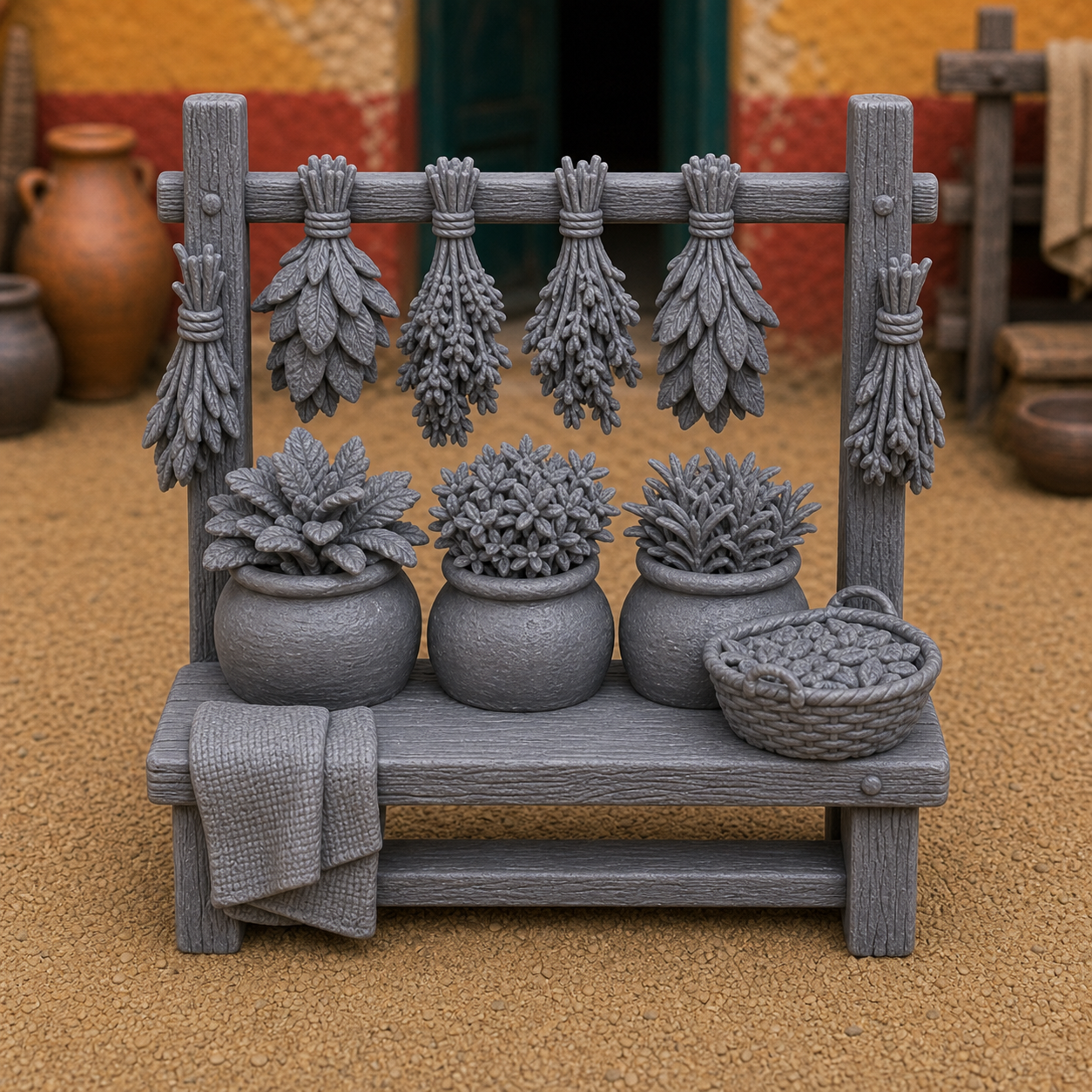
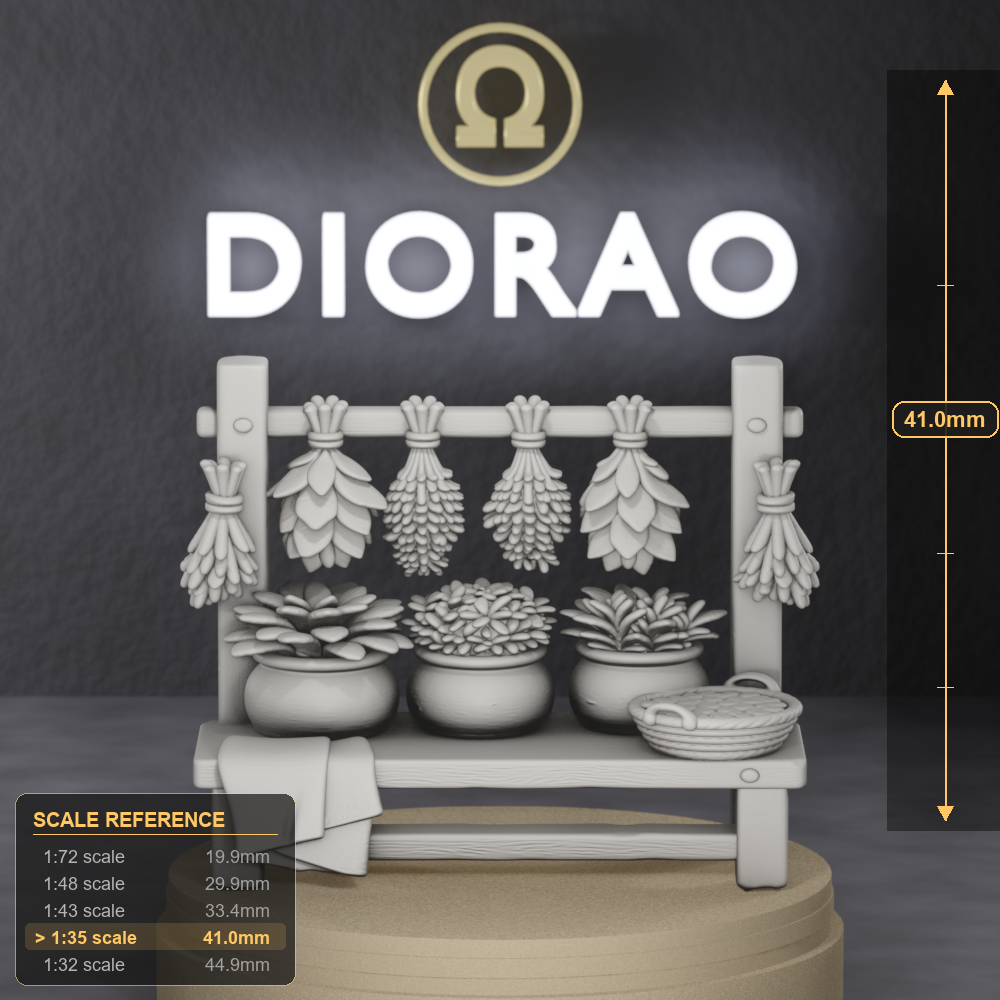
This piece depicts a typical herb-seller setup: a row of small terracotta pots with growing herbs, a wooden frame with bundles of dried sage and rosemary hanging upside-down, and a low shelf of small ceramic jars holding seeds and dried preparations. Pliny the Elder's Natural History (Books 19-27) catalogues hundreds of culinary and medicinal plants in commercial use.
Painting tips
- Fresh herbs in pots: vary greens - sage-gray, rosemary deep-green, basil bright.
- Dried bundles: muted olive and brown tones, sepia wash.
- Pots: warm terracotta with darker wash inside the rim.
- Wooden frame: medium oak, brown wash.
Historical sources & further reading
- Pliny the Elder, Natural History, Books 19-27 (1st c. CE)
- Apicius, De Re Coquinaria (1st c. CE)
- Pompeii: hortus (kitchen garden) excavations
⚠ Small parts. Not suitable for children under 14.