A gladiator trainee - Latin tiro - was a recruit at the start of his training inside a Roman ludus, before earning the right to fight in the arena. Active in the 1st century BCE through the 3rd century CE, trainees came from a mix of backgrounds: condemned criminals (damnati), prisoners of war (captivi), slaves bought by the lanista, and a smaller minority of free volunteers known as auctorati who signed binding contracts in exchange for pay, food, and the slim chance of glory in the arena. Whatever their origin, every recruit passed through months of disciplined drill against the palus before being matched to a fighting style - murmillo, thraex, retiarius, secutor, or hoplomachus.
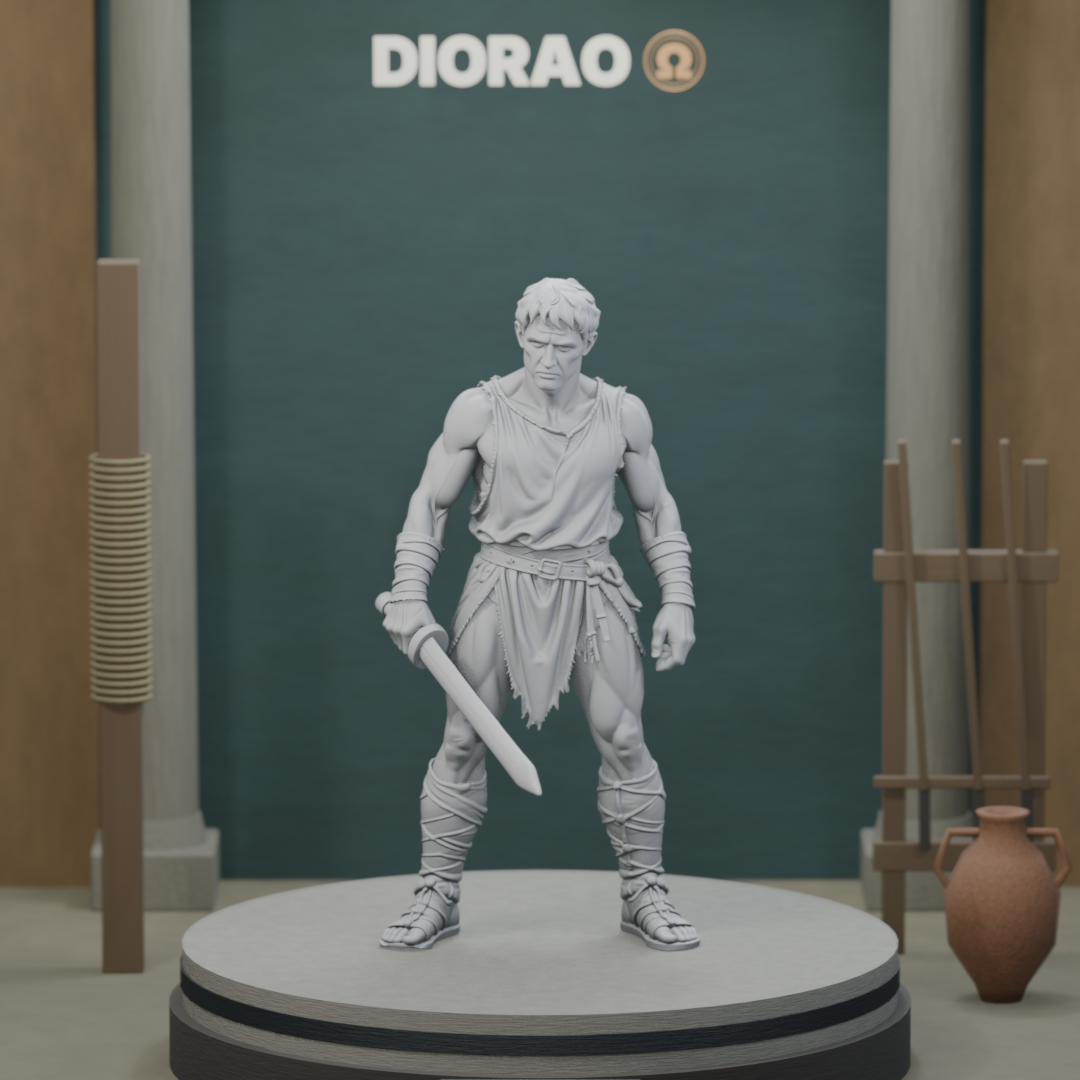
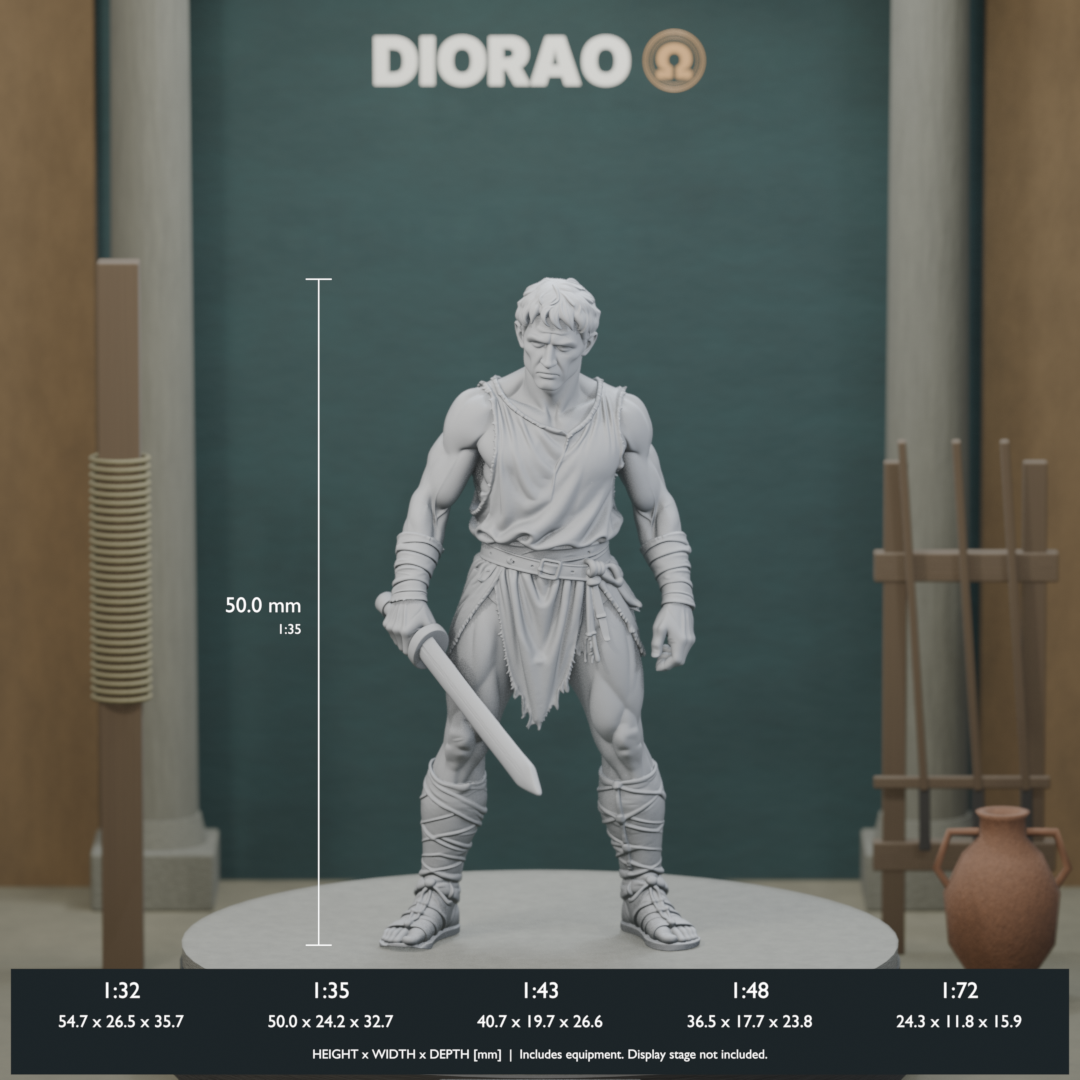
Recruits trained for hours daily with the gladius ligneus, a wooden practice sword roughly the length of a real gladius (about 60 cm) but built deliberately heavier to develop arm strength. They paired this with an oversized wicker training shield (scutum) - also weighted - to drill defensive footwork without endangering a sparring partner. Vegetius (De Re Militari, Book I, ch. 11) preserves the routine: post-drill against the palus, then shadow drill, then weighted-weapon drill, and finally graduated pair-sparring under the doctore's watch. This figure depicts a young trainee mid-stance: short knee-length tunic, simple leather belt, basic sandals, wooden gladius held in low ready. Period: Roman antiquity, 1st c. BCE - 3rd c. CE.
Painting tips
- Tunic: off-white or pale linen base, sepia wash, leave creases dirty.
- Wooden sword: pale tan base, brown wash, dry-brush highlight along the edge.
- Skin: warm Mediterranean tones - terracotta base, flesh highlights, optional sweat-shine on brow and shoulders.
- Leather belt and sandals: dark brown base, edge highlight in tan.
- Optional dust: light grey-tan dry-brush along sandals and lower tunic for sand-on-the-yard effect.
Historical sources & further reading
- Vegetius, De Re Militari, Book I, chapters 11-18
- Plutarch, Life of Crassus, chapter 8
- Suetonius, Life of Caligula 32
- Junkelmann, Marcus. Familia Gladiatoria (1996)
- Wiedemann, Thomas. Emperors and Gladiators (1992)
⚠ Small parts. Not suitable for children under 14.