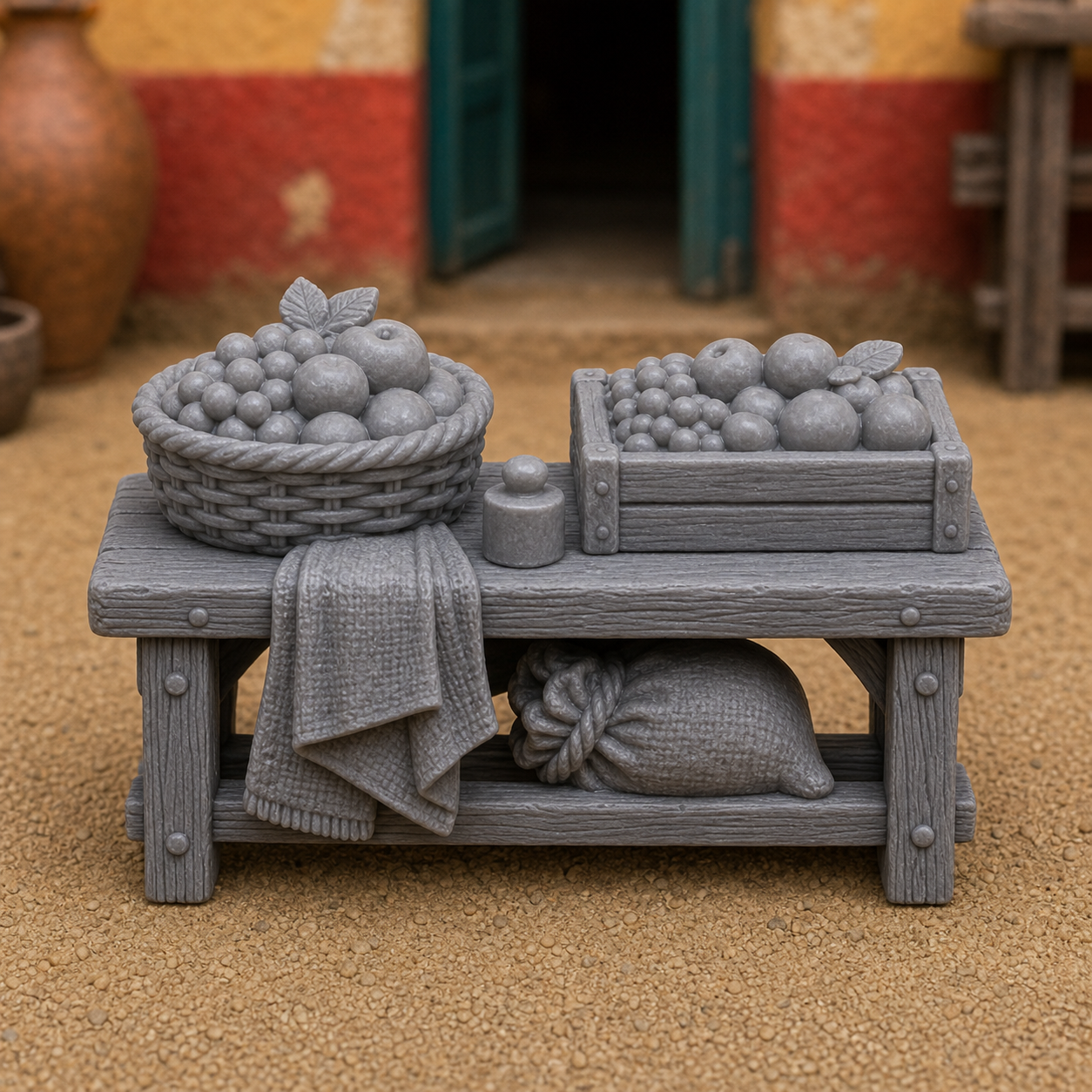
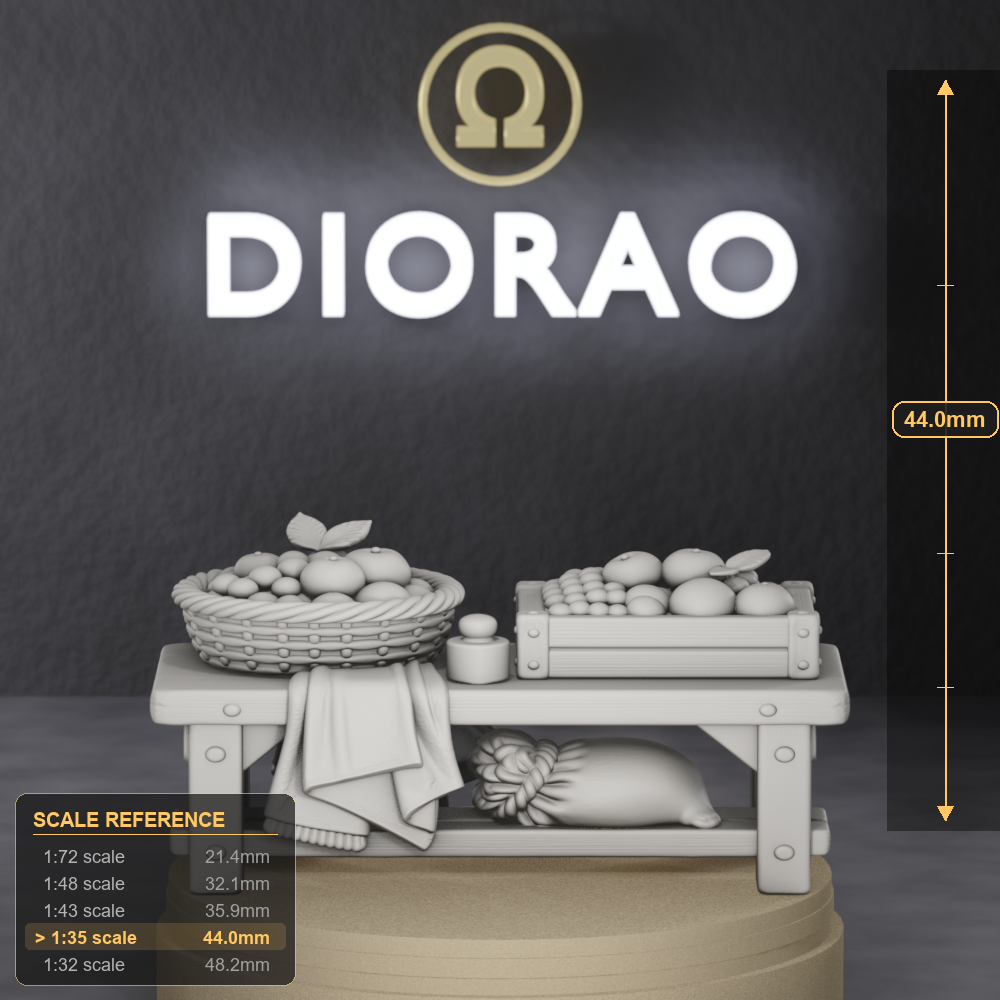
Roman markets - the macellum in larger cities, the open-air forum in towns - sold fresh produce daily from low wooden tables exactly like this one. Fruit vendors (pomarii) brought figs, dates, apples, pears, and grapes from suburban orchards before dawn and arranged them in shallow baskets and reed trays for the morning crowd. Period: Roman antiquity, 1st c. BCE - 3rd c. CE.
This table depicts a typical fruit-vendor setup: a sturdy wooden trestle topped with a sloped display, baskets of stacked produce, a small set of bronze hand-scales, and a folded cloth at one end for wiping fruit. Recovered marketplace layouts from Pompeii (79 CE) and Ostia Antica show identical low-table arrangements lining the cardo and decumanus.
Painting tips
- Wooden table: medium oak base, brown wash, dry-brush highlights along edges and grain.
- Fruits: paint each variety distinctly - purple/green grapes, red/yellow apples, dark figs, golden pears.
- Baskets: pale tan wicker, sepia wash settles into weave detail.
- Cloth: off-white linen with sepia wash for used appearance.
Historical sources & further reading
- Pompeii excavations: macellum at Regio VII, Insula 9
- Ostia Antica: Forum of the Corporations excavations
- Holleran, Claire. Shopping in Ancient Rome (2012)
⚠ Small parts. Not suitable for children under 14.