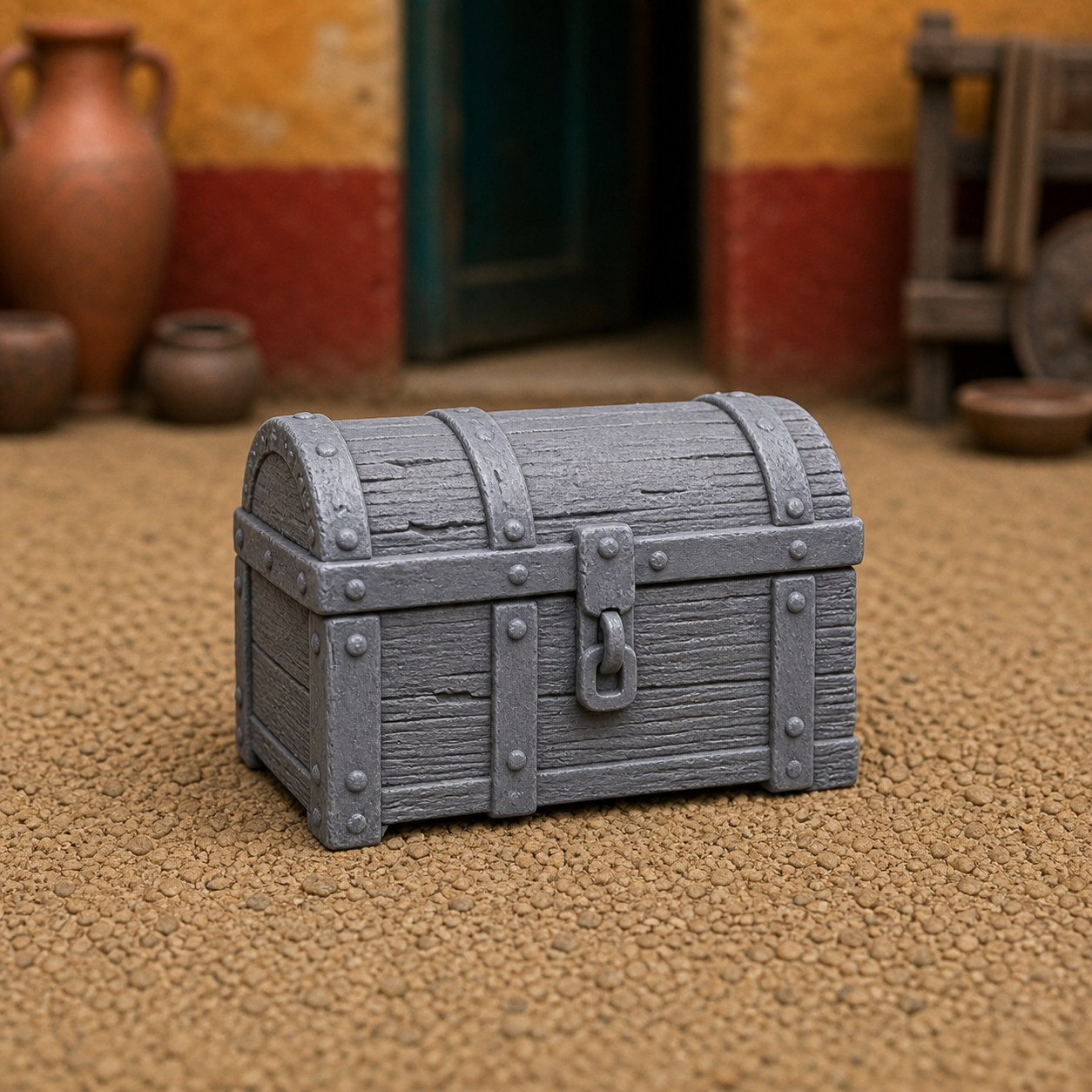
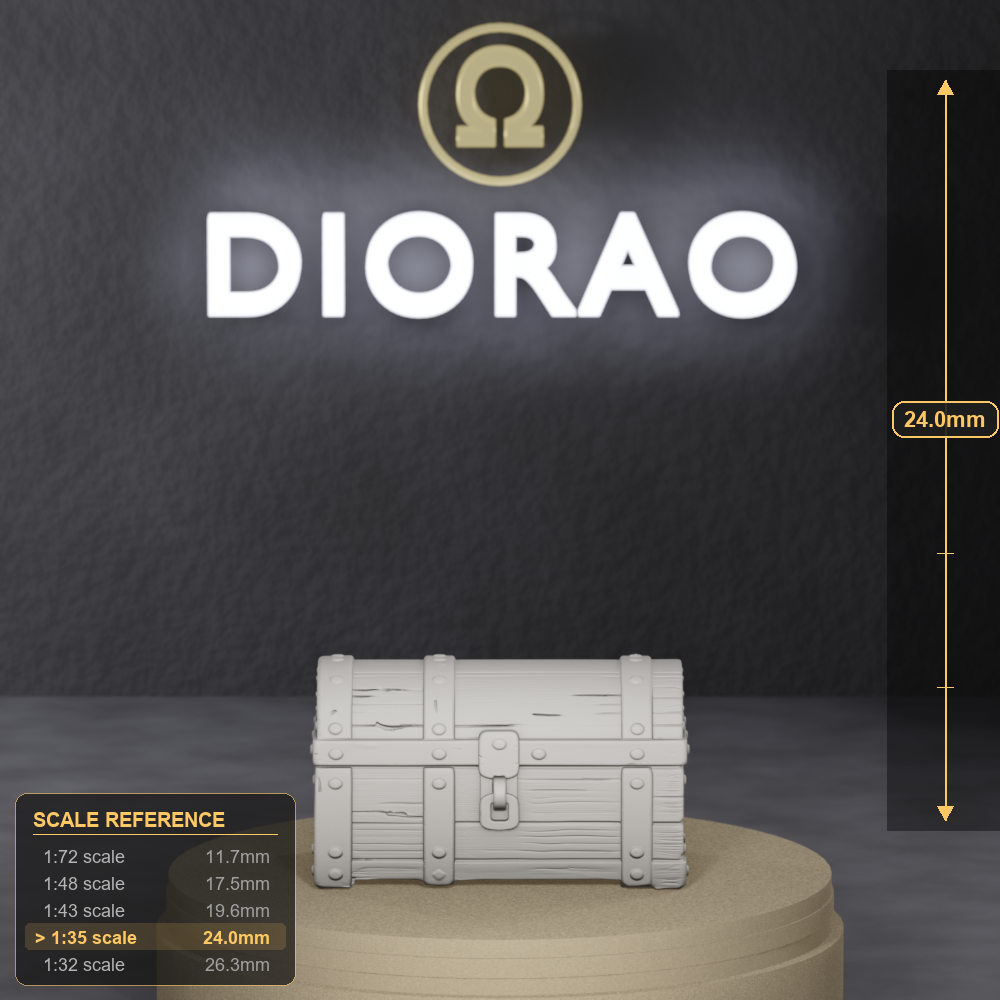
A banded wooden chest left at the doorstep - holding tools, dry goods, or a doorman's gear. Period: Roman antiquity, 1st c. BCE - 3rd c. CE.
Roman shops, taverns and ground-floor flats often kept a low wooden chest by the entry as a combination bench, storage box, and improvised counter. Iron strap-bands reinforced the corners; a simple latch closed the lid. This piece is sculpted as one fused chest with thick bands and a closed lid - readable as a working object, not a treasure box.
Painting tips
- Wood: warm walnut or olive tones with a dark wash.
- Iron bands: dark grey with rust streaks at corners.
- Latch: brighter steel highlight.
Historical sources & further reading
- Pompeii / Herculaneum carbonized chests
⚠ Small parts. Not suitable for children under 14.