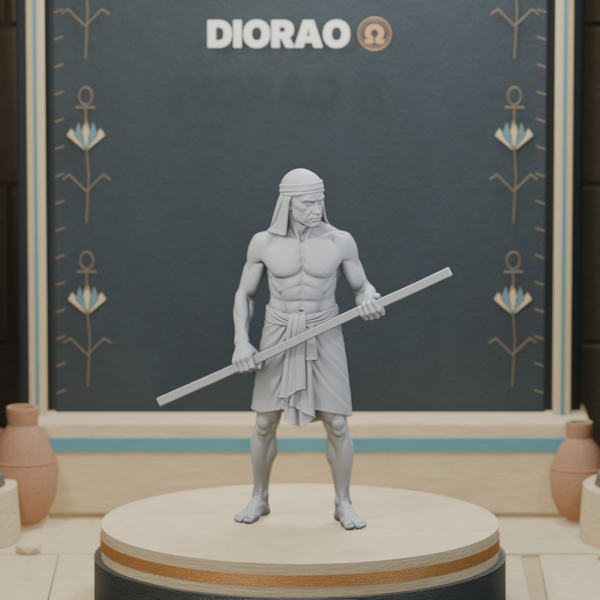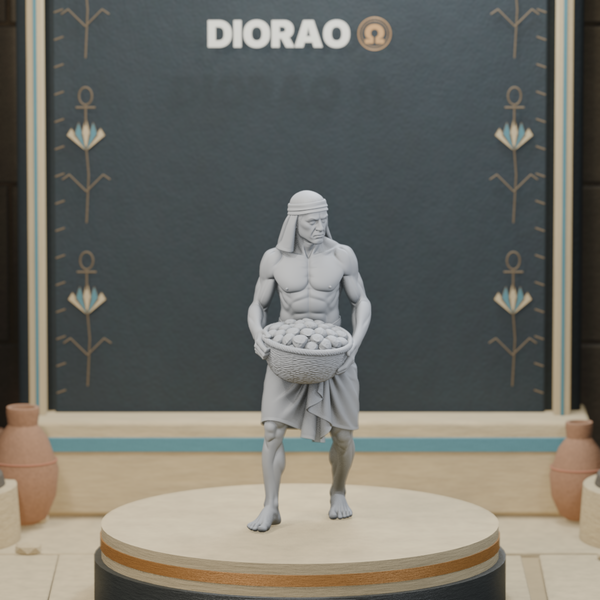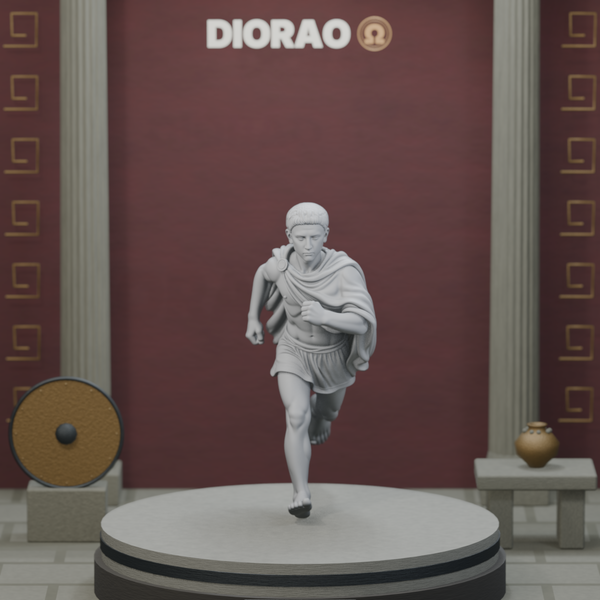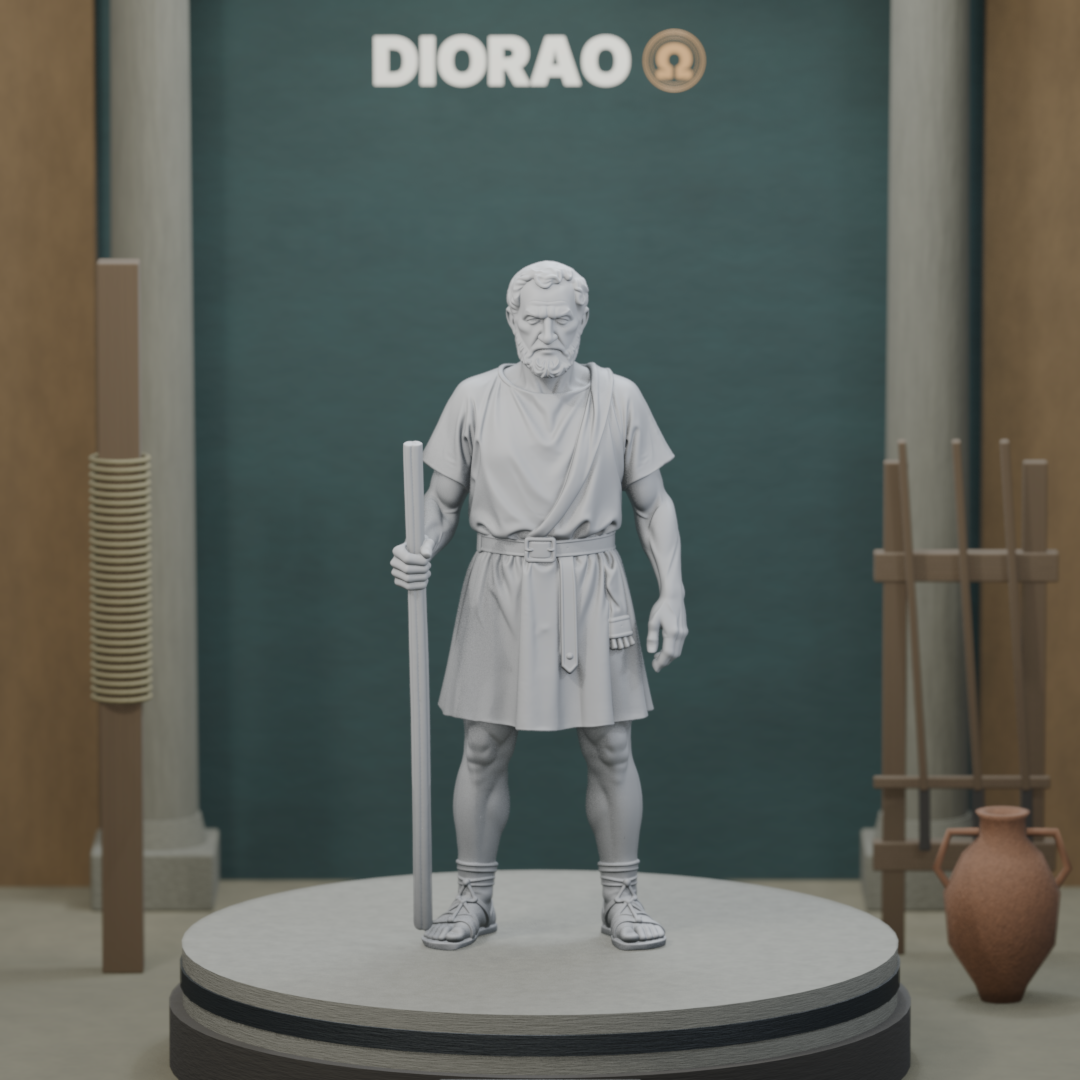
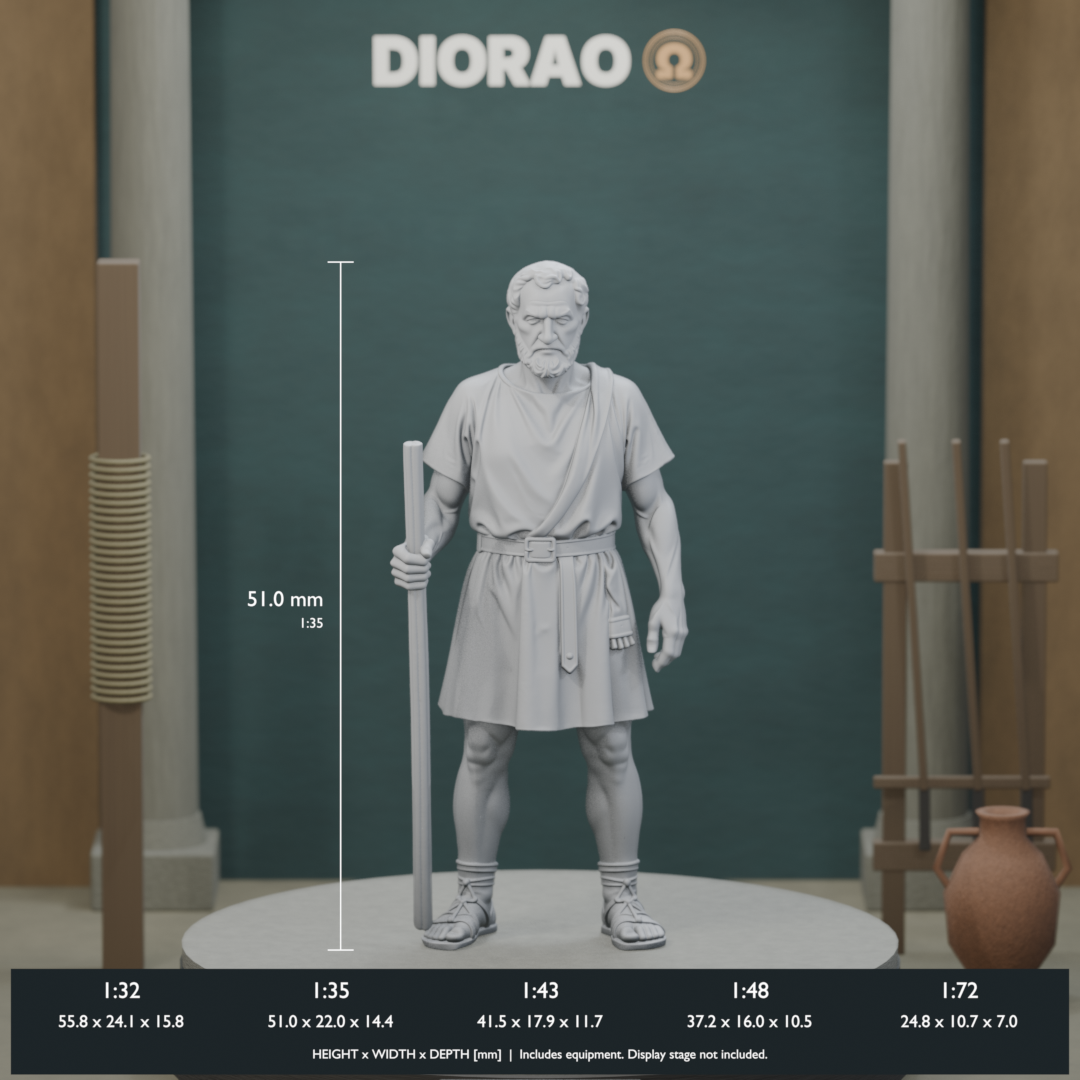
A doctore was the head trainer of a Roman gladiator school (ludus), responsible for teaching combat technique to recruits known as tirones. Active across the late Roman Republic and the Imperial period - roughly the 1st century BCE through the 3rd century CE - every major ludus employed at least one doctore for each fighting style it produced: doctore murmillonum for the heavy-armored murmillo, doctore thraecum for the curve-bladed Thracian, doctore retiariorum for the net-and-trident retiarius. Most doctores were retired gladiators themselves - men who had earned the rudis, the wooden practice sword that symbolized manumission and the right to walk free from the arena. Many returned to the ludus afterwards as paid civilian instructors (auctorati) under contract to the lanista, the school's owner.
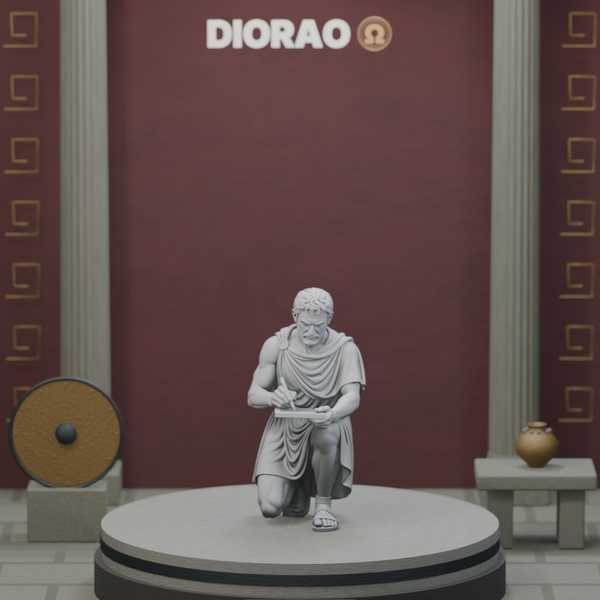
The most thoroughly documented Roman ludus stood in Capua, owned by Cnaeus Cornelius Lentulus Batiatus, where the Thracian gladiator Spartacus and roughly seventy other men broke out in 73 BCE to launch the Third Servile War. Plutarch's Life of Crassus (chapter 8) describes the school's daily training rhythm, and the 4th-century military writer Vegetius (De Re Militari, Book I) credits the gladiatorial post-drill - the ad palum drill - as the foundation of all subsequent Roman legionary training. This figure depicts a mid-career doctore between sparring sets: weathered face, knee-length tunic belted high, leather cingulum at the waist, laced sandals, and a vertical training staff or rudis in the right hand. The pose is supervisory and lived-in - a working ludus from the inside, not the spectacle of the arena.
Painting tips
- Grey resin accepts acrylic primer well - apply a single thin, even coat.
- Roman skin tones: base in a warm mid-brown, layer up with red-oranges, highlight with bone or ivory.
- Tunic: off-white or pale linen base, washed with sepia or burnt umber.
- Leather belt and sandal straps: dark brown base, edge highlight in tan.
- Wooden staff: medium wood-brown base, dark wash, dry-brush highlights with pale wood.
Historical sources & further reading
- Vegetius, De Re Militari, Book I (4th century CE)
- Plutarch, Life of Crassus, chapters 8-11
- Suetonius, Lives of the Caesars (passim)
- Junkelmann, Marcus. Familia Gladiatoria: The Heroes of the Amphitheatre (1996)
- Wiedemann, Thomas. Emperors and Gladiators (1992)
⚠ Small parts. Not suitable for children under 14.