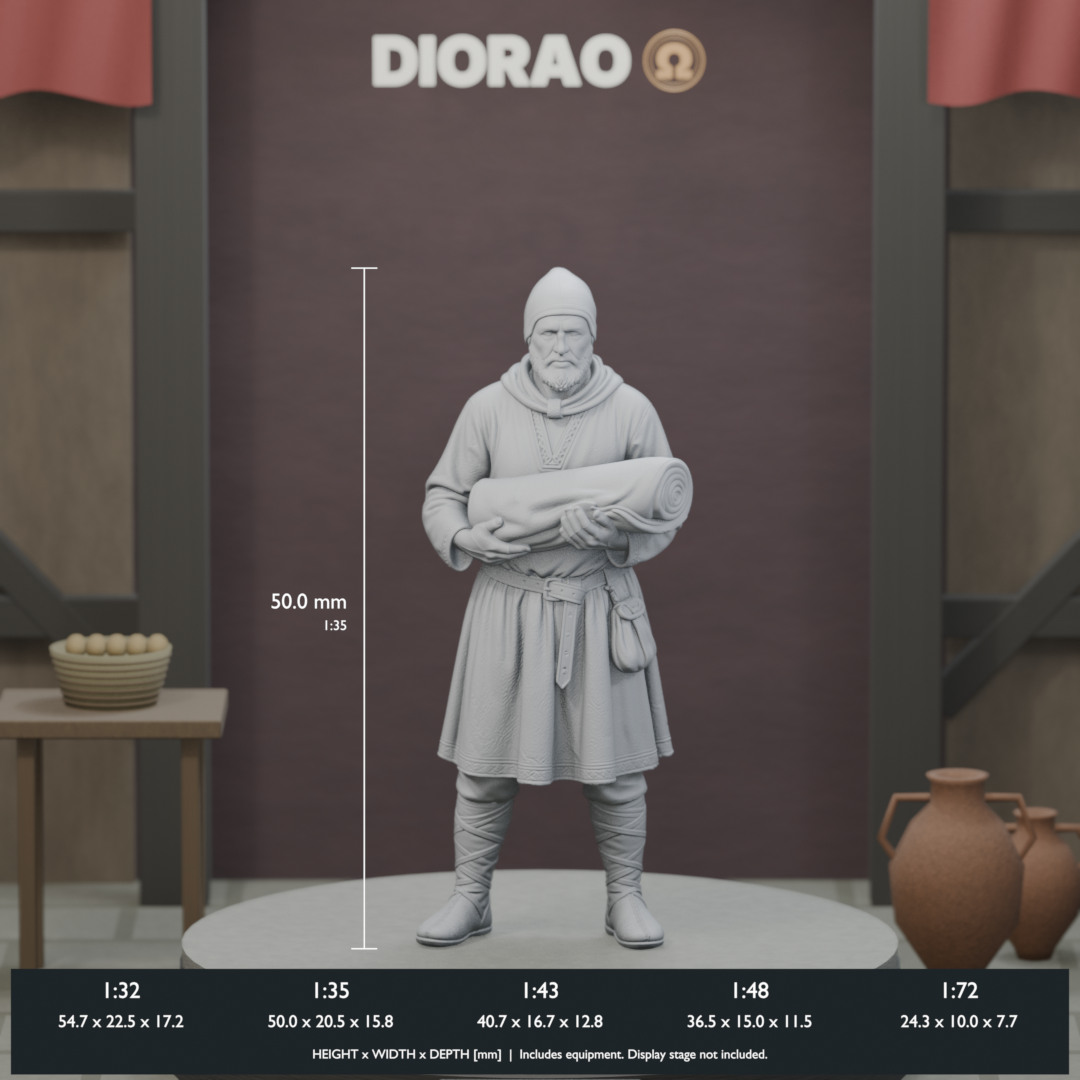
A Parisian cloth vendor — sleeves rolled, a folded bolt of undyed linen carried across both forearms, ready to drop on the counter for a customer to handle. Period: Early Middle Ages, c. 500-1000 CE.
Cloth was Frankish Paris's staple trade. The Île-de-France grew flax along the Seine and Oise; village weavers walked their bolts to the Île de la Cité market on weekly fair days. Vendors carried finished pieces in the working pose this figure shows — both arms under the bolt, weight on one foot, head turned toward the buyer. Tunic belted over a longer undertunic, leg-wraps at the calf, soft turn-shoes.
Painting tips
- Tunic: undyed wool, sepia wash.
- Bolt: pale linen with a darker fold-shadow wash and a thin rope tie.
- Leg-wraps: lighter linen, weave-tone if you want detail.
- Shoes: soft brown turn-shoe.
Historical sources & further reading
- Carolingian capitulary on cloth weights and standards
- Île-de-France flax-trade records
⚠ Small parts. Not suitable for children under 14.