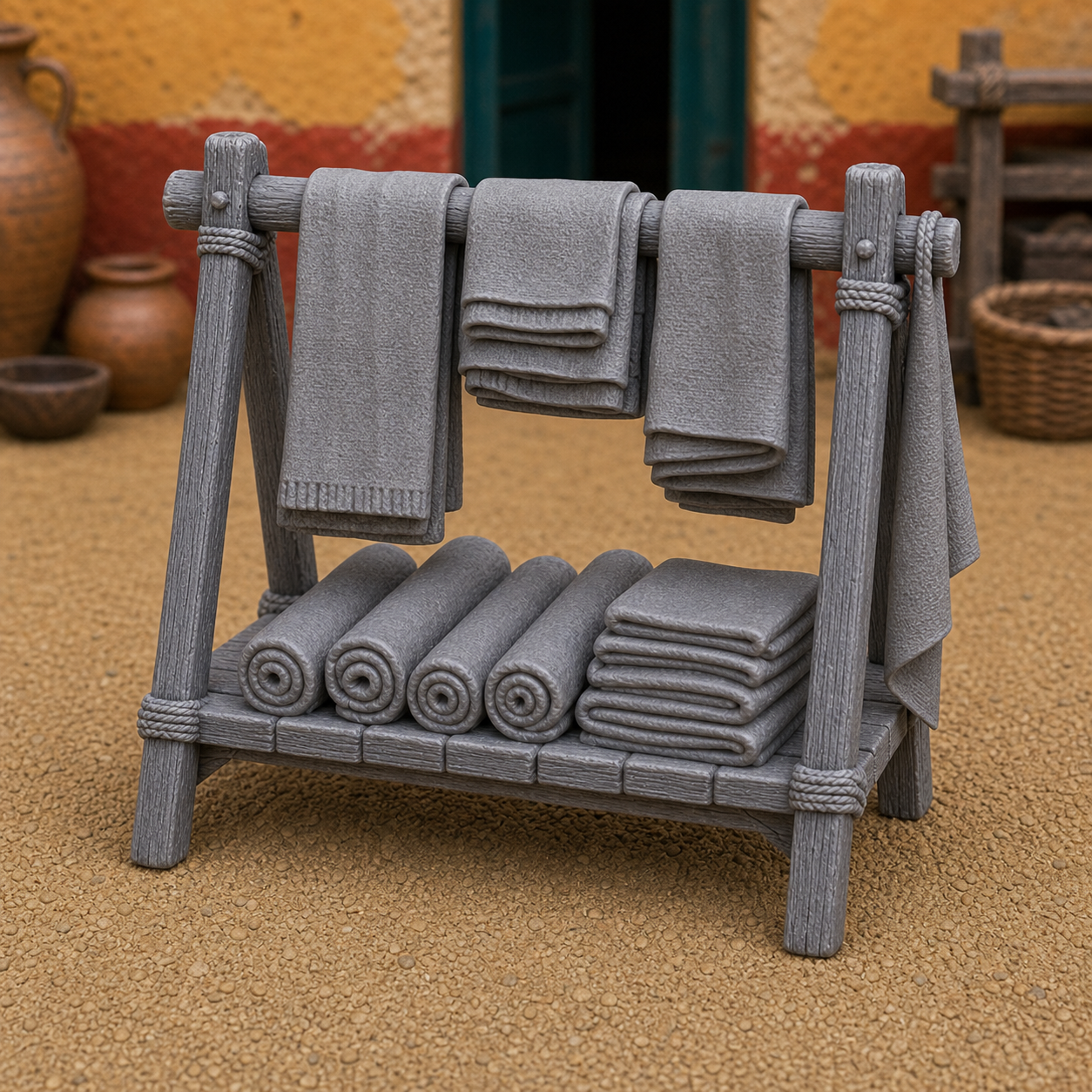
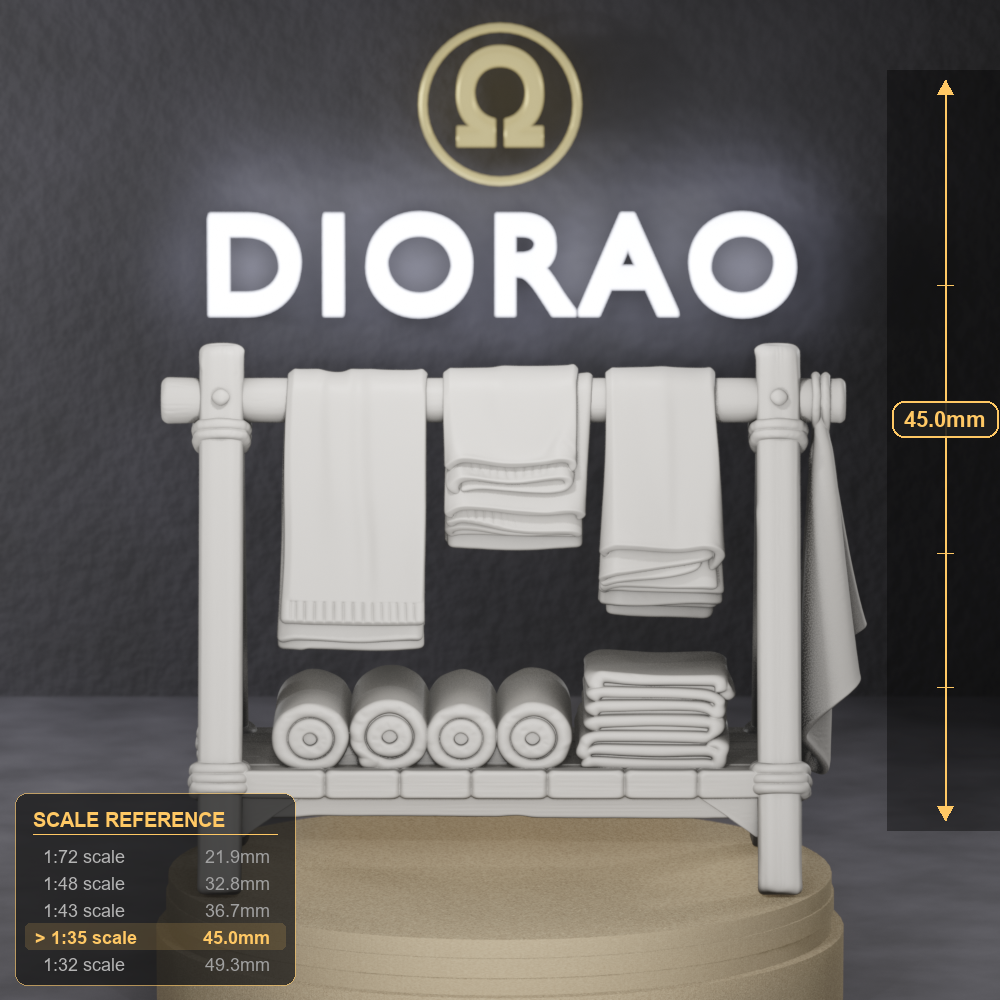
The vestiarius - Roman cloth merchant - sold tunics, mantles, woolen blankets, and bolts of linen from rack-and-pole displays exactly like this. Wool came from sheep across Italy, Spain, and Britain; fine linen from Egypt; and the most prestigious dyed cloth - Tyrian purple - could cost more than its weight in silver. Period: Roman antiquity, 1st c. BCE - 3rd c. CE.
This rack depicts a typical merchant display: a wooden frame with hanging tunics and mantles draped over a horizontal pole, folded bolts on a low shelf, and a small basket of trim and pins. The vestiarii of Rome had their own guild (collegium) and concentrated their shops along the Vicus Tuscus near the Forum.
Painting tips
- Wooden rack: medium oak with brown wash, edge highlight in tan.
- Tunics: vary between off-white linen, tan wool, and a single red or dark blue piece for color variety.
- Optional purple stripe (clavus) on one premium piece.
- Folded bolts: alternate paler and darker tones.
Historical sources & further reading
- Croom, Alexandra. Roman Clothing and Fashion (2002)
- Pompeii: fullonica and clothing-shop excavations
⚠ Small parts. Not suitable for children under 14.