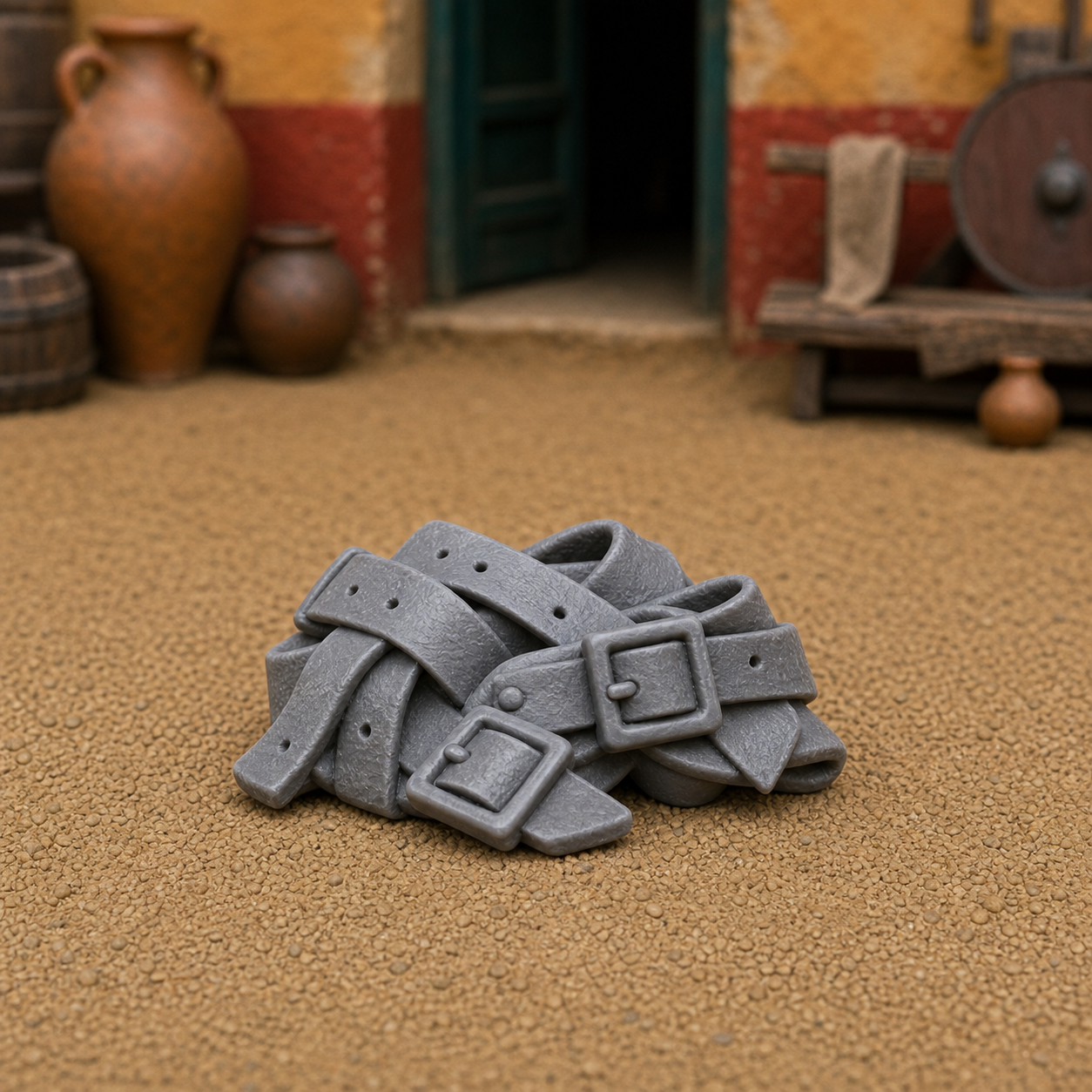
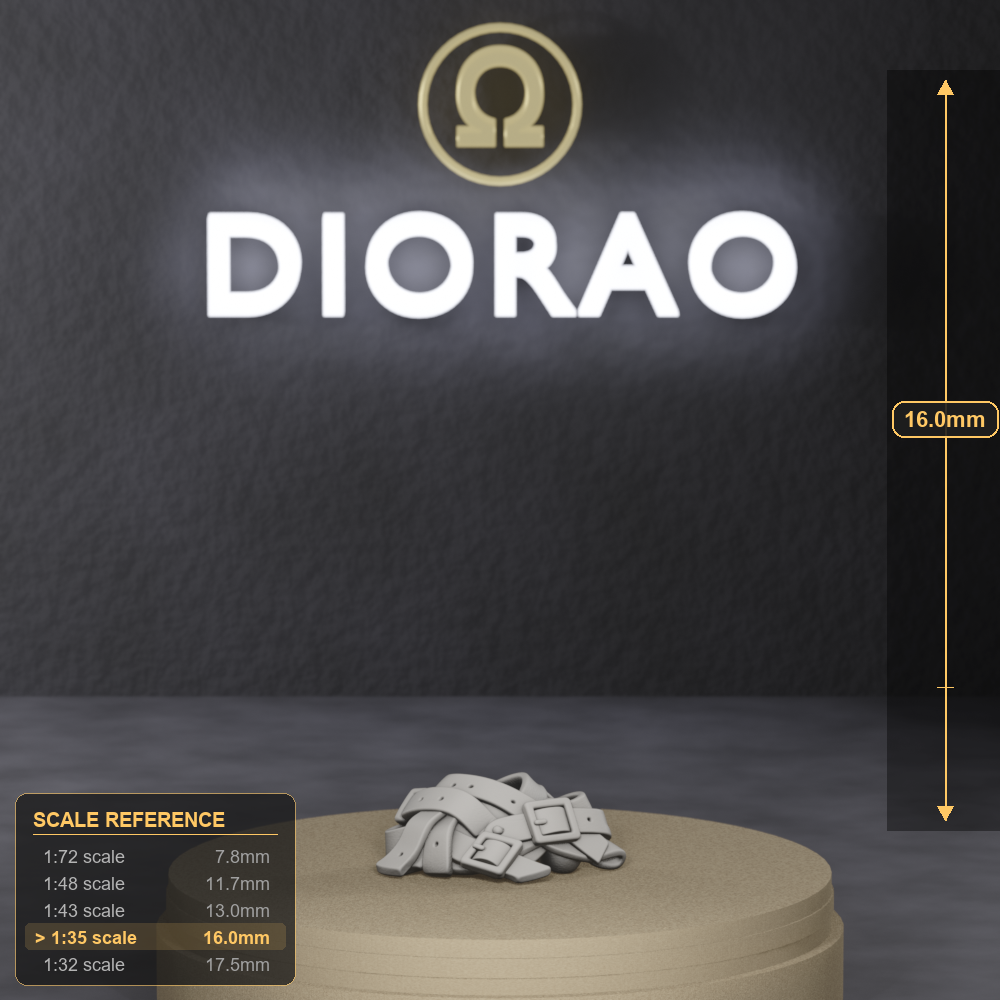
A bundle of iron buckles tied off with short leather straps - the standard repair-kit unit kept stacked on every Roman sutor's bench. Iron and bronze buckles came in stock sizes for sandal straps, sword belts, and helmet chin-cords; pre-cut strap stubs let the leatherworker swap a broken buckle without measuring fresh leather. Period: Roman antiquity, 1st c. BCE - 3rd c. CE.
Surviving Roman buckles from Vindolanda, Saalburg, and Augusta Raurica show a remarkable uniformity of size and design - evidence of a standardized military-supply economy. This prop captures a typical bundle: 6-8 buckles bound with leather strips.
Painting tips
- Buckles: dark iron-grey base, brown rust wash, polished steel highlights on raised edges.
- Strap stubs: rich brown leather, sepia wash.
- Optional bronze accent on a couple of buckles for variety.
Historical sources & further reading
- Bishop & Coulston. Roman Military Equipment (2nd ed., 2006)
- Vindolanda Trust: metalwork finds
⚠ Small parts. Not suitable for children under 14.