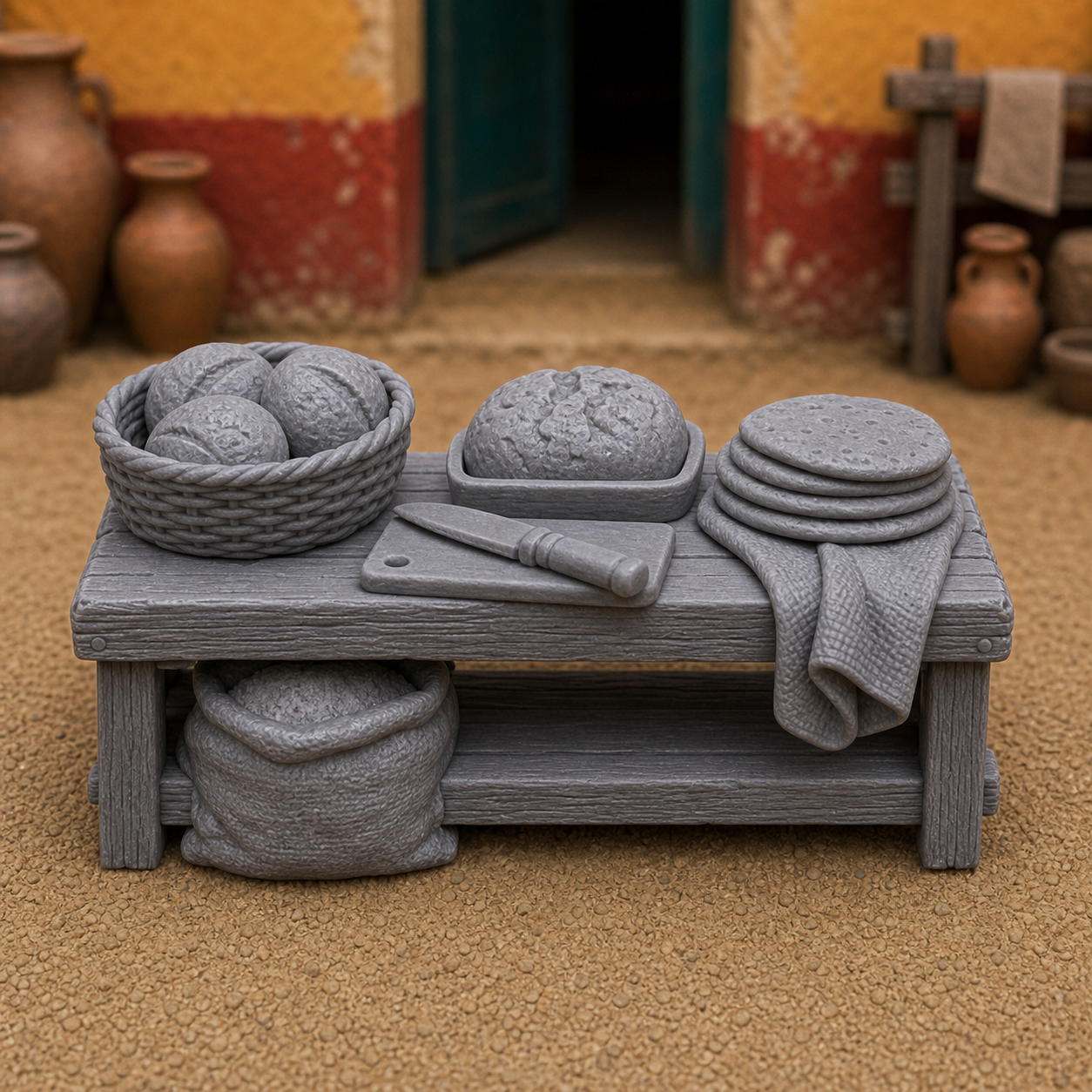
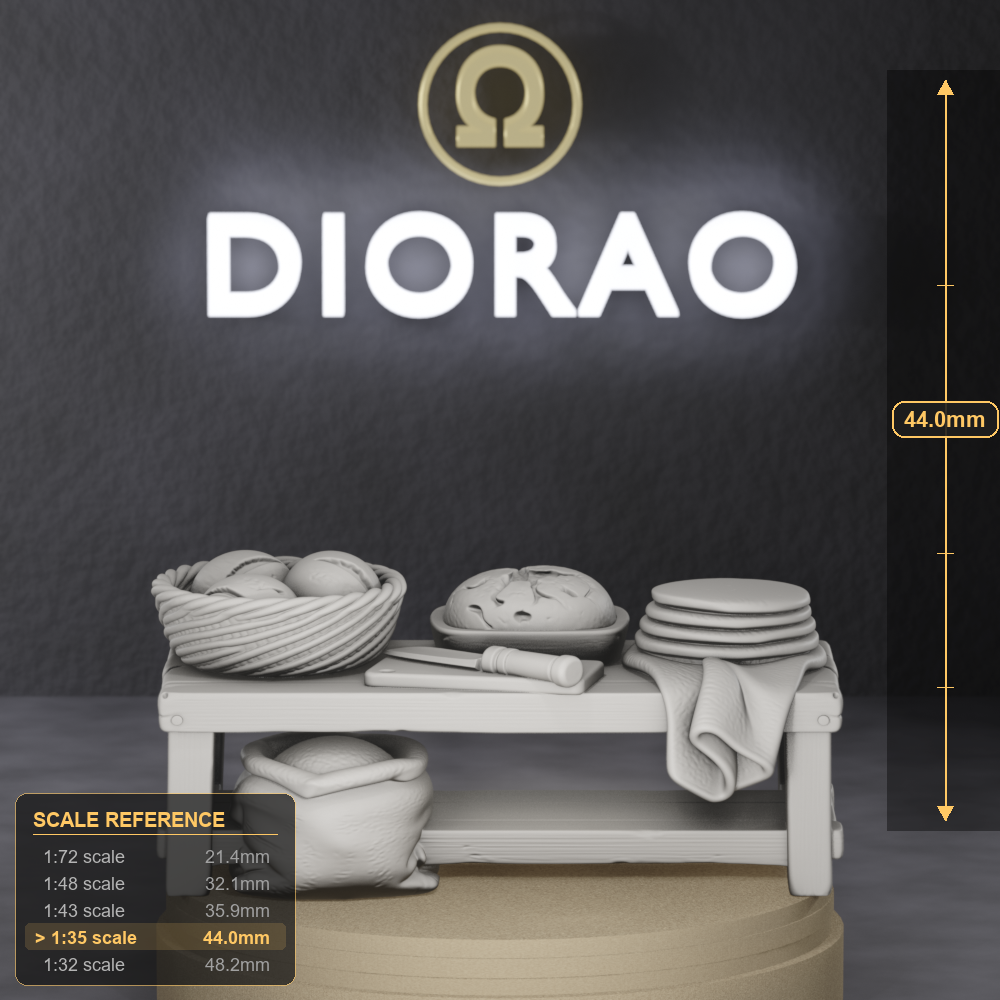
Bread (panis) was the staple of every Roman diet - rich and poor alike - and the city of Rome alone supported more than 250 commercial bakeries by the 1st century CE, distributing daily loaves through marketplace stalls like this one. The pistor (baker) baked overnight and his apprentices set up at first light. Period: Roman antiquity, 1st c. BCE - 3rd c. CE.
This stall depicts a typical bread vendor: a wooden frame with sloped baskets stacked with round Pompeian-style loaves (panis quadratus) - the eight-segment scored loaf instantly recognizable from Pompeii's carbonized finds. Smaller wicker trays hold flatbreads (libum) and pastries. Recovered intact loaves from the House of the Stags at Herculaneum and the Modestus bakery at Pompeii match this exact form.
Painting tips
- Loaves: warm golden-brown crust, paler interior on visible scoring lines.
- Wooden stall: medium oak with brown wash, edge-highlight tan.
- Wicker baskets: pale tan, sepia wash into the weave.
- Optional flour dust: light grey-white dry-brush along the stall edges.
Historical sources & further reading
- Pompeii excavations: bakery of Modestus (Regio VII)
- Herculaneum: House of the Stags carbonized loaves
- Bakker, Jan Theo. The Bakeries of Ostia (1999)
⚠ Small parts. Not suitable for children under 14.