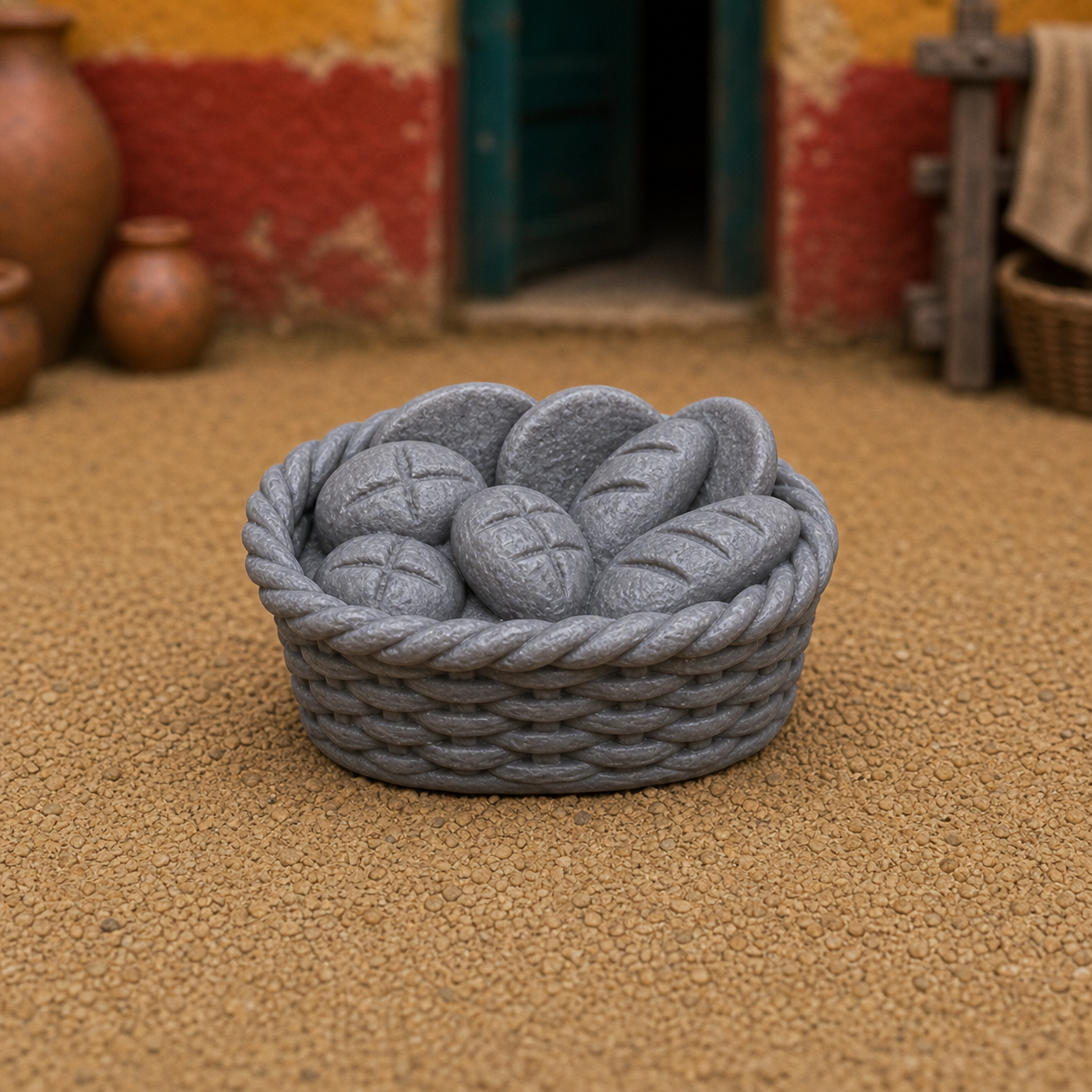
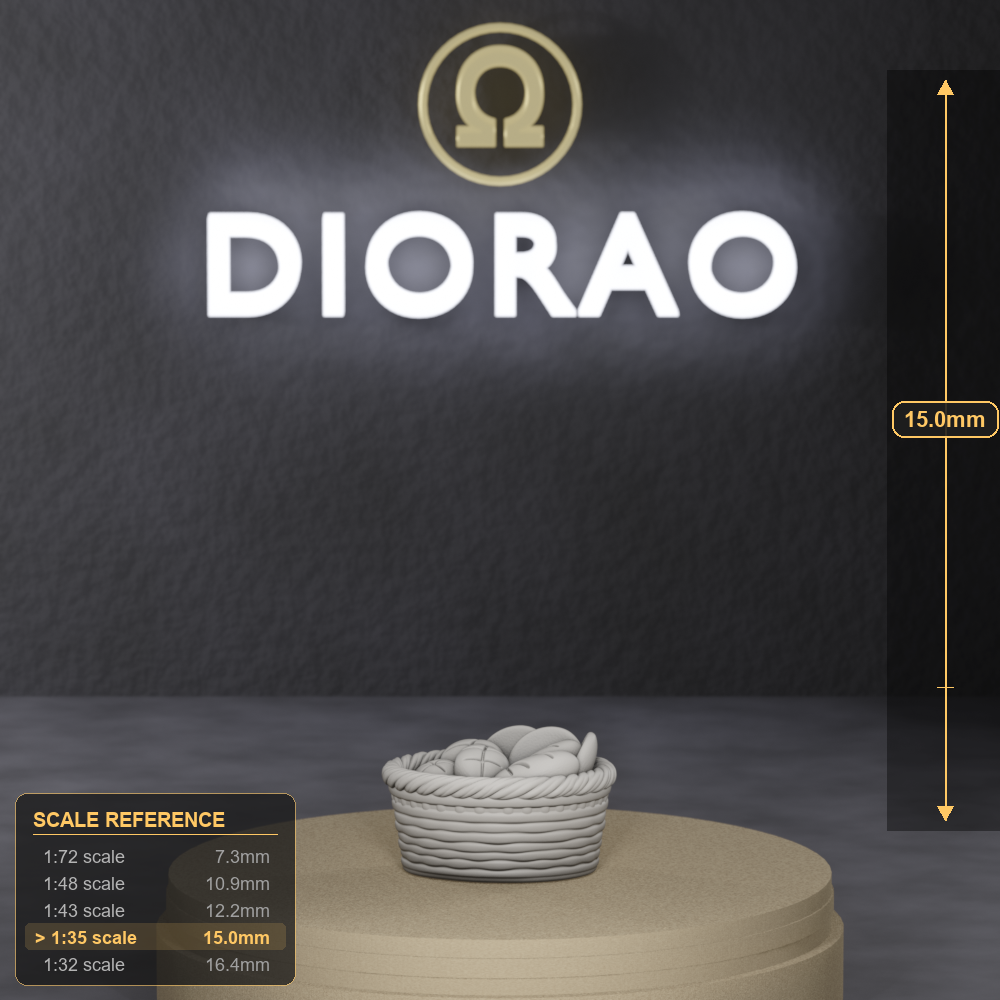
A wicker basket stacked with the iconic Pompeian round loaf (panis quadratus) - the eight-segment scored bread that has come to symbolize Roman daily life since the 1748 excavations of Pompeii. Period: Roman antiquity, 1st c. BCE - 3rd c. CE.
This piece depicts a deep wicker basket filled with 4-6 round Pompeian loaves, exactly as recovered carbonized from the House of the Stags at Herculaneum and the Modestus bakery in Pompeii.
Painting tips
- Loaves: warm golden-brown crust, paler scoring lines.
- Basket: pale tan wicker with sepia wash.
- Optional flour dusting: light grey-white dry-brush on the top.
Historical sources & further reading
- Herculaneum: carbonized loaves, House of the Stags
- Pompeii: Modestus bakery (Regio VII)
⚠ Small parts. Not suitable for children under 14.