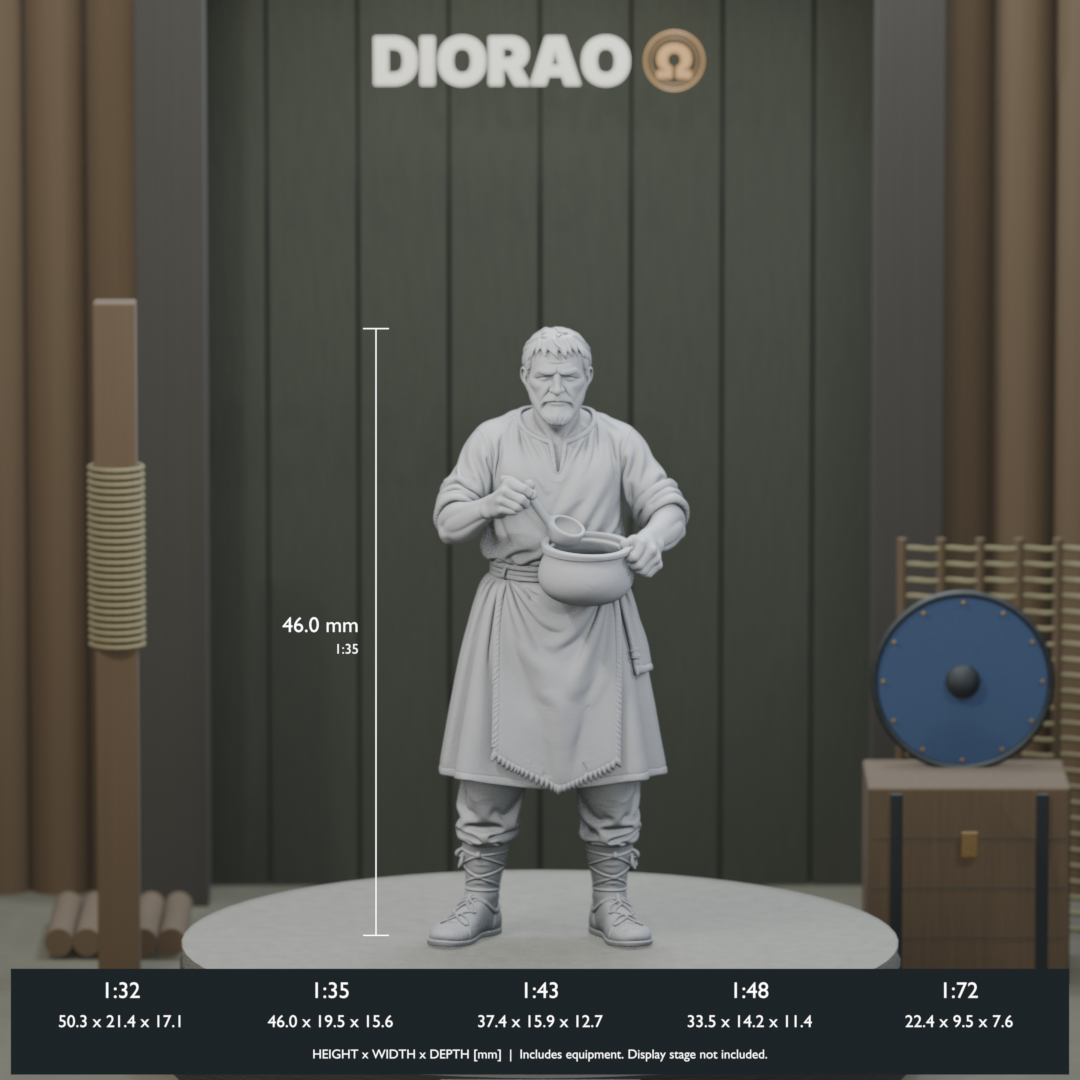
An Anglo-Saxon barracks cook — apron over a belted tunic, sleeves rolled, ladle in hand, mid-stir over the household pot. Period: Early Middle Ages, c. 600-900 CE.
Anglo-Saxon halls fed their warband from one or two great pots maintained by household cooks: barley pottage, salt pork, root stew. The cook was a constant figure in the long-house, not a kitchen-recluse — work happened next to where the men slept. This figure is mid-action: weight on one foot, ladle raised, slight lean toward the unseen pot. Pose tells the role without props.
Painting tips
- Tunic: undyed wool grey-brown.
- Apron: heavier sepia, soot-stained at hem.
- Ladle: dark wood handle, lighter polished bowl.
Historical sources & further reading
- Bede on hall life
- West Stow long-house reconstructions
⚠ Small parts. Not suitable for children under 14.